
Office cleaning
How to add an extra cleaning visit after an office event
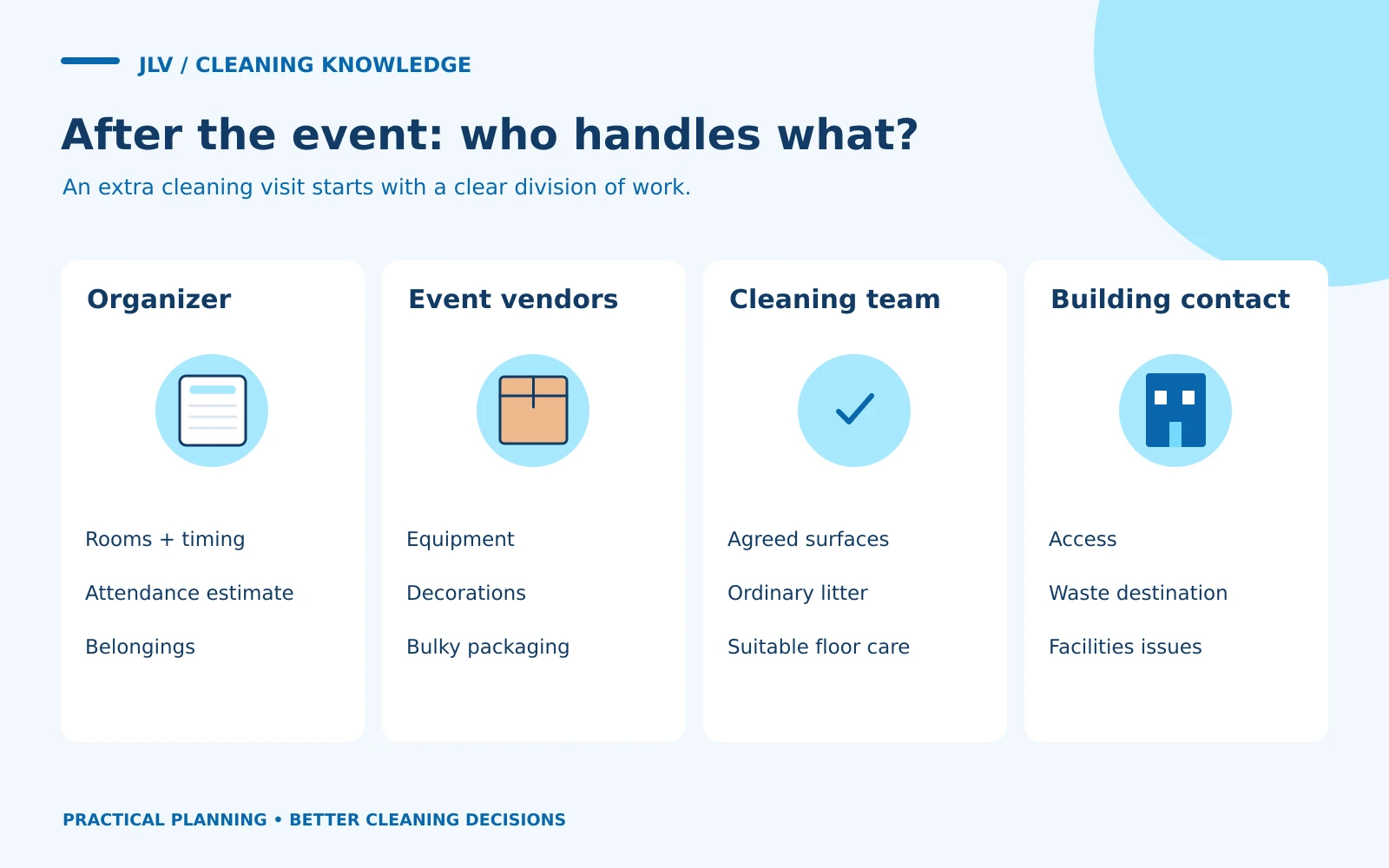
Request an extra cleaning visit after an office event by describing the attendance, spaces used, event finish time, and work that will remain after vendors leave. Confirm the provider’s availability and approved scope before treating the visit as booked.
An event can change waste volume, floor conditions, and access even when it uses familiar rooms. The most useful request separates ordinary cleanup from equipment removal, decorations, bulky packaging, and damage that needs another responsible party.
Describe what the event will change
Name the rooms, entrance route, restrooms, and any overflow areas people will use. Provide a realistic attendance estimate and note whether the office remains occupied afterward. Explain whether tables or chairs will move and who returns them to their normal positions.
Tell the provider when guests leave, when vendors remove equipment, and when the space must be usable again. These times may be different. A cleaning crew arriving while a vendor is still packing may be unable to access the agreed surfaces or floor area.
Avoid sending guest lists, attendee contact details, or private event information. Operational facts are usually sufficient to estimate the work.
Assign the non-cleaning tasks
Have the event organizer confirm who removes rented furniture, audiovisual equipment, decorations, vendor containers, and large packaging. Assign leftover belongings to the office’s found-property procedure. Keep records and electronic equipment out of ordinary waste.
Describe any anticipated ordinary litter, drink spills, or restroom demand. Unknown liquids, broken glass, bodily fluids, or damaged electrical equipment require appropriate assessment and handling; do not label every incident as a routine spill. Report concerns promptly rather than waiting for the scheduled extra visit.
OSHA’s surface requirements identify spills and sharp objects among walking-surface hazards. Restrict unsafe access and involve the building’s responsible contact when needed.
Write a request the provider can evaluate
A useful example is: “Please quote an additional visit after our office event. Reception and two meeting rooms will be used. Vendors will remove their equipment before access begins. Please assess ordinary litter collection, accessible surface cleaning, restroom service, and floor cleaning appropriate to the installed finishes. Confirm exclusions and the earliest available completion window.”
Add the event date, site address, approximate attendance, and known constraints. This is a request for assessment, not a guarantee that those tasks or timing are available. Review the response for access assumptions, waste handling, and anything excluded before approving it.
Extra-visit checklist
- Date, suite, event end, and vendor departure times
- Areas used and approximate attendance
- Furniture-reset responsibility
- Decoration and equipment removal responsibility
- Expected ordinary waste and approved disposal location
- Known spills or unusual conditions
- Building access and authorized contact
- Requested completion window
- Written scope, cost, and approval from the authorized buyer
Keep additional work distinct from the recurring service. If the extra visit replaces a normal visit rather than adding one, state that explicitly and confirm how the provider will schedule it.
Inspect for the next office day
After the event, provide an updated condition report if the actual situation differs materially from the original request. Do not expect a quote based on light ordinary litter to cover an unreported room full of packaging or restricted access.
At handover, check the areas needed for the next workday and record any deferred tasks. A brief completion note should distinguish finished cleaning, inaccessible areas, and damage or maintenance issues referred elsewhere. That record makes the next decision clear without attributing fault from appearance alone.