
On this day
Griffith Observatory: An Invitation to Look Closer
Historical event:
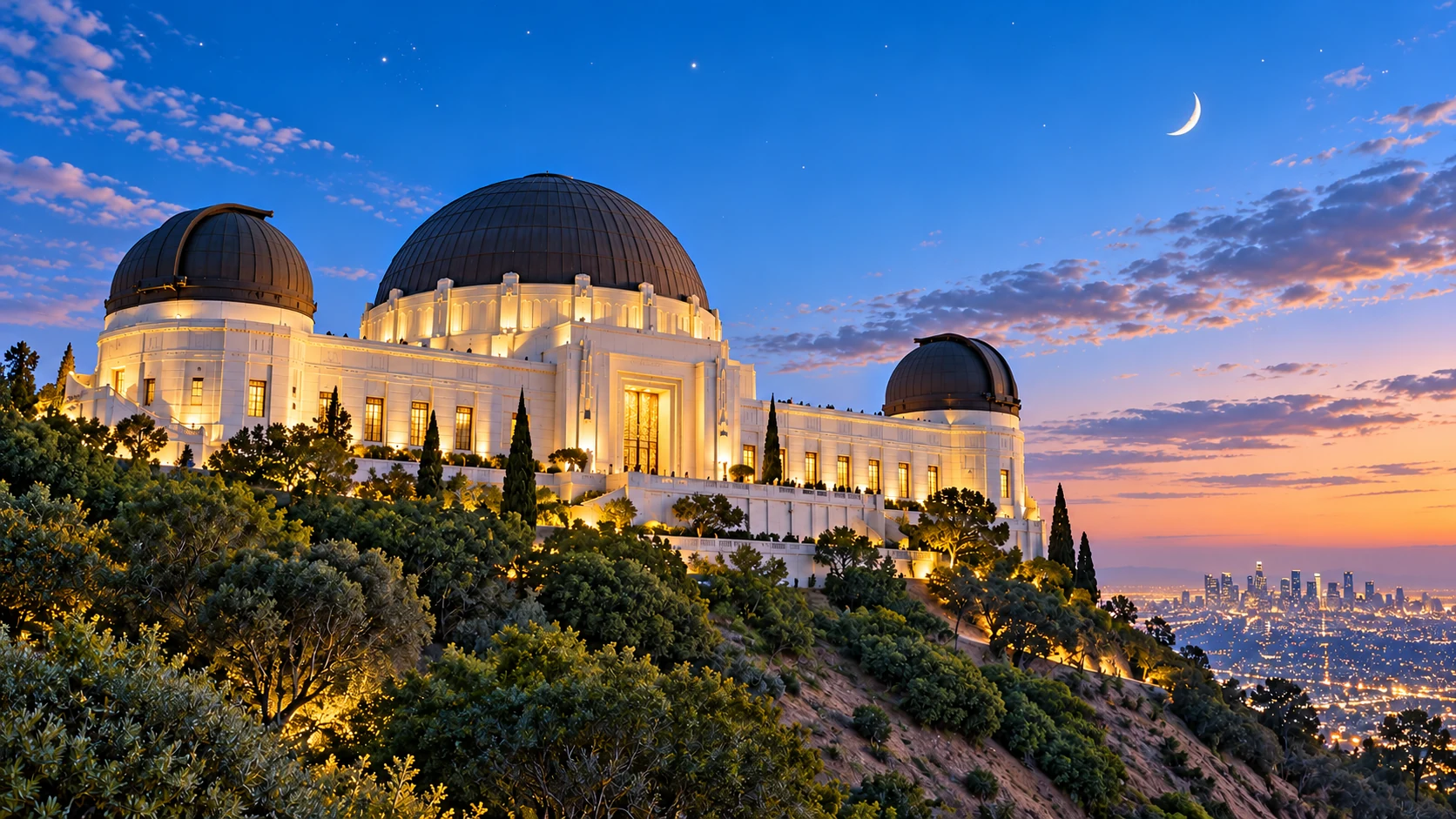
The building was ready. The telescope was ready. Los Angeles had something extraordinary to celebrate. The sky, however, had its own schedule.
On May 14 in 1935, Griffith Observatory was formally dedicated. Its account of the public telescope remembers a cloudy opening night, followed by the first opportunity to look through the eyepiece on May 17. Even a carefully planned invitation to the universe had to wait for the weather.
There is a small wrinkle in the calendar worth keeping straight. The Observatory's historical timeline distinguishes the May 14 dedication from its May 15 public opening. Other official accounts refer to May 14 as opening night. The dedication date is certain; clear telescope views arrived a few days later.
That sequence makes the story more interesting. A public observatory is a building, an educational project, and a working encounter with the sky. Those experiences do not all switch on at the same instant.
The institution's history describes a plan to bring science within reach of the public. A telescope would let visitors observe the heavens, while the Hall of Science would introduce ideas through exhibits. The planned educational theater evolved into a planetarium as that technology became available.
The public telescope was a 12-inch Zeiss refractor, ordered in 1931 and assembled in its dome early in 1935. The instrument was selected for a very particular purpose: giving ordinary visitors a chance to see celestial objects for themselves.
Think about the difference between hearing that Saturn has rings and being invited to look. One gives you a fact. The other gives you a personal encounter with a fact. An accessible place, a working instrument, and a clear explanation make that encounter possible.
The setting adds another invitation. Griffith Observatory's history describes visitors coming both for the astronomy inside and for views toward the coast and sky. Looking outward is part of the experience before anyone reaches an eyepiece.
Clear views begin with clear boundaries
In a workplace, a glass partition, a display screen, and an instrument lens may all look like surfaces that need a wipe. Their appearance does not tell you whether they belong in the same cleaning plan.
Before a walkthrough, ask the people responsible for equipment to identify sensitive items. Note which ordinary windows or partitions are included, which displays require their manufacturer's instructions, and which instruments must be left to authorized specialists. Keep those distinctions attached to the room, so they remain understandable when staff or furniture changes.
That is a planning step any business owner can use without becoming an expert in optics. It avoids leaving a routine cleaner to guess what an unfamiliar object is or whether it may be touched. A clearly excluded instrument is easier to respect than an unstated expectation.
If your Ontario office has sensitive equipment alongside everyday surfaces, let's bring the cleaning scope into focus. Talk with JLV about the work to include and the things that should stay untouched.