
Office cleaning
Greasy Marks on Leather Office Seating: Why Washing Can Be the Wrong Next Step
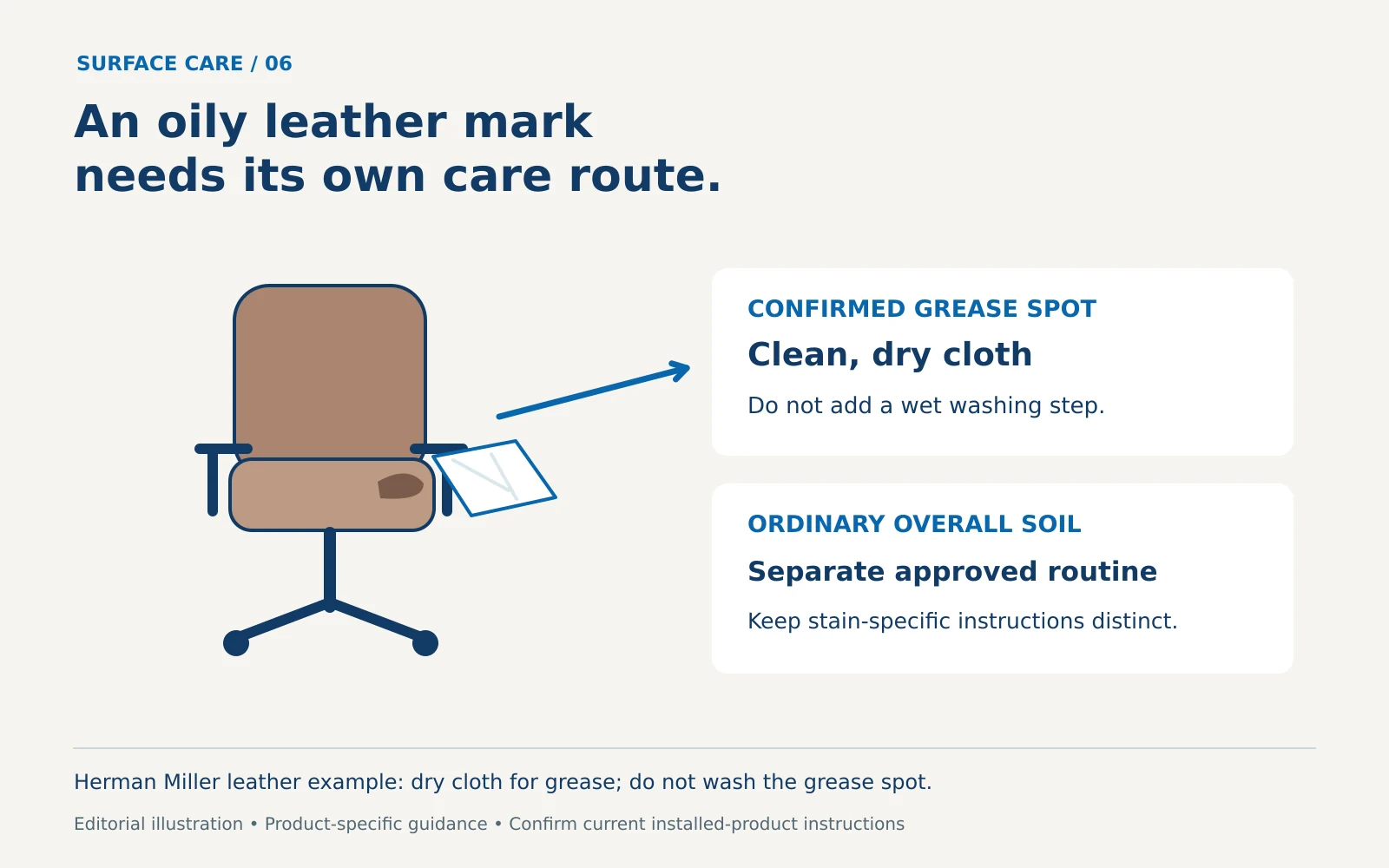
An oily mark on leather office seating needs a stain-specific decision before washing. For leather covered by Herman Miller's care guide, the instructed response is to wipe with a clean, dry cloth and allow the remaining oil to dissipate into the leather. The guide expressly advises against washing a grease spot with water. Herman Miller leather care
That direction applies to the covered material. An office should identify its actual chair and leather finish before adopting it, especially when the seating has been replaced or reupholstered.
Identify both the upholstery and the mark
Find the maker, model and material specification in the furniture record or on an accessible label. Confirm that the surface is genuine leather. A leather-look chair may have a different construction and require a different care guide.
Then ask what is known about the mark. A freshly reported oily spill gives a clearer starting point than a dark patch discovered during an evening cleaning visit. Note its location, approximate size and whether anyone has already applied a product. Do not identify an unknown substance by smell, touch or trial chemicals.
If the source is unclear, treat that uncertainty as a reason to ask the furniture supplier for guidance. Darkening, wear and an old spill can look similar in a photograph. The cleaning request should describe the observation without declaring that every variation is removable dirt.
Follow the grease instruction separately
For identified furniture covered by the Herman Miller guide, use the dry-cloth response described above without adding a wet washing step. The same guide gives a separate mild-soap routine for ordinary overall soiling, with care directed across the complete seat, back or arm surface. It also prohibits heat drying and lists products such as saddle soap, solvents, oils, abrasives and ammonia among those to avoid. Herman Miller leather care
This distinction should appear in the work instruction. A note that simply says “clean leather chair” leaves the crew to choose between routines intended for different conditions.
Keep the first response controlled. Photograph the affected panel before touching it, use a fresh cloth and observe rather than repeatedly rubbing the same area. Pause if the finish lifts, the chair's color transfers, a seam opens or the surface is already peeling. Those observations need to be passed to the owner or supplier before further treatment.
Test only a method that is already approved
If the installed furniture's own instructions call for a different method, use those instructions and their testing requirements. An inconspicuous test can help assess an approved product's effect, but it cannot turn a forbidden cleaner into an acceptable option.
Do not create a sequence of degreaser, alcohol, conditioner and heat based on whether each previous step failed. Record the products already used and seek advice before adding another. That history matters to the next person assessing the chair and helps avoid an undocumented series of experiments.
There is no universal waiting time after which an oily patch must have disappeared. Agree with the supplier on when to inspect again. Under the cited guide, a persistent stain or extensive soiling belongs with a professional cleaner. Herman Miller leather care
Write a handoff that supports the next decision
Use a short condition record:
- Chair location, model and confirmed upholstery
- Photograph of the whole panel and the affected area
- What was reported about the spill, with uncertainties retained
- Date, product and method of any treatment
- Visible change after the response, including any finish concern
- Person responsible for approving the next step
For example, a facilities contact reports an oily mark on the right arm of a confirmed Herman Miller leather chair. The applicable guide supports the dry-cloth response. If a dark patch remains, the next request should include the care record and ask for assessment, rather than direct the evening crew to wash the arm again.
Keep appearance and usability decisions separate. A persistent mark may prompt a repair or replacement discussion, but a cleaning provider should not promise restoration without an assessment. If the surface is damaged or leaves residue on clothing, ask the furniture owner whether the chair should remain out of use while it is reviewed.
For general seating identification, see How to Clean Fabric Office Chairs.
Request a quote from JLV for office or post-construction cleaning in Orange County, Chino Hills, Chino, Ontario, Corona or Eastvale.