
Science
Jack Kilby's Small Circuit and a Very Big Idea
Historical event:
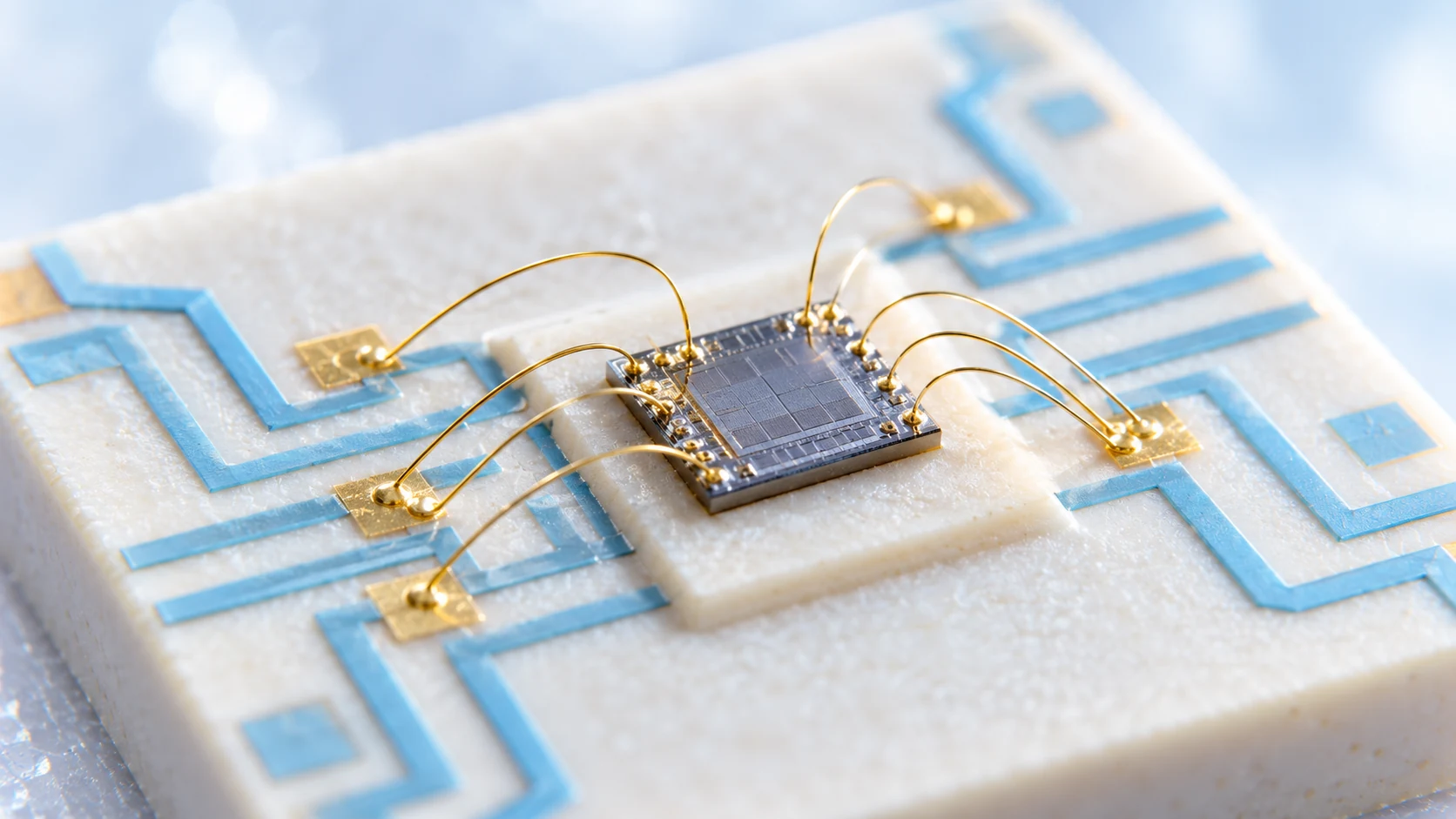
A sliver of germanium and a few fine wires do not look much like a technological revolution. They look like something you would be careful not to lose on a laboratory bench.
On September 12 in 1958, Jack Kilby demonstrated a working integrated circuit at Texas Instruments. The Computer History Museum describes five components connected by wires on the same small piece of semiconductor material. It also preserves the story through a replica of the engineering notebook page Kilby dated that day.
The physical object was modest. The question it answered was enormous: could the different elements of a circuit be made together, rather than assembled as a growing collection of separate parts?
A summer problem with a smaller answer
The Royal Swedish Academy of Sciences' account explains that Kilby had joined Texas Instruments in 1958 and had not yet earned vacation time when colleagues left for the summer. He used the period to investigate the problem of increasingly complex circuits.
The appeal of bringing components together was not simply making something cute and tiny. More components meant more connections to organize. Changing how the circuit was made could change the practical possibilities of the whole system.
Kilby's early work still used fine wires between elements. The Computer History Museum notes that the handcrafted approach was difficult to mass-produce, even though it demonstrated a promising direction. A successful experiment and a convenient manufacturing method were different achievements.
Robert Noyce's work at Fairchild belongs in the story as well. The Swedish Academy describes his approach to a silicon integrated circuit using deposited aluminum connections and recognizes Kilby and Noyce as co-inventors. The history has several people solving related problems, with important differences in how they made the idea usable.
That fuller account is more satisfying than a single magical eureka moment. An invention can begin with a clear demonstration, then depend on other materials, processes, and people before its possibilities spread. The September demonstration was a beginning with consequences, rather than a complete preview of everything to come.
Small equipment can leave awkward spaces
A modern workstation makes the consequences of miniaturization wonderfully visible. A desk can hold a screen, docking station, telephone, and several connections while leaving just enough room for the person who uses them. Small equipment does not necessarily leave simple spaces.
Before a cleaning visit, look for the desk surface hidden behind that arrangement. Ask the occupant or IT contact to prepare any area that requires moving equipment; leave cables and devices in their hands. Then identify the ordinary surfaces that are ready for cleaning.
That small preparation task can be especially useful at a shared desk, where nobody wants to arrive and reconstruct yesterday's setup. The point is to make the space workable for the next person using it.
Have a compact Orange County office with plenty going on? Talk with JLV about business and office cleaning. Let's make a little room for the details.