
Post-construction cleaning
Construction Specks on New Glass: When to Call the Glazing Installer
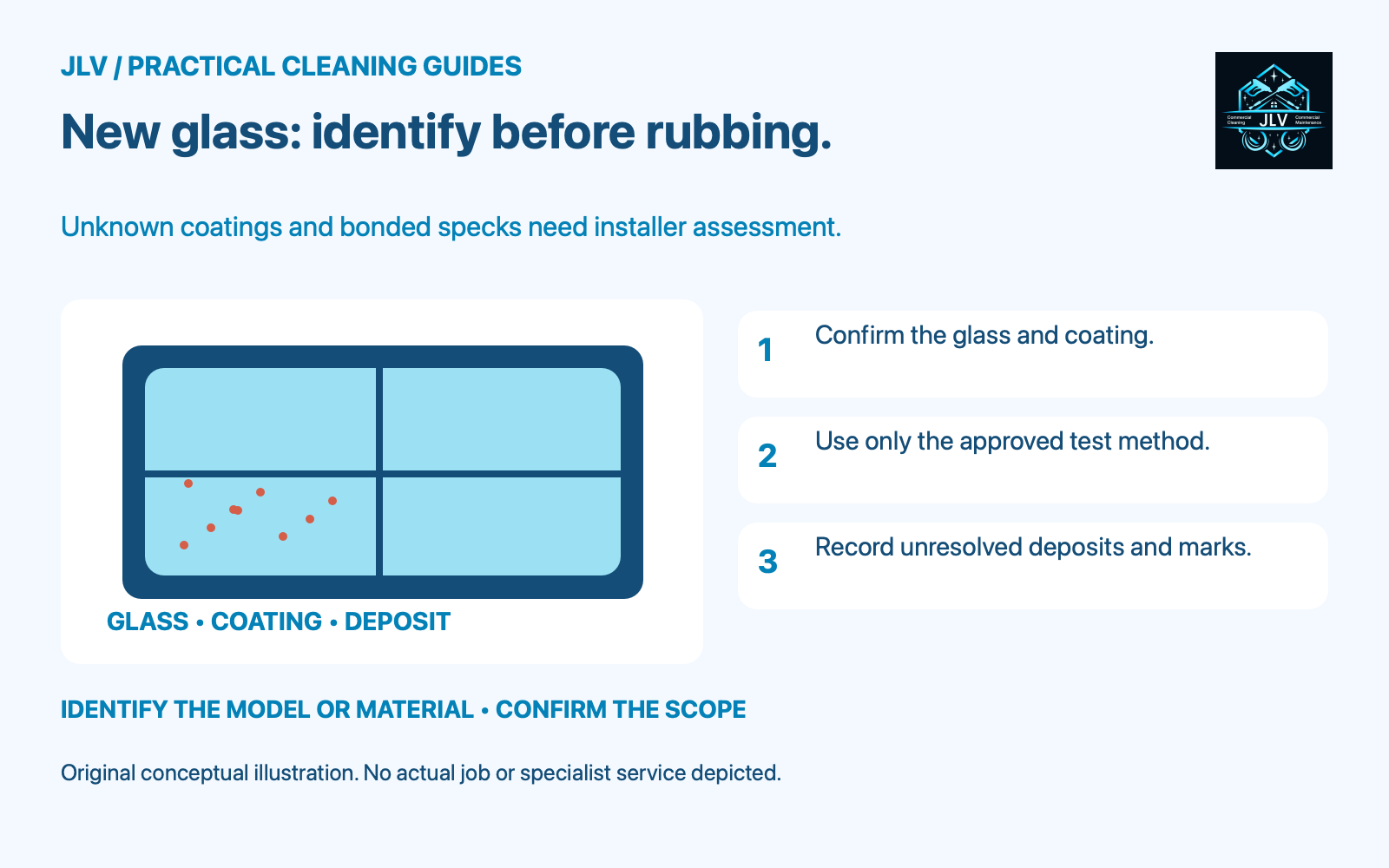
Specks on newly installed windows should be identified before they are rubbed or scraped. Ask the glazing installer for the glass specification, exposed coatings and approved cleaning instructions. Document cement, paint, adhesive and unexplained hard particles individually. A final-cleaning deadline is not permission to use a blade or an acid treatment.
Separate three questions about the pane
- What is the glass construction? Confirm the product and whether it is heat-strengthened or tempered.
- What is on the accessible face? Identify factory coatings, applied film and any temporary protection.
- What is the deposit? Ask the project lead about nearby concrete, stucco, painting, sealant work or other trades.
These answers are independent. Heat treatment does not tell you whether the surface has a coating, and a coating does not identify a construction deposit. Keep protective-film removal under its own product instructions. Do not peel a layer to discover what it is.
Why even a plastic scraper can be a problem
Vitro’s glass-cleaning guidance warns that very small debris fused to heat-strengthened or tempered glass during processing can be dislodged by a plastic scraper and damage the surface. These particles are different from loose jobsite grit. You cannot confirm their presence or absence by seeing whether one speck feels rough.
Vitro also gives special restrictions for exposed coated glass and warns that masonry runoff can permanently affect glass if left in place. Alert the glazing installer promptly when new runoff or deposits are found. Do not wait for the scheduled final clean, and do not turn the warning into an improvised chemical-removal job.
Agree on a first-cleaning hold point
Before work, identify each glass type and the approved method in the room list. Ask the installer for written instructions when bonded residue, an unknown coating or hard particles are involved. Keep blades, metal tools, abrasive pads and unapproved acids out of this workflow. A method permitted for one pane does not automatically cover the adjacent pane.
Confirm that the construction area has been assessed and released for ordinary cleaning. Unknown dust, active cutting or suspect hazardous material needs the project’s qualified safety response before disturbance. Arrange safe access and runoff protection; reachable indoor glass does not make high exterior work part of the same task.
Test only the approved ordinary-soil method
For ordinary loose soil on identified compatible glass, follow the glass maker’s wet-cleaning sequence. Pilkington IGP’s guidance emphasizes abundant clean water, soft clean tools and removal of grit before a rubber squeegee is used. That example does not override a coating’s restrictions or authorize flooding window assemblies and occupied interiors. Work on cool glass and follow the maker’s restrictions on direct sunlight.
Choose a small area representative of each glass construction and protect the surrounding finishes. Record its dry appearance in daylight. Keep the applicator free of collected particles and stop if it drags, makes a scratching sound or encounters bonded specks. Do not press harder or switch tools mid-test.
Inspect the dry test in daylight from more than one angle before continuing. Vitro notes that light scratches can be difficult to see under some lighting and backgrounds. A satisfactory test supports only the same approved method on the same identified construction; it is not proof that all deposits can be removed safely.
Give unresolved marks a specific owner
List the pane location, glass type if known, deposit, test method and remaining condition. Ask the glazing installer to assess scratches, coating changes, persistent spots and bonded material. Avoid promising that every construction mark is removable. For a JLV post-construction inquiry, provide those records and ask which accessible ordinary-cleaning tasks fit the scope. Glass repair and specialist restoration require a separate qualified provider.