
Exterior & outdoor cleaning
How to Clean a Wood Deck
Quick answer
Clean a sound wood deck with the cleaner and soft-brush method approved for its wood and finish. Work with the grain, rinse as directed and allow complete drying. Avoid assuming a pressure washer is necessary: the Western Red Cedar Lumber Association specifically advises against power washing cedar because it can damage the surface.
Before you start
Identify the wood species and whether it is bare, stained, painted or coated with a film-forming product. Different finish systems tolerate different cleaners. Unknown old paint, loose coatings, rot and structural movement are stopping points. This guide removes routine dirt; it does not teach stripping, bleaching, sanding, lead-paint removal or deck restoration.
Supplies
- A soft broom for ordinary leaves, a nonmetal deck brush and clean cloths.
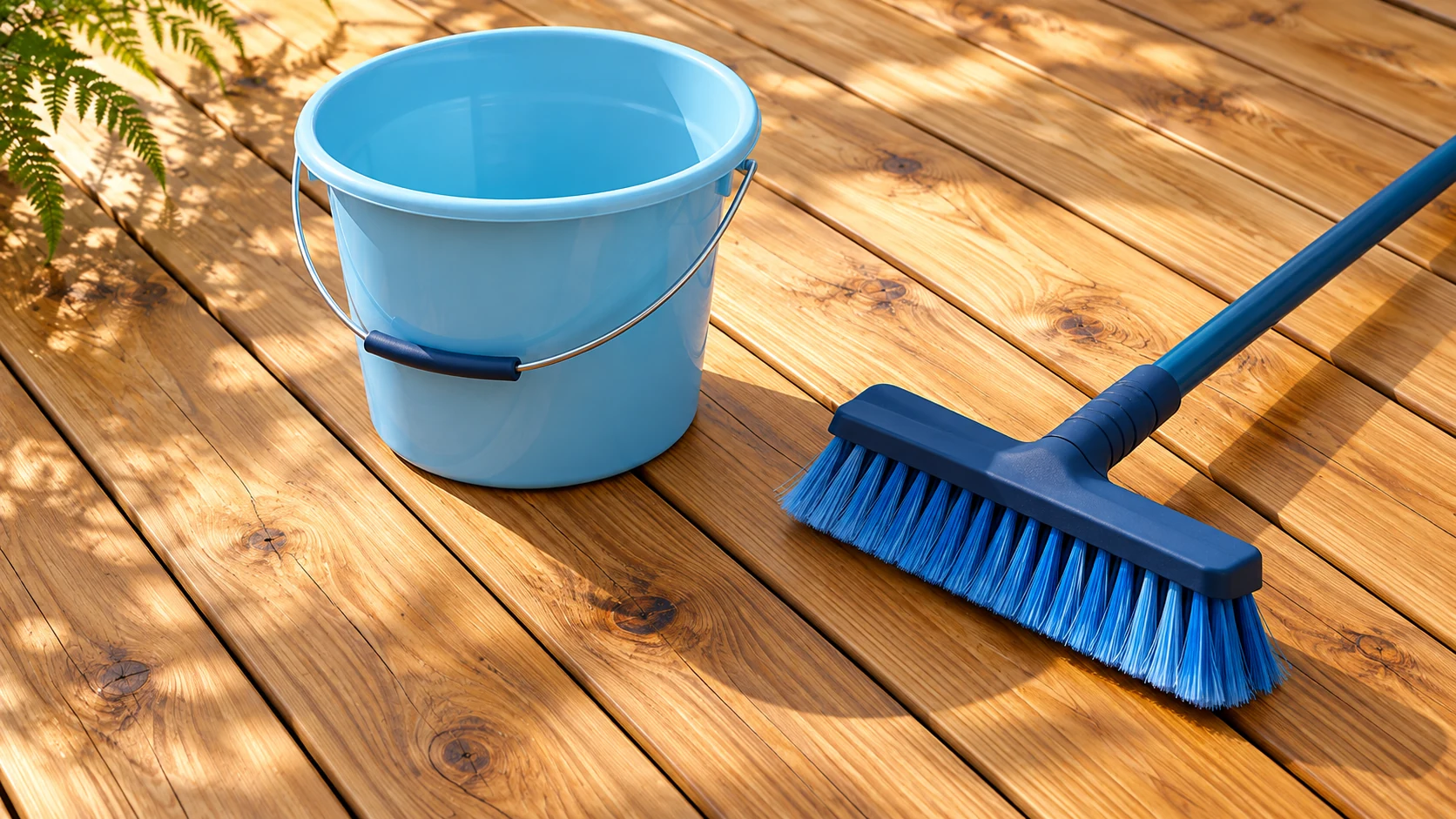
- A cleaner approved by the wood and finish suppliers, clean water and label-required protection.
- A safe work boundary, runoff collection and enough drying time before furniture returns.
Step-by-step method
- 1. Walk the dry deck slowly and inspect boards, railings and steps. Stop using any area that feels unstable. Photograph split boards, fastener problems, flaking finishes and recurring wet spots. Cleaning cannot establish whether a deck’s structure is safe.
- 2. Move light furniture with lifting help and collect leaves or other ordinary loose debris. Clear accessible surface gaps gently without gouging the board edges. If there is unknown dust from cutting, sanding or nearby construction, have the responsible professional identify and control it first.
- 3. Plan a small work area with an exit that does not require walking across wet boards. Arrange to collect rinse water, and keep it out of storm drains. Choose conditions that allow you to follow the cleaner’s temperature and drying requirements without rushing.
- 4. Test the approved cleaner on a discreet section of the same finish. Use the label’s strength, contact time and rinse. Allow the wood to dry and check whether color, sheen or surface texture changed. If the test removes the finish, you have crossed from cleaning into restoration.
- 5. Clean several boards at a time with light strokes along the grain. Let the specified cleaner do its work instead of grinding grit into the wood. Rinse the brush frequently and replace dirty solution. Do not mix products or add a brightener as an improvised second ingredient.
- 6. Recover the dirty liquid and rinse according to the approved method without forcing water into the grain, joints or building. Avoid soaking the same area repeatedly. Preserve a consistent approach across the section rather than attacking individual pale or dark boards.
- 7. Wait until the boards are dry before judging the color and returning furniture. Inspect for raised fibers, remaining residue or slick patches. Discuss a weathered finish with its manufacturer; natural wood variation and fading may remain after ordinary dirt is removed.
Check the result and avoid common mistakes
- A cleaner, brightener and stripper can have different purposes. Read the intended use before selecting one.
- Do not chase a uniform new-wood color by increasing pressure or scrubbing force. That may remove sound material.
- Do not sand unexpected raised fibers as part of the cleanup. First identify why they appeared and whether the coating is safe to disturb.
Keep it easier next time
Keep the deck free of damp leaves and allow areas beneath pots and furniture to dry. Cedar guidance emphasizes good drainage and moving accessories periodically to prevent persistent dampness. Keep finish records so future maintenance can follow the actual product system instead of treating every wood deck alike.
When to stop
Stop for rot, movement, splintering, unknown paint, loose coating or a failed test. Hand the work to a suitable deck professional if it requires restoration, height access or pressure equipment. A clean appearance is never a substitute for a structural inspection.
A practical next step
For business and office cleaning or post-construction cleaning in Orange County, Chino or Ontario, California, contact JLV Cleaning and Maintenance to discuss your space at /contact/.