
Floor & carpet cleaning
Cleaning a Terrazzo Lobby: Check the Binder, Sealer and Joints
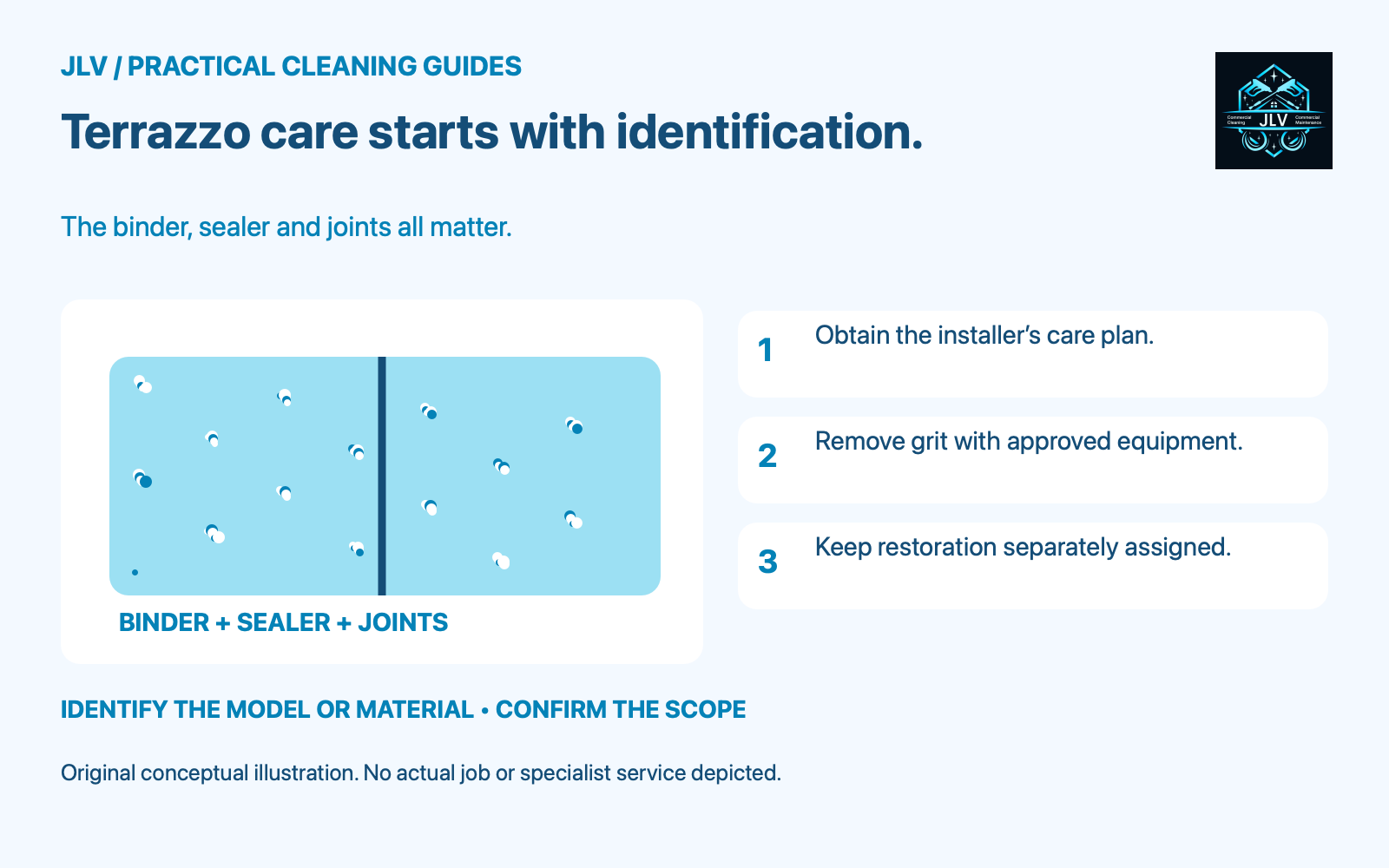
A speckled lobby floor needs a positive material identification before anyone chooses a cleaner or machine pad. Terrazzo can use a cement or epoxy binder with decorative aggregate and a particular protective finish. Obtain the installer’s care plan for that combination, then agree on routine soil removal separately from polishing, stripping or resealing.
Build a short floor-care record
Ask for the terrazzo system, aggregate, installation date, sealer or guard, and any later maintenance coating. Sherwin-Williams explains that cement-based and epoxy terrazzo use different binders. The visible chips alone will not identify the complete installation. Terrazzo-look tile also needs its own care instructions.
- Which cleaner and dilution does the installer approve?
- Which pad, brush and machine settings are approved for ordinary cleaning?
- What rinse or liquid-recovery method is required?
- How should divider strips and flexible joints be maintained?
- When is a newly installed or recoated area released for the proposed work?
Keep the answers with the cleaning scope. If the records are incomplete, request identification rather than using a chemical spot test to guess the binder or sealer. A successful test on one room does not identify a neighboring floor with a similar pattern.
Remove grit before it travels through the lobby
For its thin-set epoxy terrazzo, Sherwin-Williams recommends a clean, non-oily dust mop, prompt attention to spills and an installer-recommended neutral cleaner. Its care guide warns against unsuitable acids, alkalis and general-purpose sealers. Follow the exact floor’s instructions rather than adopting a machine pad or product because it worked elsewhere.
Start with an inspection of the entrance, reception route and furniture edges. Note scratches, chips, loose divider strips or new damp areas. Remove ordinary loose grit with approved clean equipment. Check wheels and attachments before rolling them across the floor, and arrange help for furniture that cannot be safely lifted.
Clean the field and joints deliberately
Prepare the permitted cleaner exactly as labeled and test the planned method in a discreet area. Inspect it dry before continuing. Work in manageable sections, collect dirty liquid and follow the required rinse. Do not leave solution to dry into a residue. Maintain a dry alternative route and keep people off the wet area until it is ready.
Give recessed flexible joints their own instruction. The National Terrazzo and Mosaic Association notes that control, expansion or isolation joints can need hand attention with a neutral cleaner approved by the joint-material manufacturer. Do not dig out flexible material or fill a depression with polish because it catches dirt. Report loose strips, failed joints and chipped edges.
Do not make a shine decision during routine mopping
A dull lane can involve residue, wear or finish damage. Record where it appears and whether approved cleaning changes it. More force is not a reliable way to distinguish those causes. Ask the installer to assess a persistent difference before someone adds a coating or switches to a restoration pad.
NTMA cautions that not every sealer can be stripped and that aggressive black pads can unintentionally abrade the floor. Its guidance also treats stripping and sealer application as separate operations. Leave those decisions outside the recurring cleaning checklist unless the exact treatment has been specified and separately authorized.
Keep the handoff practical
Record the approved method, test location and deferred defects. After construction, confirm the area has been released for ordinary cleaning; unknown dust or adhesive residue requires assessment first. Ask JLV about a business-cleaning scope for your lobby in Orange County or the confirmed Inland Empire service areas. Refer terrazzo repair, honing and specialist restoration to an appropriately qualified provider.