
Hiring & service planning
How to Plan Commercial Floor Care Across Mixed Surfaces
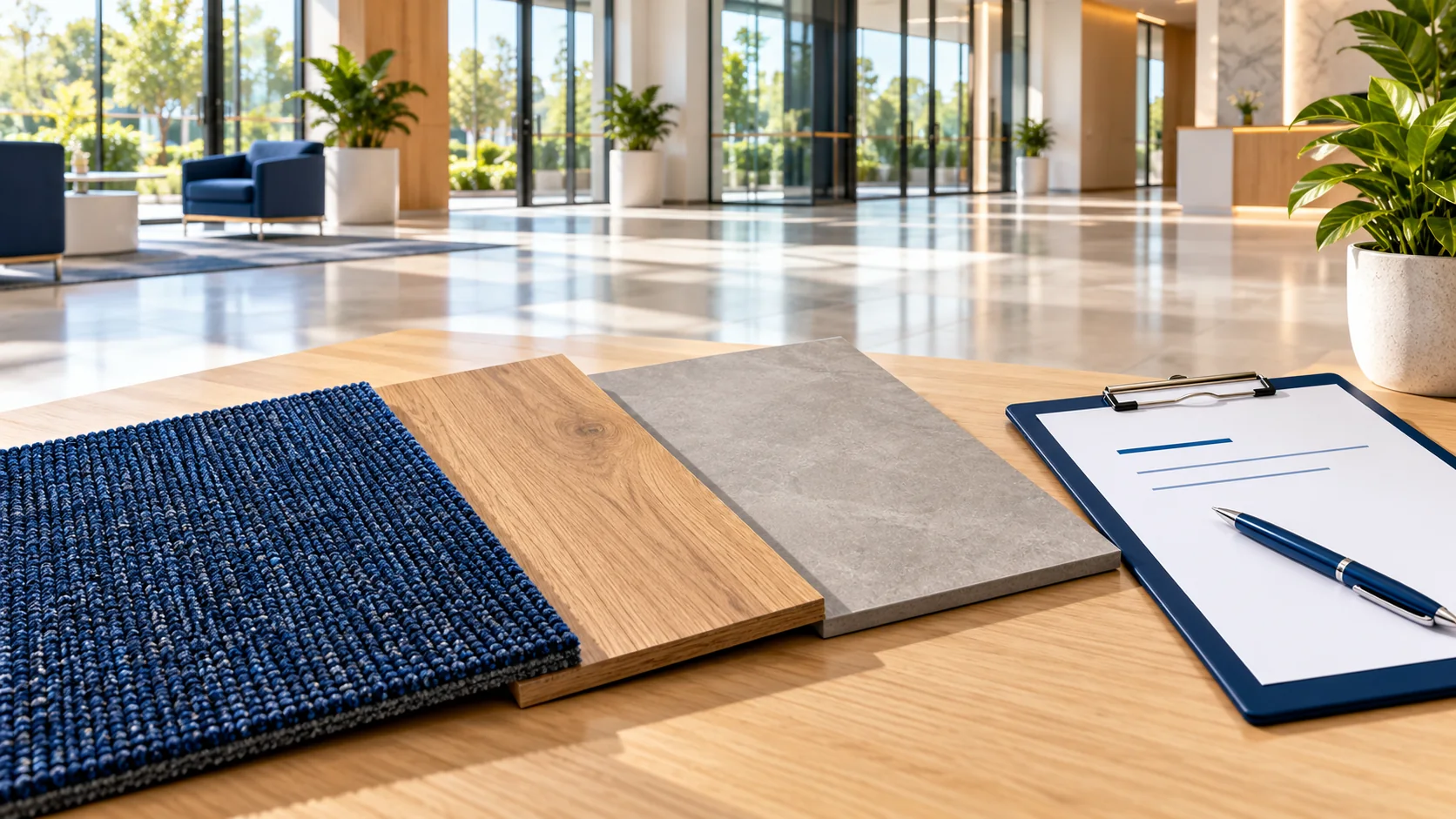
A commercial floor-care proposal should begin with the floors you actually have. An office may combine carpet tiles, resilient flooring, ceramic tile and a specialty reception finish, each with different care instructions. Buying one treatment for the entire floor area can leave important differences unexplained.
Build a simple floor register before discussing service. Record the material, location, condition and available manufacturer instructions, then separate everyday cleaning from periodic work and repairs. This gives the cleaning provider a useful starting point and helps you evaluate whether the proposed work fits the property.
Identify the product and finish as accurately as possible
Start with installation records, invoices, spare materials and the property manager’s maintenance file. A wood-look floor may be a different material from the wood flooring in another room. A concrete floor may have a coating or treatment that affects its care. Appearance alone is not enough to choose an aggressive process.
Ask the installer or manufacturer for the current instructions for the actual product, including any existing applied finish. Shaw Contract, for example, publishes separate maintenance resources for carpet, hardwood and resilient products. Use the relevant guidance instead of borrowing instructions from a similar-looking floor.
- Room or zone and approximate service area.
- Manufacturer, product and finish, where known.
- Installation or last treatment information, if available.
- Care instructions and the person who can clarify them.
- Visible condition, including pre-existing damage.
- Access limits and furniture or equipment that must remain in place.
Leave unknown fields marked as unknown. A provider can then explain what needs identification or a test area before a treatment is proposed. Do not turn a guess into a permanent instruction on the service checklist.
Separate three kinds of work
Routine cleaning addresses the tasks agreed for normal visits, such as removing loose soil and cleaning accessible floor areas with an appropriate method. Periodic cleaning is separately planned work for identified conditions or accumulated soil. Repair or restoration concerns damage or a finish problem that may require a different specialist.
Ask the provider to name the intended outcome for each proposed task. Is the aim to remove soil, address a removable mark or renew a particular approved finish? A scratch, worn surface or loose tile needs assessment before someone promises that cleaning will correct it.
Avoid assuming that every hard floor needs wax, polish or the same machine treatment. Tarkett’s published guidance for its Linoleum xf² range says wax and polish are not needed, and gives additional restrictions for specified variants. That example illustrates why the exact product matters; it is not an instruction for other linoleum or resilient floors.
Plan by traffic zone and operating constraints
Mark entrances, main walkways, desk areas and lightly used rooms. Record where soil first appears and whether deliveries, rolling chairs or particular routes are involved. These observations help the provider discuss targeted work rather than simply repeating the same treatment across the whole suite.
Connect the plan to operations. Identify when furniture can be moved, who is authorized to move it and how people will reach the rooms they still need. Ask the provider to explain anticipated drying or return-to-use conditions for the proposed process. Do not accept a generic time estimate as approval to reopen a floor before the specified conditions are met.
- What method and product are proposed for each floor type?
- Which manufacturer instructions support that choice?
- Is an agreed test area needed before the full job?
- What furniture movement and preparation are included?
- How will wet or temporarily closed areas be managed?
- What result is realistic given the existing condition?
Record the baseline and approve changes
Before periodic work, record the relevant condition with room names and clear photos where permitted. Separate visible wear from removable soil as far as the available evidence allows. If the cause of a mark is uncertain, write that down rather than assigning blame.
Keep a treatment history showing the date, area and method used. When someone proposes a new product or process, review it against the existing finish and manufacturer guidance. Ask who must approve the change and how an unexpected result will be reported.
Review results before buying the next treatment
Inspect the agreed area after the provider says it is ready for review. Compare it with the baseline and the promised scope. If the same issue returns quickly, discuss the source, traffic pattern and suitability of the method before repeating a larger service. Update the floor register when a surface is replaced or refinished.
For an office in Orange County, Chino Hills, Chino, Ontario, Corona or Eastvale, share your floor types and current concerns with JLV when discussing cleaning. Ask which routine and periodic tasks can be included; confirm any specialist treatment separately. A clear floor register makes that conversation more useful.