
Fixtures & surface cleaning
How to Clean Painted Baseboards
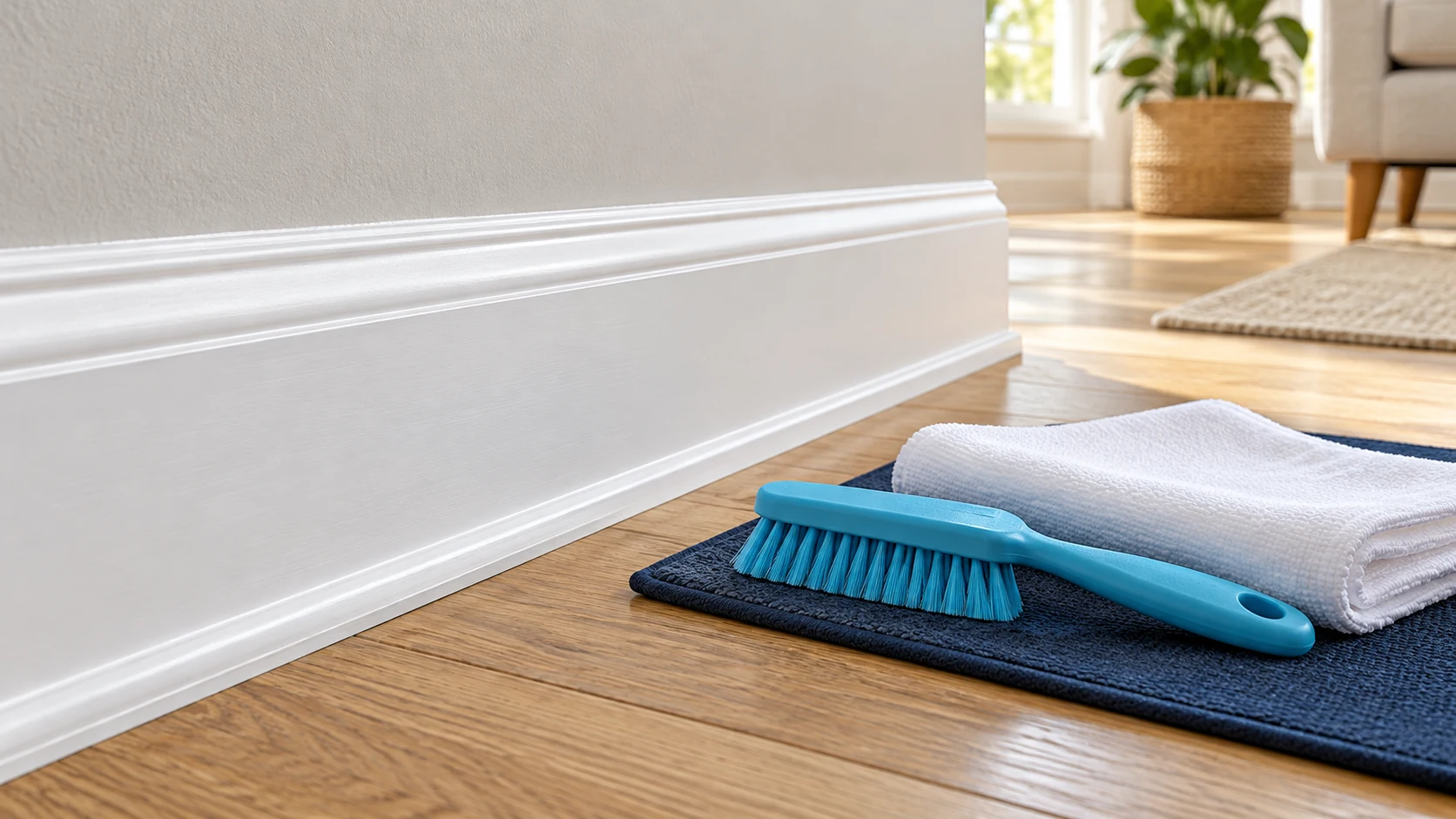
The quick answer
Remove loose dust from the top edge of painted baseboards, then wipe intact, washable paint with a soft, lightly damp cloth and a permitted mild cleaner. Remove residue and dry promptly, especially along the floor joint. Avoid soaking the trim. Painted wood and MDF can hide vulnerable edges beneath a durable-looking surface.
Inspect before you kneel down
Check whether the baseboard is painted wood, MDF, another composite or a different material altogether. Look for swelling, loose trim, open joints, exposed substrate and peeling paint. This routine is for sound, cured finishes. Deteriorating old paint should be assessed for hazards before anyone scrapes or aggressively brushes it.
Identify the floor beside the trim too. Carpet, wood, stone and resilient flooring do not share the same cleaning limits. Protect the adjacent surface and avoid letting a wall-care product run into a floor seam. If the trim is damp before cleaning, investigate that moisture rather than sealing it under a fresh cleaning film.
Supplies
- Vacuum with a clean soft dust brush or another gentle dusting tool
- Several soft cloths, clean water and a paint-approved mild cleaner
- A soft detailing brush only when permitted for the coating
- A kneeling pad and small absorbent towels for controlling moisture
Work along one wall at a time
1. Clear a comfortable access path. Ask for help with heavy furniture, and do not disconnect workplace equipment without authorization. Inspect the exposed area before moving on so an existing dent or water mark is not mistaken for a cleaning result.
2. Vacuum ordinary loose dust from the top ledge and decorative profiles. Keep the hard part of the tool away from the paint. Do not force a brush into a caulked joint or pull at loose material. Collect the debris instead of sweeping it onto freshly cleaned flooring.
3. Test a discreet section with a lightly damp cloth, allowing it to dry. If the finish remains unchanged, wipe manageable lengths using light pressure. Use the approved mild detergent only where a water-only pass does not remove ordinary soil.
4. Fold the cloth to reach shallow grooves and corners. Keep it well wrung so liquid does not run behind the trim. Where a permitted soft brush is useful, use minimal pressure and collect the loosened dirt promptly. Do not scrape black scuffs with a blade or screwdriver.
5. Wipe away cleaner residue with a fresh damp cloth, then dry the trim and adjacent floor edge. Check the result after drying. Put furniture back carefully and leave enough clearance to prevent the same rubbing mark from returning immediately.
Mistakes that turn cleaning into repair
Do not saturate MDF, unfinished edges or open joints. Avoid abrasive pads and repeated hard rubbing; a scuff may disappear while the paint develops a shiny patch. Do not use glass cleaner, solvent or a homemade chemical mixture without explicit coating approval. Never mix cleaning products. Do not treat a missing strip of paint as dirt that simply needs more pressure.
Troubleshoot what remains
If a smear moves with the cloth, use a fresh face and remove the residue. If a dark line remains where an object struck the trim, it may be a scratch or transferred material requiring a paint-safe treatment. Swollen edges, soft areas and recurring stains need a maintenance or painting professional. Cleaning cannot restore a damaged substrate or solve a leak.
Keep the detail on the schedule
Include baseboard ledges in periodic dust checks, with more attention near entrances and busy corridors. Record paint and floor requirements together so the cleaning method suits both. JLV can discuss detailed office cleaning in Orange County, Chino and Ontario, California. Start at /contact/.