
Floor & carpet cleaning
How to Clean Sealed Hardwood Floors
Quick answer
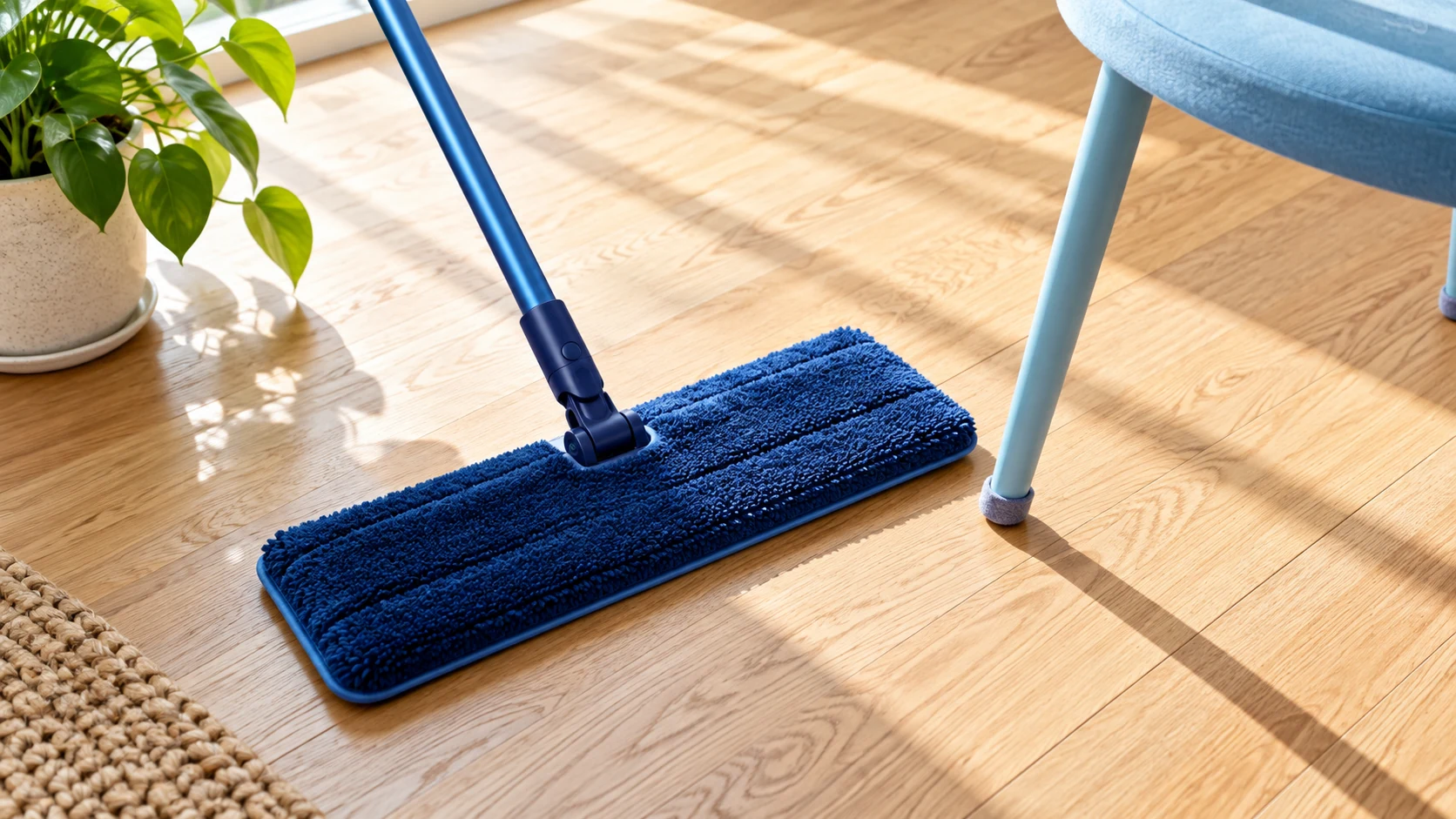
For intact sealed hardwood, remove grit and use a cleaner approved for the actual finish with a soft, barely damp cleaning pad. Collect spills promptly and leave no standing water. Stop if the finish is worn through, the boards are moving, or the surface stays damp instead of drying normally.
Sealed does not name the finish
Find out whether the floor has a polyurethane-type coating, a penetrating oil system, wax, or another finish. Those systems can need different products. Engineered wood also needs finish-specific care; its construction is not permission to use extra water. Check the flooring and finish instructions together, especially after refinishing.
Bona's timber-care guidance distinguishes oiled-floor cleaning from other wood care and cautions against excessive moisture and steam. Do not assume that any product labeled wood cleaner is suitable for every finish. If the records are missing, ask the installer or finish supplier before a wet-cleaning trial.
Supplies worth having ready
- Soft floor attachment on a suitable vacuum or a clean dust mop
- Finish-approved cleaner in its original labeled container
- Clean microfiber floor pads and soft white spill cloths
- A dry cloth for edges and accidental droplets
- Barriers and a clear exit route
Use only tools in good condition. A worn vacuum wheel, exposed metal edge, or grit trapped in a pad can mark an otherwise carefully maintained floor. Keep abrasive scrubbers and furniture-polish products out of the routine.
Clean the finish with a light touch
Remove tracked-in grit and loose objects first, especially at entryways and around chair casters. Work slowly enough to collect dirt rather than push it under furniture. Lift light items when practical; arrange help for heavy furniture instead of sliding it across the boards.
Blot spills before starting the wider floor. Check whether liquid has reached a joint or the underside of a mat. A wet patch that returns after blotting deserves investigation rather than another pass with the mop.
Test the approved cleaner in a discreet spot, using its specified amount. Let the test dry and inspect for a change in gloss or color. Clean short sections with a fresh pad, following the boards where practical so you can see remaining streaks and droplets. Never leave a wet mop parked against the floor while you move furniture or answer a call.
Change pads as they collect soil. Follow any required rinse procedure without saturating the wood. Inspect edges and thresholds, remove stray moisture, and keep traffic away until the floor is dry. Replace rugs only when both the rug backing and floor are dry.
Haze, dullness, and marks
If the whole floor looks hazy, review dosing and pad cleanliness before treating it as finish failure. Test only the corrective method recommended by the flooring or finish maker. Layering wax or polish over an unknown coating can create a larger restoration problem.
A gray traffic lane, deep scratch, peeling coating, or blackened joint may be beyond routine cleaning. Stop when gentle approved care produces no improvement or changes the finish. Cupping, soft boards, or recurring moisture should go to the building manager and a flooring professional.
A sustainable routine
Keep entrance mats clean and use floor-compatible furniture protection. Record the finish, approved cleaner, and any recently repaired areas. For help organizing business-office cleaning around sensitive floor finishes in Orange County, Chino, or Ontario, contact JLV at /contact/.