
Office cleaning
How to Clean Mesh Office Chairs
Quick answer
Use the chair maker's mesh-care instructions, a suitable upholstery attachment, and a light touch. Remove loose dust first. Apply liquid only when the specific mesh permits it, then dry thoroughly before use. Mesh, knit fabric, and a perforated plastic back may look similar but can require different treatment.
Inspect the whole chair
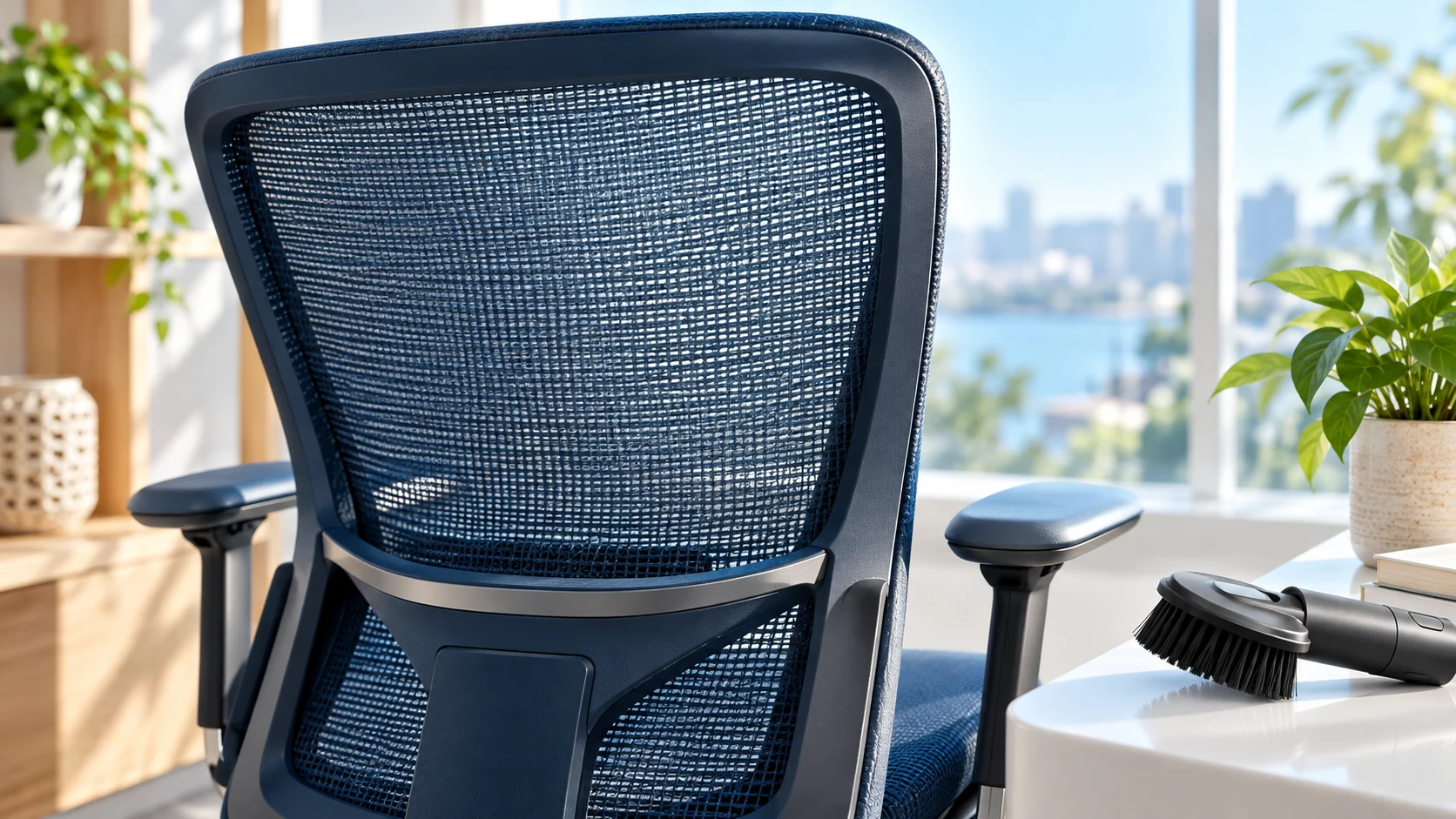
Find the model and mesh material in the chair's records. Check whether the seat is open mesh or fabric over a cushion, and whether a padded lumbar support sits behind the back. Moisture that passes through the visible surface may reach a component with different care limits.
Look for stretched areas, broken strands, tears, and loose attachment points. Stop using a structurally damaged chair and report it to the office manager. Cleaning is not a repair for a mesh panel that has lost tension or separated from its frame.
Useful supplies
- Vacuum with a clean, manufacturer-compatible upholstery tool
- Soft, lint-free white cloths
- Approved mesh cleaner if the chair's directions permit liquid treatment
- A separate compatible product and cloth for the frame
- A temporary out-of-use label
Avoid sharp crevice tools pushed through the mesh, aggressive brushing, steam, and indiscriminate disinfectant spraying. Do not remove a tensioned panel, gas cylinder, or adjustment mechanism to make cleaning easier.
Work from open surfaces to edges
Set the chair where you can move around it without twisting cables or scratching the floor. Adjust it only through its normal controls. Remove papers and clothing, and stabilize the chair so it cannot roll while you work.
Use gentle vacuum passes over the mesh, supporting it only as the manufacturer allows. Keep the nozzle moving and reduce suction if it pulls the material excessively. Concentrate on the rim and accessible underside where dust accumulates, without forcing the nozzle between structural parts.
For a small ordinary spill, blot with a white cloth. If wet spot treatment is approved, test a hidden area and let it dry before continuing. Use the product in the stated amount and avoid saturating the panel. Light controlled treatment is preferable to repeatedly pressing liquid through the weave.
Clean the frame and arms with a separate cloth and a product approved for their finish. Prevent runoff into adjustment mechanisms or onto the floor. A textured arm pad may need its own care method, so avoid assuming that one wipe can safely clean every component.
Allow all treated materials to dry fully and inspect the chair before removing its out-of-use label. Check the floor underneath as well; a dry seat does not guarantee that no liquid dripped below it.
Troubleshoot gently
If dust remains trapped at a frame joint, stop rather than prying the mesh away. The manufacturer may have a service procedure for that part. A white mark or dark patch that does not change after approved cleaning may be material wear or discoloration.
Stop when a strand catches, the mesh stretches, the cloth picks up color, or a cleaned patch becomes visibly different. Persistent odors or deeply embedded stains are reasons to seek specialist advice. Fragrance sprays can mask a problem without removing its source.
Keep the next clean easy
Save the mesh identification with the chair inventory, and check high-use chairs when reviewing routine office maintenance. Encourage staff to report spills and damaged mesh promptly. JLV can discuss office cleaning in Orange County, Chino, and Ontario at /contact/, with chair materials and practical limits included in the conversation.