
Fixtures & surface cleaning
How to Clean Laminate Desks
The quick answer
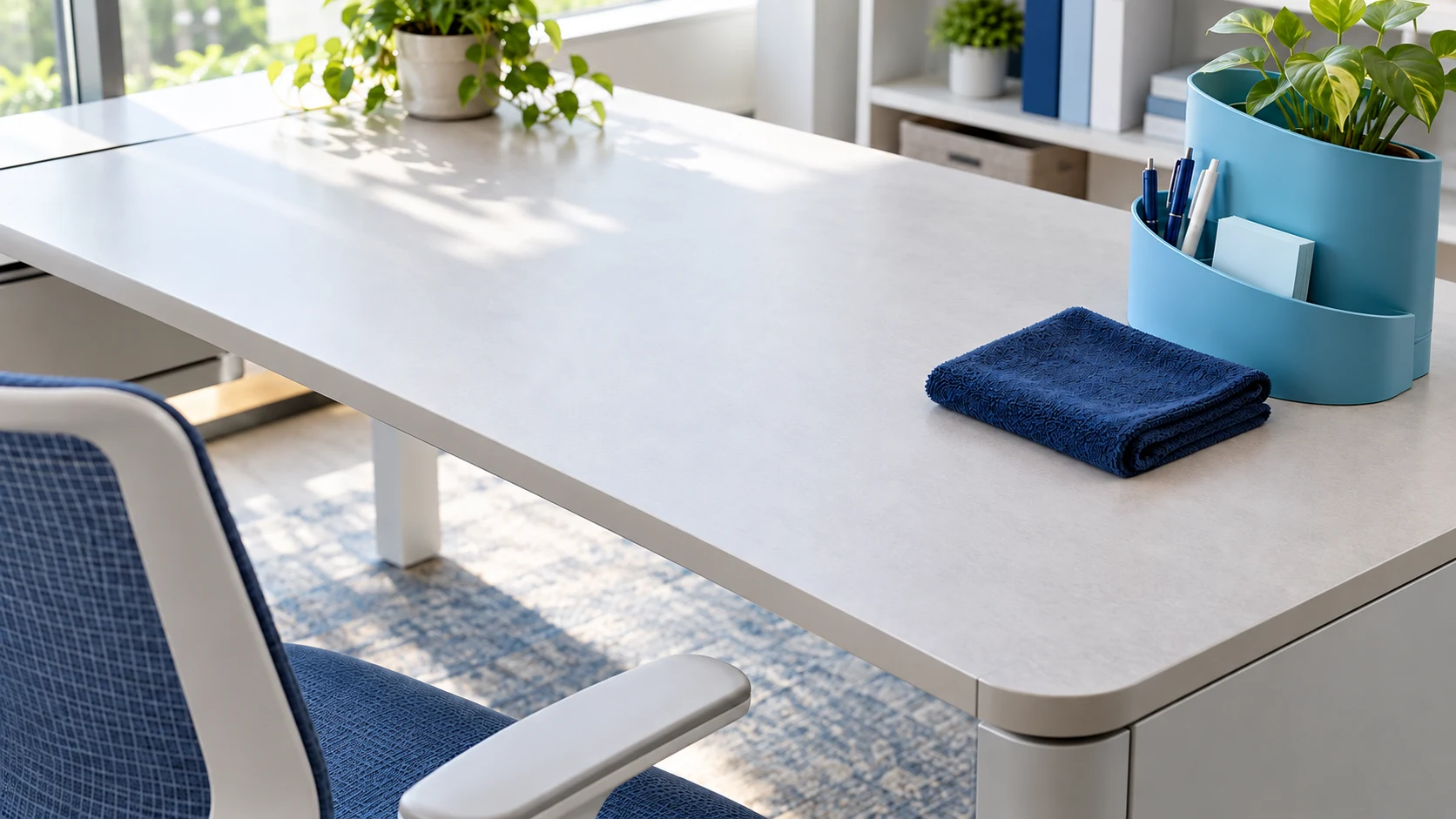
Wipe a laminate desk with a soft damp cloth and a compatible mild cleaner, remove the cleaning residue with a fresh damp cloth, then dry it. Pay extra attention to seams, edge banding and cable openings. The decorative surface may tolerate ordinary wiping while the material underneath is vulnerable to water entering an exposed edge.
Confirm the desk material
Woodgrain does not establish that a desk is laminate. Veneer, solid wood, high-pressure laminate, melamine-faced board and specialty soft-touch surfaces can look similar. Check the furniture specification or ask the owner before choosing the cleaner. A laminate manufacturer's general guidance may need adjustment for the complete desk assembly.
Inspect lifting edges, swollen seams, scratches and exposed core material. Keep moisture away from existing damage. This guide covers the desktop and accessible finished edges, not electrical controls, keyboards, upholstery or internal desk mechanisms. Treat a sit-stand desk's controls and power components according to its own instructions.
Supplies
- Clean, soft nonabrasive cloths for washing, rinsing and drying
- Mild cleaner approved for the laminate finish
- Clean water in a stable small container
- A clear approved staging area for belongings
Clean around a real workday
1. Get permission to move desk contents. Let the user secure confidential papers and fragile items, and leave connected equipment for authorized staff to handle. Do not photograph documents as a way to remember the layout. Work on an available section if the desk cannot be fully cleared.
2. Lift loose ordinary debris gently with a soft cloth or furniture-appropriate dusting method. Check the surface for grit before damp wiping. Avoid brushing crumbs into keyboard gaps, cable grommets or the joint between the top and its edging.
3. Test the cleaner on a discreet intact area and inspect it after drying. Wipe the desktop with a well-wrung cloth, using only the specified dilution. Work from cleaner areas toward visible hand marks and cup residue. Fold to a fresh cloth face frequently.
4. Remove cleaner with a fresh damp cloth. Use controlled moisture around joints, drilled holes and the front edge, keeping liquid from collecting underneath a desk mat. Do not spray directly at electronics or into a gap in the laminate.
5. Dry the top and accessible edges thoroughly. Inspect for a uniform finish in angled light, then return approved items to their positions. Keep damp cloths and product bottles off the finished desk once the work is complete.
What not to use as a shortcut
Avoid scouring pads, strong acidic cleaners, aggressive solvents and abrasive polishing compounds unless the desk maker gives a specific approved process. Do not flood a sticky patch or attack it with a sharp scraper. A wood furniture polish is not a default treatment for a wood-look laminate desk. Never mix cleaners, and do not use a hot steam tool near seams or edge adhesive.
If the surface stays sticky or dull
First try a small compatible rinse pass with a fresh cloth to check for cleaning residue. If stickiness remains, consider whether adhesive, coating damage or another substance needs identification. Do not cover the issue with wax. A swollen edge or lifting decorative layer needs the furniture supplier's advice; further wetting may worsen it.
Build a desk-friendly routine
Encourage prompt spill cleanup and use suitable protection under objects that scratch or concentrate heat. Keep the approved cleaning method with the desk specification, especially when several furniture types share a room. For office cleaning in Orange County, Chino and Ontario, California, contact JLV at /contact/ to plan around your team's workspaces.