
Stone cleaning
How to Clean a Granite Bathroom Vanity
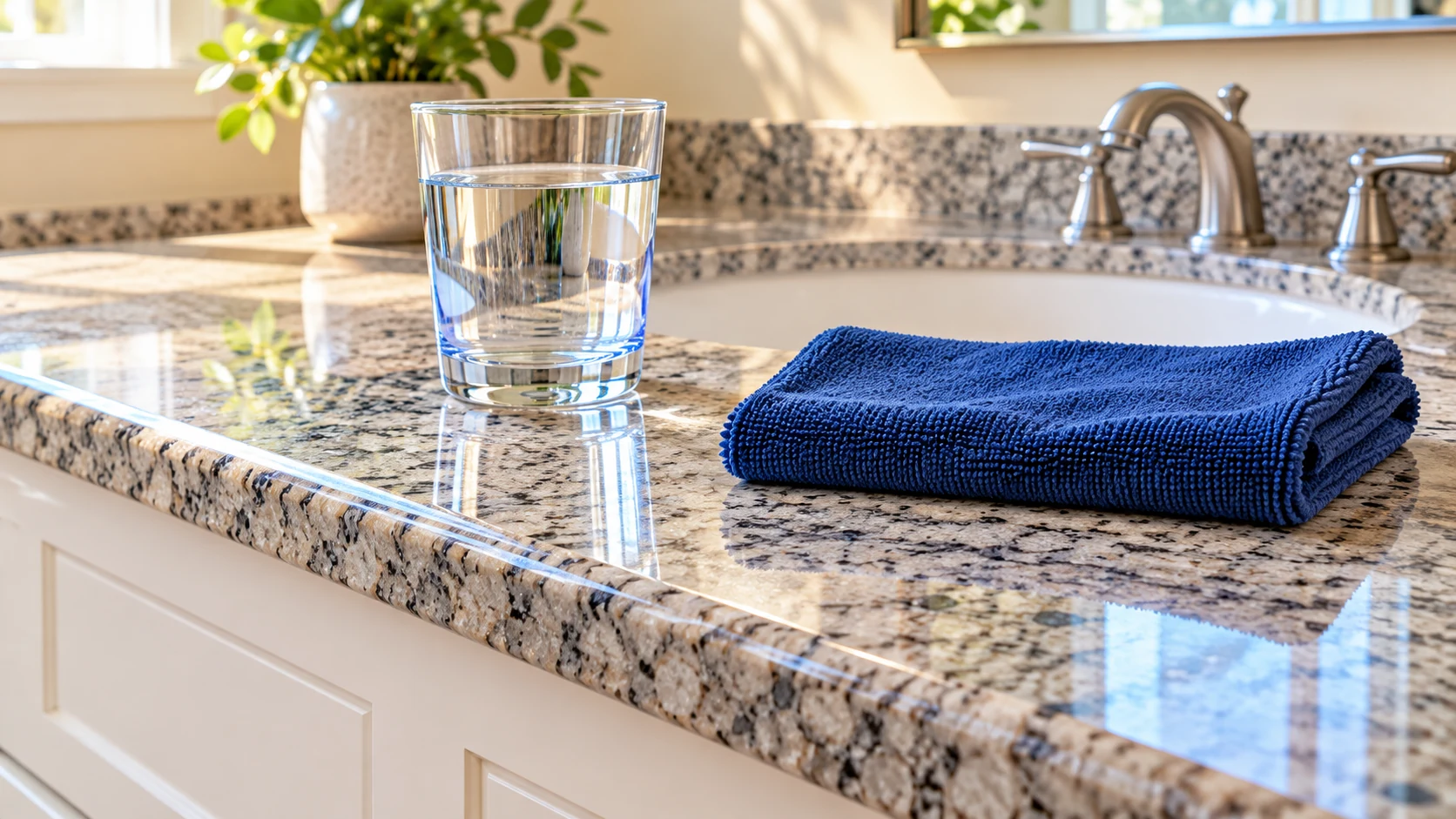
For a granite bathroom vanity, clear the top, remove loose residue and wipe with a neutral stone-safe cleaner. Rinse if directed and dry around the faucet, backsplash and bottle bases. Those small wet spots often need more attention than the open center of the counter.
Confirm natural granite
A vanity sold casually as “granite” may be another natural stone or an engineered surface. Find the supplier’s care sheet and note any sealer, resin treatment or coating. Confirm the sink and faucet finishes separately; a stone cleaner is not automatically suitable for every attached fixture.
Look closely at seams, caulk and the underside of items before starting. If water keeps returning around a faucet base or the seam stays dark, report the moisture source. This guide covers routine bathroom residue, not removal of rust, adhesive, deep stains or etch marks.
Gather what you need
- A neutral daily cleaner approved for the granite and installed treatment
- Several clean soft cloths, fresh water and a dry finishing cloth
- A tray for toiletries while the surface is cleaned
- Gloves or eye protection if required by the product label
Work from the dry area toward the wet area
1. Lift each item rather than sliding it. Check bottle bottoms and trays for grit, leaked soap or a metal base that may have marked the stone. Place them on a separate protected surface while you clean.
2. Blot fresh spills with an absorbent cloth. Remove loose dry debris gently. Do not spread a cosmetic spill over a wider area or grind a gritty particle into the polished face.
3. Test any new cleaner discreetly, following its instructions. After rinsing and drying, check the test for a change in sheen or color. If the vanity is new, obtain care directions from the fabricator instead of relying on a generic “stone safe” claim.
4. Wipe the broad surface with a clean damp cloth and the approved cleaner. Work around the sink in sections so you can keep track of what has been cleaned. Fold to a fresh face when the cloth picks up residue.
5. Detail the backsplash edge and faucet area with controlled damp wiping. Keep liquid out of open seams and off finishes the product does not cover. Do not wedge a blade under a faucet base or pry away the caulk to reach a dark line.
6. Rinse as directed using a clean cloth, then dry the stone and the areas beneath returned items. Clean the bottle bases too. Leaving a wet tray on the finished surface immediately recreates a hiding place for residue.
When a mark survives
A persistent dark patch can be a stain or moisture; a dull mark may be a surface problem. Record the probable cause, location and products already tried, and ask the fabricator for a targeted treatment. Do not escalate to toilet cleaner, a solvent or an abrasive pad.
Granite is not universally acid-proof. The Natural Stone Institute cautions against acidic cleaners even for siliceous stones because mineral composition varies. Sealer also improves resistance rather than making the stone stain-proof, and its maintenance interval depends on the system.
Prevention that takes seconds
Keep toiletries on suitable trays, wipe splashes promptly and dry beneath the dispenser. A quick check for drips can prevent repeated cleaning of the same patch. For business and office cleaning in Orange County, Chino and Ontario, California, reach JLV through /contact/ to discuss routine care for your washroom surfaces.