
Glass & window cleaning
How to Clean Acrylic Partitions
The quick answer
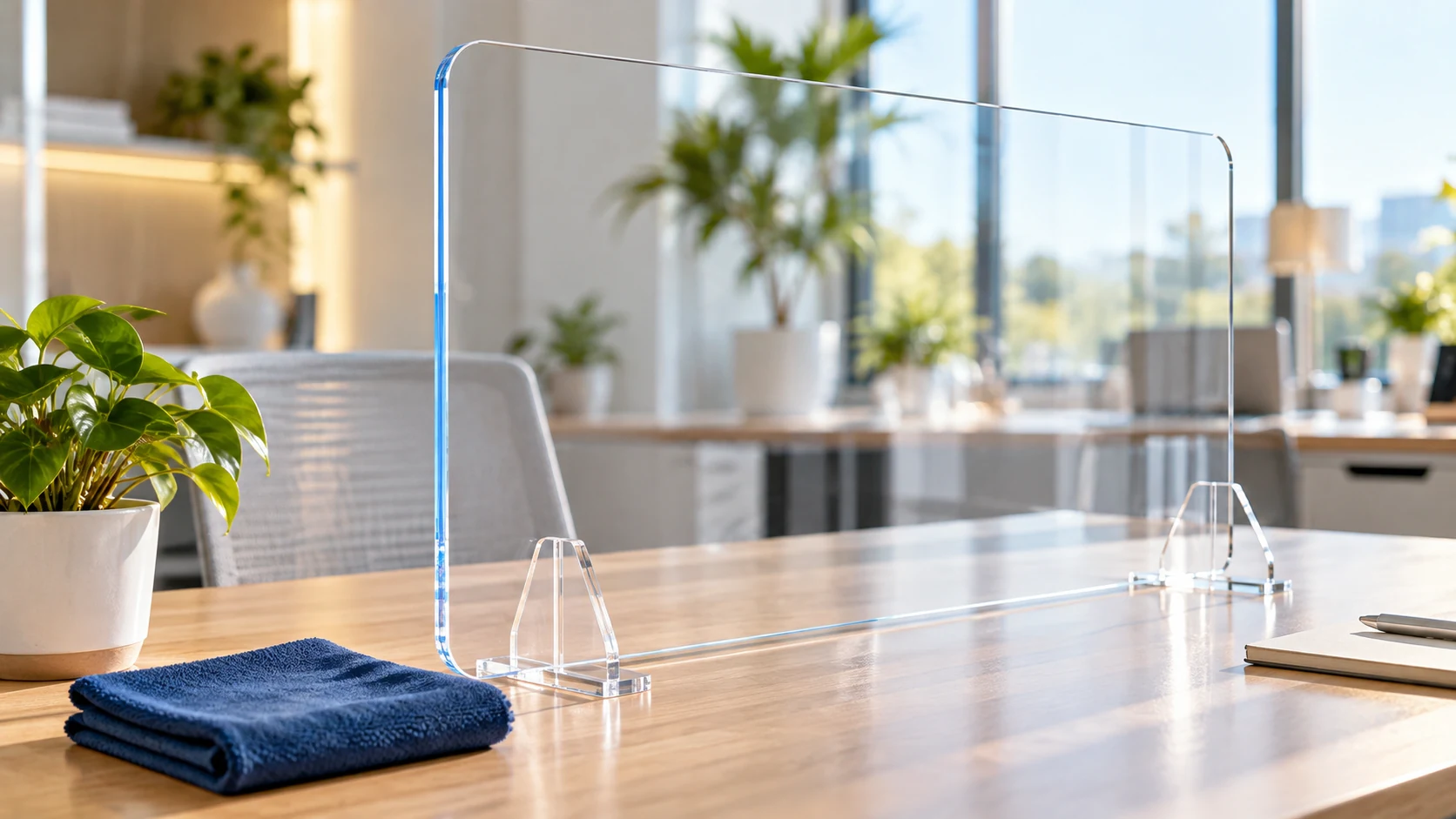
Clean confirmed acrylic partitions with the manufacturer's permitted mild-soap solution and a very soft, clean cloth, using light pressure. Remove residue with clean water and finish as directed. Do not use ordinary glass cleaner merely because the panel is transparent. Acrylic can scratch and can develop fine chemical cracks when exposed to unsuitable products.
Identify the clear material
Check the product information for acrylic, polycarbonate, coated acrylic or another plastic. These names are not interchangeable. Specialty coatings can change the permitted cleaning method, so the partition manufacturer's instructions take priority over a general acrylic guide. Keep the material label or invoice with the cleaning plan.
Check the mount before touching the panel. A loose clamp, cracked screw hole or unstable freestanding base needs repair. Do not flex a large screen to reach behind it. This routine covers accessible surfaces and ordinary fingerprints; removal of adhesives, scratches or unknown chemical splashes requires separate advice.
Supplies
- Multiple very soft, clean cloths or chamois approved for the acrylic
- Lukewarm water and the permitted mild detergent
- Clean rinse water and an absorbent cloth for the surrounding desk
- A separate container for used cloths so grit does not return to the panel
A low-pressure cleaning routine
1. Ask the workspace owner to move papers and electronics away from the partition. Protect the desk below without draping material over vents or cables. Leave the panel secured in its normal position unless its instructions provide a safe removal method.
2. Lift loose dust using the maker's damp-cleaning method. Avoid dragging a dry, gritty cloth across acrylic. Check both the panel and cloth as you work, and stop if you encounter hard particles that do not release gently.
3. Apply the mild solution with a clean soft cloth. Work in manageable areas with light, even pressure. Fold to a fresh cloth face frequently. Clean the reverse side separately so a fingerprint there is not mistaken for a mark on the face you are polishing.
4. Remove the loosened soil and detergent with clean water according to the care instructions. Keep liquid away from clamps, electrical equipment and gaps in the desk. Do not pour water over an installed partition.
5. Finish using the specified drying technique. Ordinary ACRYLITE guidance calls for gentle blotting rather than vigorous rubbing. Inspect the dry panel under angled light, and clean the base with a separate material-appropriate cloth before returning belongings.
What commonly damages acrylic
Avoid scouring pads, stiff brushes, paper products or cloths that the manufacturer does not permit. Window sprays, alcohol, acetone and other solvents can be incompatible with ordinary acrylic sheet. A product marketed as a disinfectant is not automatically appropriate for the plastic. If disinfection is required, match an approved product and its use directions to the exact acrylic grade and workplace requirement. Never mix cleaners.
Cloudiness versus removable residue
If a mild haze moves with the cloth, try a fresh permitted rinse pass. Fixed scratches, a milky patch or a network of tiny cracks may indicate damage. Stop rather than attempting a home sanding or power-polishing repair. A plastic fabricator or the partition supplier can advise whether repair or replacement is appropriate, especially near mounts.
Keep the clear surface clearer
Reserve a clean cloth supply for transparent plastics and make the material distinction obvious in the cleaning instructions. Inspect hand-contact areas and supports during routine care. JLV can discuss a material-aware office cleaning plan for Orange County, Chino and Ontario, California, at /contact/.