
Office cleaning
Blue Marks on Pale Reception Seats: When Dye Transfer May Be Permanent
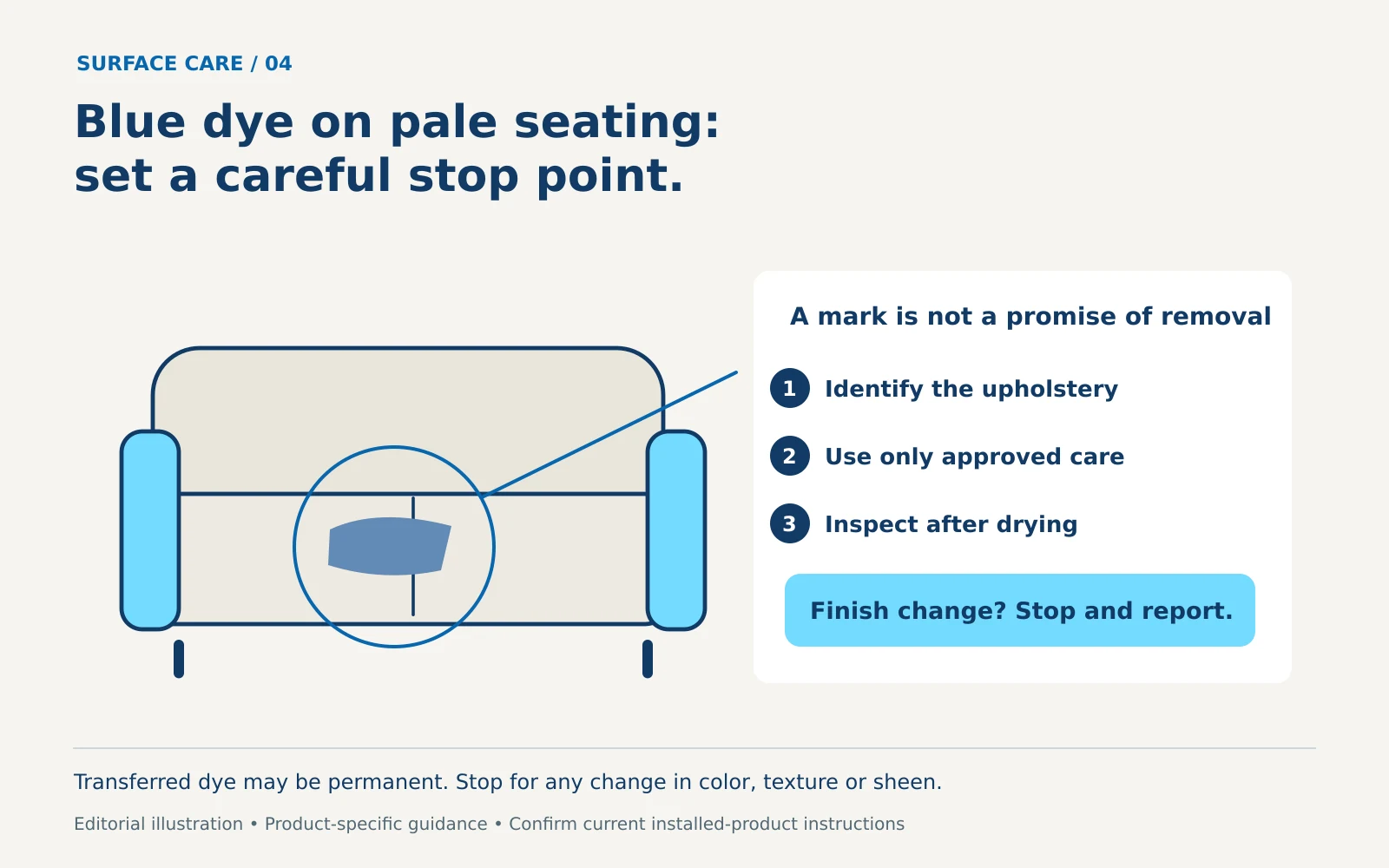
Blue marks on pale synthetic-leather reception seating may be clothing dye transfer, and complete removal is not always possible. Ultrafabrics warns that transferred dyes can be irreversible, including on its ink- and stain-resistant collections. Confirm the actual upholstery, start only with its approved care method and stop before a stubborn mark becomes a damaged finish. Ultrafabrics cleaning instructions
A stain-resistant description is useful purchasing information, but it does not tell a cleaning crew which chemical to use on an unidentified chair. The decision needs the collection name and the furniture maker's instructions.
Confirm what the seat is made from
Look for the furniture model, upholstery code and purchase specification. Check whether the chair has been reupholstered. Terms such as leather-look, performance upholstery and easy-clean do not identify a particular material or finish.
Keep genuine leather, vinyl and polyurethane upholstery separate in the cleaning record. A permission found for one product should not be transferred to another because both surfaces look smooth. If identification is unresolved, photograph the mark and ask the supplier for the correct guide before treating it.
Also record what happened, if known. Was a dark garment resting against the seat? Did the mark appear after a wet spill? Has anyone already used a wipe or stain remover? These observations help frame the inquiry, but color alone cannot prove the source of the stain. Avoid blaming a visitor or collecting identifying details that are unnecessary for care.
Begin with the confirmed routine
For products covered by the cited Ultrafabrics guide, the basic sequence is prompt spill removal, soap-and-water cleaning, thorough removal of cleaner residue with clean water and air drying. The guide also lists isopropyl alcohol for stubborn stains. Its public PDF is dated August 2021, so obtain current collection-specific approval before any solvent treatment. Ultrafabrics cleaning instructions
Before work starts, agree on the product, tool and treatment area. Use any inconspicuous test required by the applicable instructions, and inspect the result after the test area has dried. An unchanged test area is only a check on that proposed method; it is not permission to increase concentration or scrub harder.
Record the cleaner already used so the next person does not unknowingly repeat or combine treatments. Keep the seating unavailable during the process and until it is ready for normal use under its care directions.
Define the stop point in advance
A useful plan distinguishes improvement from complete removal. Photograph the mark under the same ordinary lighting before treatment and after drying. Compare the blue area with the surrounding seat, including texture and sheen.
Stop and report if:
- The surface becomes sticky, rough, unusually glossy or visibly lighter
- The seat's own color appears to transfer to the cloth
- Cracking, peeling or a damaged seam becomes apparent
- An approved treatment produces no useful improvement and the next step lacks approval
Do not keep cycling through household stain removers or add a protectant to hide the problem. Ultrafabrics cautions against unapproved cleaners, conditioners and protectants because they can affect performance and warranty coverage. Ultrafabrics cleaning instructions
Give the next reviewer a useful record
For a persistent mark, send the supplier or qualified upholstery-care provider the model and collection, photographs, approximate discovery date and exact treatment history. Ask whether further approved cleaning is appropriate and what result is realistic. A remaining blue shadow does not by itself establish that another cleaning visit will help.
For example, two ivory reception chairs may show similar marks, but one may be genuine leather and the other a replacement covered in polyurethane. They need separate identification and treatment decisions. A successful method on the replacement seat is not evidence that it is suitable for the original chair.
For future purchasing, ask the furniture supplier about clothing-dye-transfer limitations, approved maintenance and replacement-cover availability. Do not rely on a general stain-resistant claim as a promise of permanent appearance.
For broader seating preparation, see How to Clean Fabric Office Chairs.
Request a quote from JLV for office or post-construction cleaning in Orange County, Chino Hills, Chino, Ontario, Corona or Eastvale.