
Science
Bell's Telephone Patent and the Object Everyone Reaches For
Historical event:
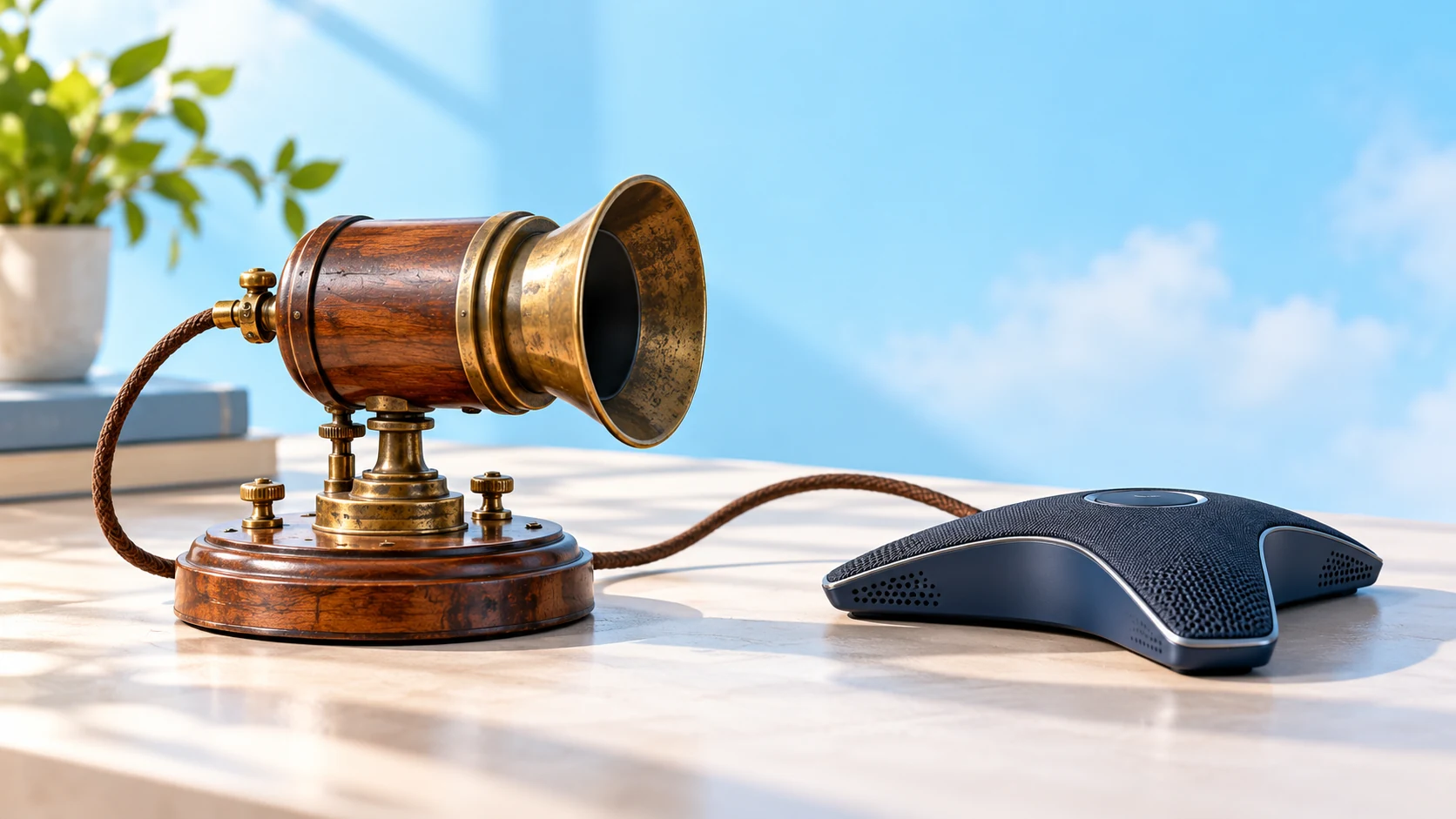
Before a telephone could interrupt an office meeting, it had to do something far more surprising: carry a recognizable voice to someone who was somewhere else.
On March 7 in 1876, Alexander Graham Bell received U.S. Patent 174,465, titled Improvement in Telegraphy. Three days later, on March 10, he made the well-known experimental call to Thomas Watson. The patent and the successful conversation belong to the same story, but they are separate milestones.
The Library of Congress's guide also records the dispute with Elisha Gray over priority. The telephone's history involved competing work and contested claims. A precise patent date gives us a solid point in that history without requiring a sweeping claim that one person supplied every part of the invention.
Bell's own later recollections bring the early experiments down to human scale. In a 1911 speech preserved by the Library of Congress, he remembered trying instruments with Watson in 1875 at Charles Williams's workshop in Boston. They exchanged positions as speaker and listener, trying to make sense of imperfect results.
Bell recalled the workshop's noise and the different advantages each man brought to speaking and hearing. These were experiments conducted by people dealing with actual rooms and actual sound. The elegant idea of transmitting speech still had to survive a practical test at the other end of the apparatus.
By June 1876, the telephone was being exhibited at the Centennial Exhibition in Philadelphia. Moving from an experiment to a public demonstration meant inviting other people to encounter the possibility themselves. A voice arriving through a device could become persuasive in a way that a description on paper could not.
It is worth lingering on the novelty. We are accustomed to equipment that lets a conversation ignore distance. In the early demonstrations, that everyday convenience was the startling part. The object on the table was changing what it meant for two people to be within speaking distance.
Over time, phones became part of ordinary work. A handset at reception or a conference unit in a meeting room can now be so familiar that it almost disappears from attention until someone needs it.
For a workplace cleaning discussion, identify shared handset exteriors and conference-phone controls as specific items. Ask which model is installed, who is responsible for it, and what the manufacturer permits before adding it to the scope.
Cisco's phone-cleaning guide, for example, warns against spraying liquid directly onto its devices and explains that liquid can reach sensitive electronics through gaps. That instruction is a reason to obtain the correct guide for the actual equipment, rather than borrow a method from another surface.
Keep any preparation or disconnection under the owner's authority. A scheduled meeting may depend on a device that looks idle. Recording the boundary gives both the office manager and the cleaning team a clearer starting point.
Let's get the everyday touchpoints into the conversation, including the ones that carry your conversations every day. Contact JLV to discuss office cleaning for your Chino business.