
Science
A Phonograph Patent and the Voice Inside the Grooves
Historical event:
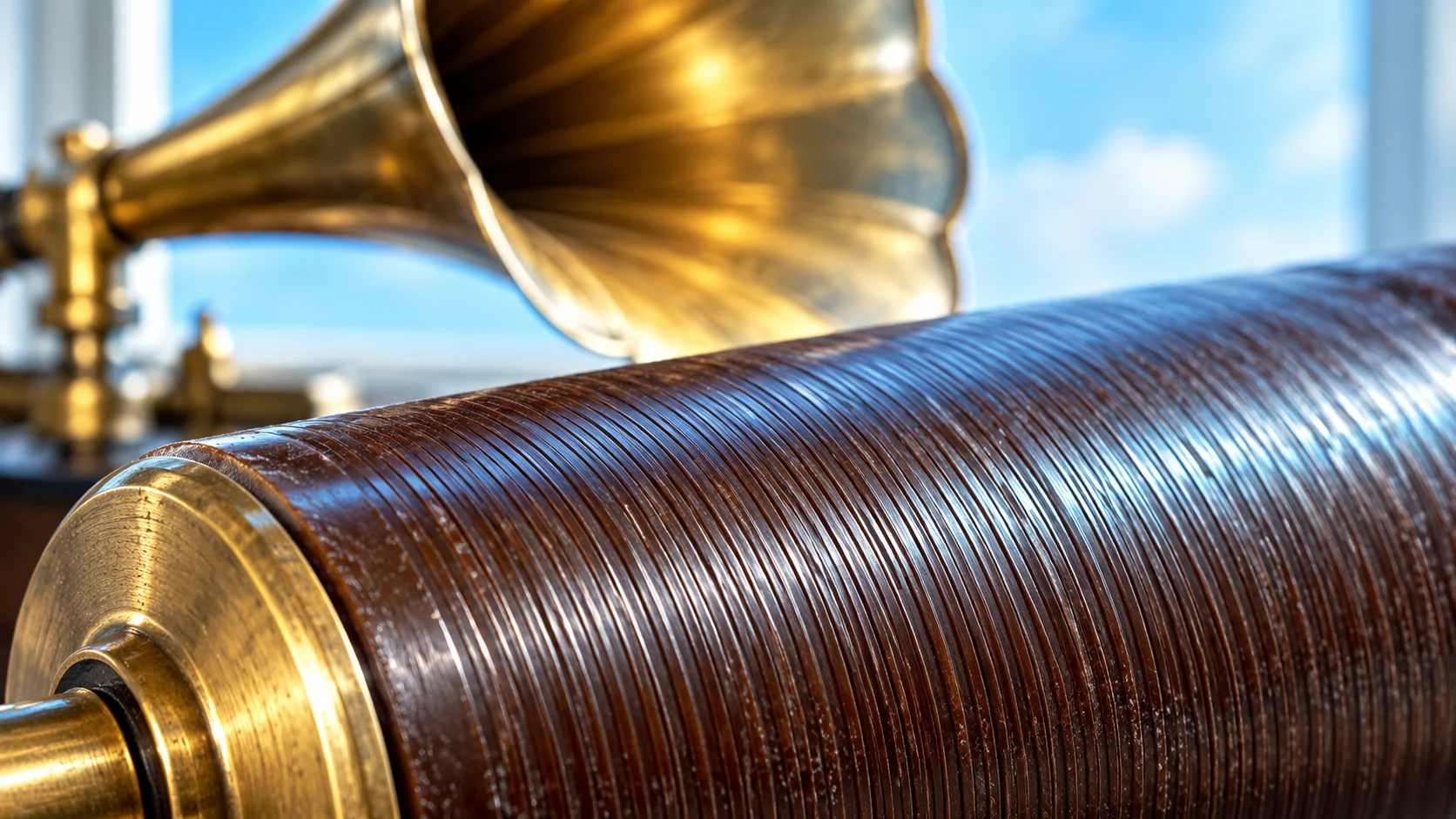
A piece of foil does not look as though it should remember a voice. Yet a changing pattern of tiny impressions could make a machine speak after the speaker had stopped.
On February 19 in 1878, Thomas Edison received U.S. Patent 200,521 for an improvement in phonograph or speaking machines. The patent followed experiments and public demonstrations in 1877. February marks the grant, rather than the instant sound recording was first imagined.
The patent describes a diaphragm responding to sound and a point making corresponding impressions in a moving material. Another point could follow the recorded impressions and pass their motion to a diaphragm, reproducing sound. A groove and the marks associated with it were doing real information work.
The surface carried the performance
For someone used to a digital audio file, that physical relationship is wonderfully direct. A voice creates movement. Movement leaves a pattern. The pattern can create movement again. The material's small details are central to the result.
The National Park Service traces Edison's approach through his earlier telegraph work. Telegraph messages could be recorded and replayed, sometimes at a changed speed. The idea of separating the time of a message's arrival from the time someone listened helped shape his thinking about recorded speech.
The experiments involved several possible materials and arrangements. Late in 1877, the team developed the familiar cylinder wrapped in tinfoil, built by mechanic John Kruesi. The Park Service distinguishes this recognizable machine from earlier laboratory attempts.
In December 1877, Edison and colleagues demonstrated the phonograph at Scientific American. Imagine hearing a small device return words after their speaker had fallen silent. Sound had left a usable trace.
The Park Service also credits Edouard-Léon Scott de Martinville with earlier sound recording and discusses Charles Cros’s playback proposals. Edison brought recording and machine playback together in a working phonograph. Those distinctions give the story a more accurate shape.
Small details can have a purpose
In a workplace, grooves, seams, and textured edges can be easy to overlook until someone tries to clean them. Some are ordinary finish details. Others belong to a device's function, an intentional texture, or a delicate feature that should remain untouched.
Identify the surface and its role before including it in routine work. For an ordinary fixture, agree on accessible areas and consult the relevant care instructions. For equipment openings or unfamiliar components, ask the responsible owner to define the boundary instead of forcing a tool into a gap.
For the business owner, the helpful question is what the detail is supposed to look like when cared for. A deliberate texture should still be a texture. An ordinary fixture should be recognizable, usable, and ready for the people returning to the room.
Give your workplace details the attention they deserve. For business and office cleaning in Orange County, talk with JLV about a scope that stays in the right groove.