
Science
Bakelite's Public Debut and the Many Lives of Plastic
Historical event:
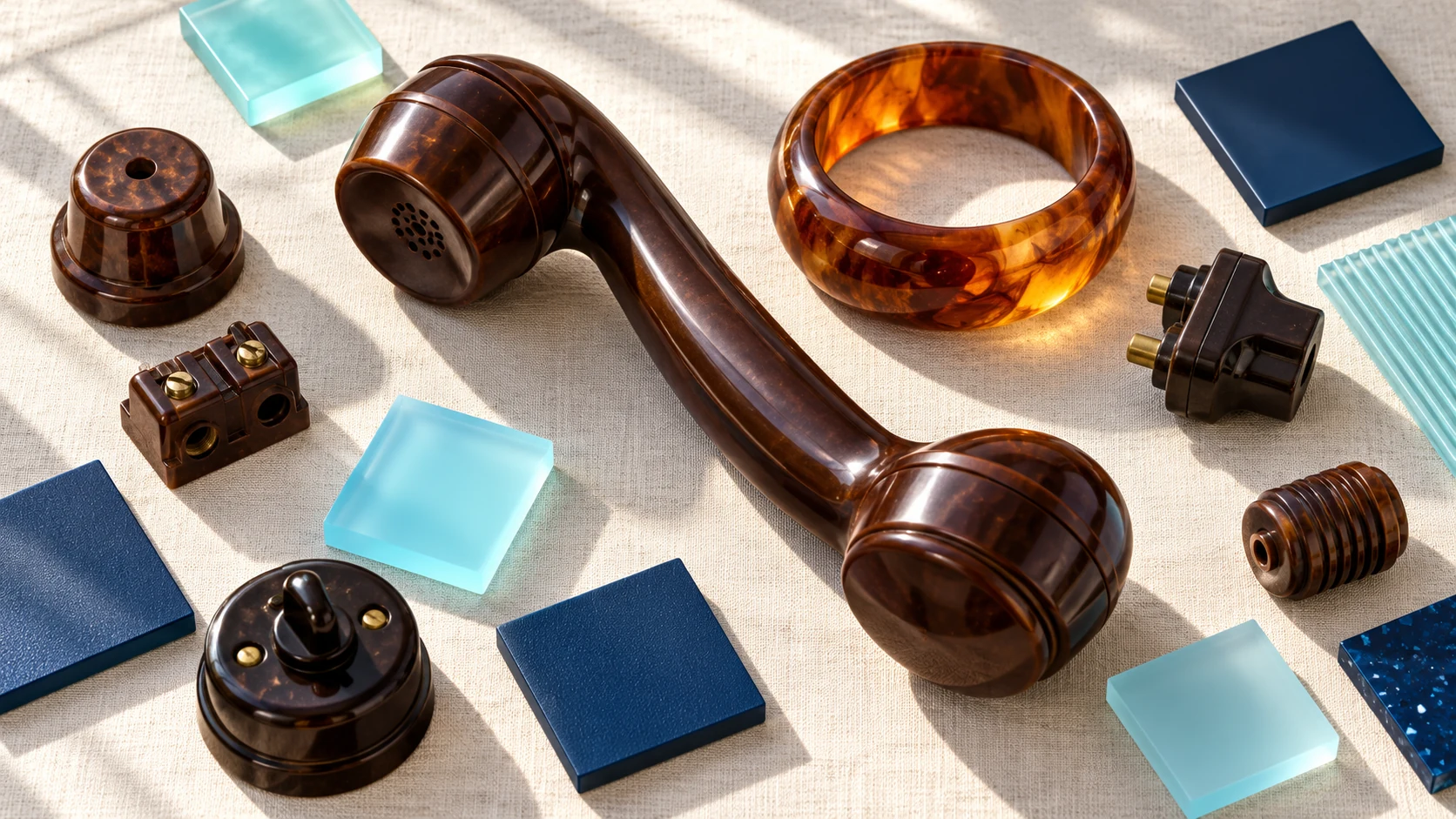
A new material's big introduction survives in a very small line of type. Leo Baekeland's original paper on Bakelite says it was presented to the New York section of the American Chemical Society on February 5, 1909. The manuscript was received on February 8. Reading both dates prevents a presentation from quietly becoming a different event.
Baekeland had developed a material based on phenol and formaldehyde that could be shaped during manufacture and then set into a hard form. The American Chemical Society places the breakthrough in the development of wholly synthetic plastics. Earlier materials such as celluloid had modified naturally occurring substances; Bakelite opened a different manufacturing possibility.
Its uses would spread through an increasingly electrified world. The ACS history describes applications in electrical components and later familiar molded goods. A material made in a laboratory could become something handled without a second thought. That journey from chemistry to everyday object is the real drama behind the name.
The molded objects included telephones, jewelry, and handles. Those very different destinations make the name feel less like one product and more like an invitation to designers.
The original paper's title is almost a miniature business plan: synthesis, constitution, and uses. Baekeland was discussing what he could make, what it was, and what it might do. Those are related questions, but none can substitute for the others.
One word, many materials
“Plastic” became such a convenient everyday category that it can make very different objects sound interchangeable. A rigid housing, a flexible part, and a transparent panel can all enter the same conversation under that one word. The category tells us something useful while leaving much unresolved.
Bakelite's history makes that easy to appreciate. The excitement came from its particular combination of properties and a way of being formed that opened particular uses. A different material would tell a different story.
In an office, that is a good reason to slow down at the identification stage. A clear partition or chair arm might look familiar, but a cleaning plan should be tied to the actual product and its care information. “It looks like plastic” is an observation, not a complete specification.
Choose one item whose instructions are missing. Find its maker or product record, ask the owner what information is available, and keep the relevant care guidance with the cleaning scope. This small administrative step is more useful than selecting a treatment because it worked on a vaguely similar object somewhere else.
It also gives the business owner a concrete way to communicate what matters. The special display, new partition, or favorite reception furniture no longer has to rely on an unwritten assumption.
Planning cleaning for your Chino office? Tell JLV about the materials in the room. Let's shape the plan around the actual surface.