
Human origins
Mary Leakey's Olduvai Find Was More Than a Skull
Historical event:
On July 17 in 1959, Mary Leakey spotted teeth protruding from a slope at Olduvai Gorge in what is now Tanzania. The find became OH 5, one of the best-known fossils in the study of human origins. It began as a glimpse of something significant within a much larger landscape.
The Leakey Foundation's account describes a discovery followed by the labor of recovering and reconstructing hundreds of skull fragments. A face that can now be recognized in a museum illustration did not arrive as a convenient, finished exhibit. The reconstruction depended on patient work after the exciting moment in the field.
The nearly complete cranium is about 1.8 million years old. It was originally named Zinjanthropus boisei; the Smithsonian currently classifies it as Paranthropus boisei. The familiar nickname Zinj preserves something of the older name, while the scientific classification reflects a changing understanding of its relationships.
A name is a starting point
The skull's large cheek teeth and pronounced areas for chewing-muscle attachment made it visually striking. Those features also invited a memorable popular nickname, Nutcracker Man. A nickname, however, is not a menu preserved for science. Researchers need other evidence to understand what an ancient species actually ate.
The Smithsonian's species account distinguishes anatomical capacity from direct evidence of habitual diet. That is a useful distinction: a body feature can suggest possibilities without describing every behavior. It is one reason a striking specimen should remain part of a wider investigation.
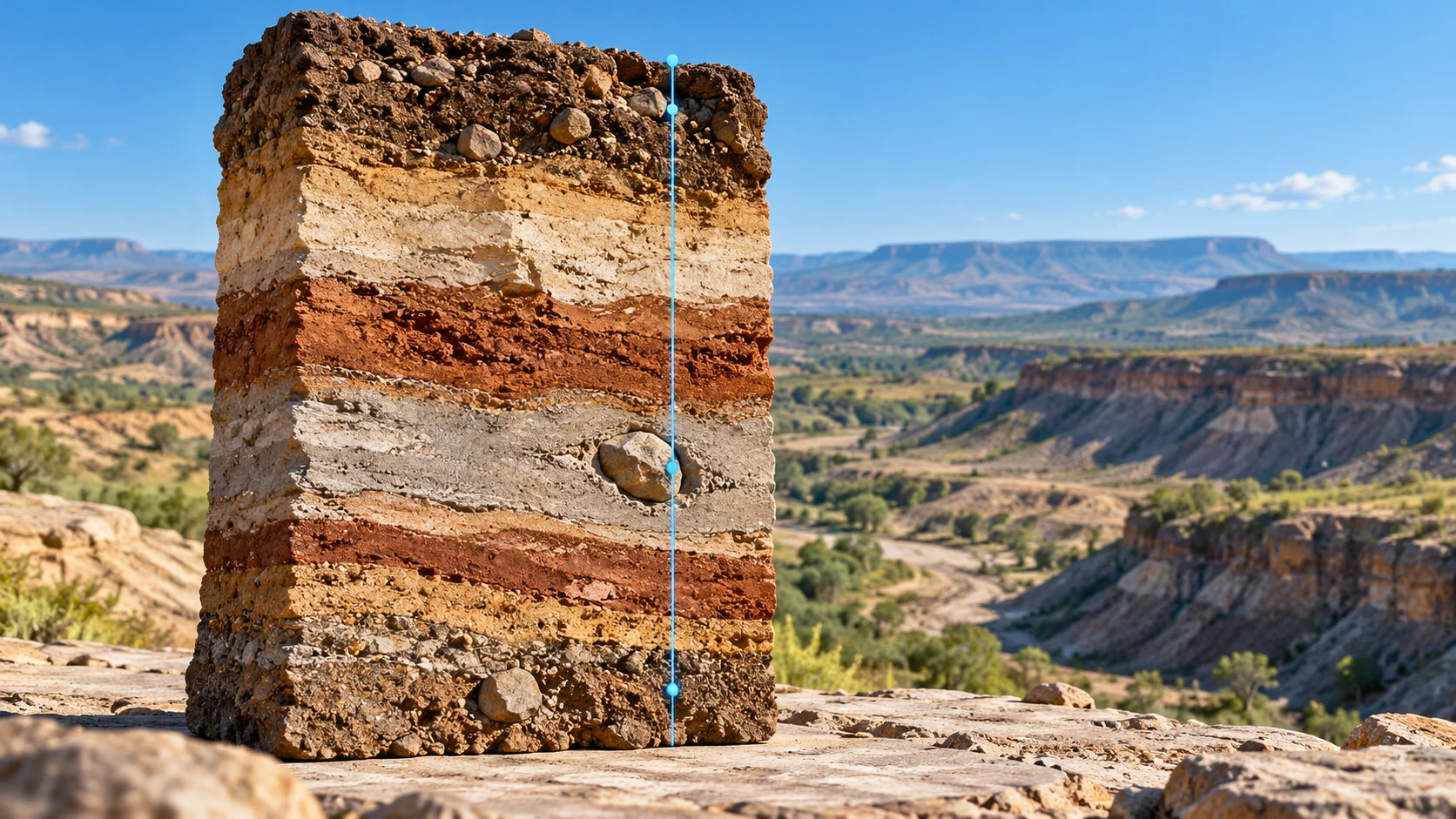
The geological setting matters in another way. Stratigraphy, the study of rock layers, helps researchers establish the sequence in which ancient materials accumulated. Knowing where a fossil occurs within that sequence is part of understanding its age and relationships to other finds. The surrounding material carries information that a cleaned-up portrait of the skull cannot show.
The scientific publication also belongs to a different date from the discovery. Louis Leakey's paper appeared in Nature on August 15, 1959. Keeping the discoverer, the publication, and the later classification distinct gives the history more room to breathe.
The result is a branching story, not a ladder. Paranthropus boisei is generally understood as belonging to a side branch of human evolution rather than the direct line to Homo sapiens. Its importance doesn't depend on making it everyone's ancestor. It helps reveal the diversity of ancient relatives.
Context before clearance
At a renovation handover, context can be as ordinary as a label on a box or a sample beside a newly finished wall. Those small clues help separate what is ready to leave from what someone still needs.
Before post-construction cleanup, ask the project lead to identify what belongs to unfinished work, what is intended for the completed space, and what has been approved for disposal. Unidentified parts, finish samples, labels, and paperwork should not become debris merely because they are sitting in the wrong-looking place.
An agreed keep-and-check area can make those questions easier to resolve. The goal is a clear removal boundary, set by the people who know the project, so cleaning supports the handover instead of creating a search for something important.
For an Orange County renovation, discuss post-construction cleaning with JLV and identify the conditions that are ready for it. Let's prepare the finished space with its context intact.