
Human origins
Lucy's Discovery Began With One Piece of Bone
Historical event:
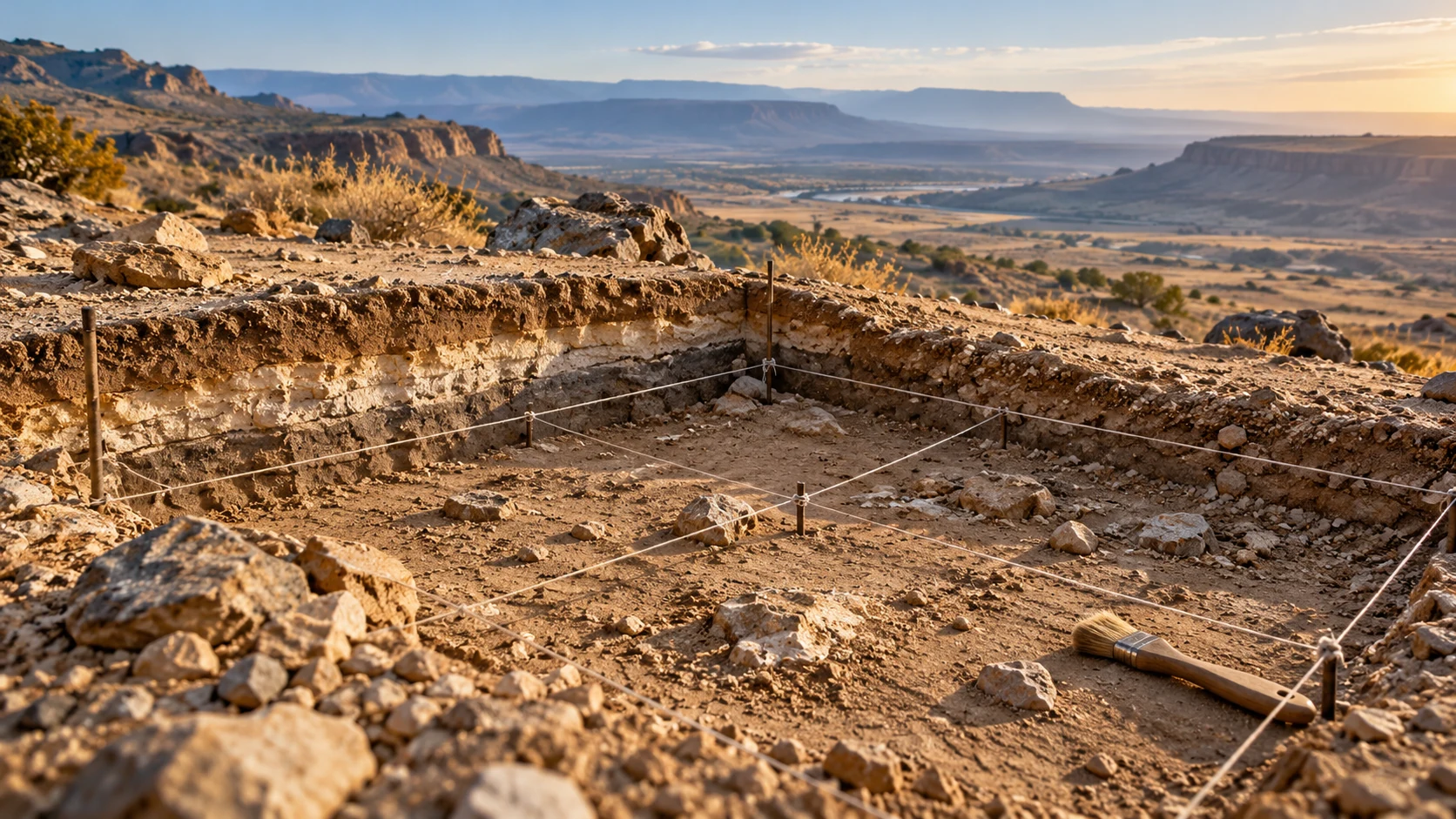
A small piece of forearm bone was the beginning. On November 24 in 1974, Donald Johanson and Tom Gray were walking through a gully at Hadar in Ethiopia when Johanson noticed the fragment. Looking more closely revealed other pieces nearby. The fossil now known as Lucy had entered the story.
The Institute of Human Origins describes what followed as many hours of excavation, screening, and sorting. The memorable moment of spotting a bone was only the opening scene. Recovering a partial skeleton required patient work, with each piece contributing to the larger question of what had been found.
The wider expedition mattered too. France's National Museum of Natural History identifies Maurice Taïeb, Johanson, and Yves Coppens as leaders of the international research effort. Lucy's fame shouldn't make the field team and the groundwork disappear behind a single discovery photograph.
A partial skeleton can tell a substantial story
Lucy belongs to Australopithecus afarensis and lived about 3.2 million years ago. A partial skeleton supplies relationships that an isolated tooth or fragment cannot: body proportions, the shapes of joints, and clues about movement.
The Smithsonian explains how the pelvis and inward-angled thigh bones support the conclusion that Lucy walked on two legs. Other aspects of the upper body inform discussion of climbing. The fossils invite a careful account of an ancient species with its own combination of features, rather than a cartoon march from something supposedly inferior to a modern person.
There are also limits. A famous nickname doesn't turn Lucy into the first human, identify her as the proven direct ancestor of every person, or reveal an entire life in detail. Questions about behavior and evolutionary relationships require evidence beyond the popularity of one fossil.
That is part of what makes the discovery enduring. A substantial find can answer important questions while creating new ones. Researchers keep comparing, measuring, and arguing about the evidence, rather than treating a display reconstruction as the final word.
Even the display has a distinction worth noticing. The Institute of Human Origins explains that casts of the fossils can be used in teaching and exhibits, while the original remains are cared for in Ethiopia. A replica can be tremendously useful when its relationship to the original is made clear.
Pause when the object is unfamiliar
An unexpected detail can be a useful place to begin an office walkthrough, too. It might raise a small question that saves someone a much larger search later.
A loose item on a work surface may be an active project component. An unusual mark may already be documented, or may concern a finish the owner wants handled differently. Record the question and ask the responsible person before moving important materials or trying an aggressive response. The discovery here may be as modest as learning that a scrap-looking sample is the one sample someone still needs.
For a business owner, a walkthrough that begins with understanding the space can make the eventual scope clearer. It gives context to the visible details and keeps assumptions from becoming instructions.
Start your Chino office cleaning conversation with a thoughtful walkthrough and JLV. Sometimes the most useful beginning is noticing the detail that deserves a question.