
Hiring & service planning
Cleaning During an Occupied Office Renovation
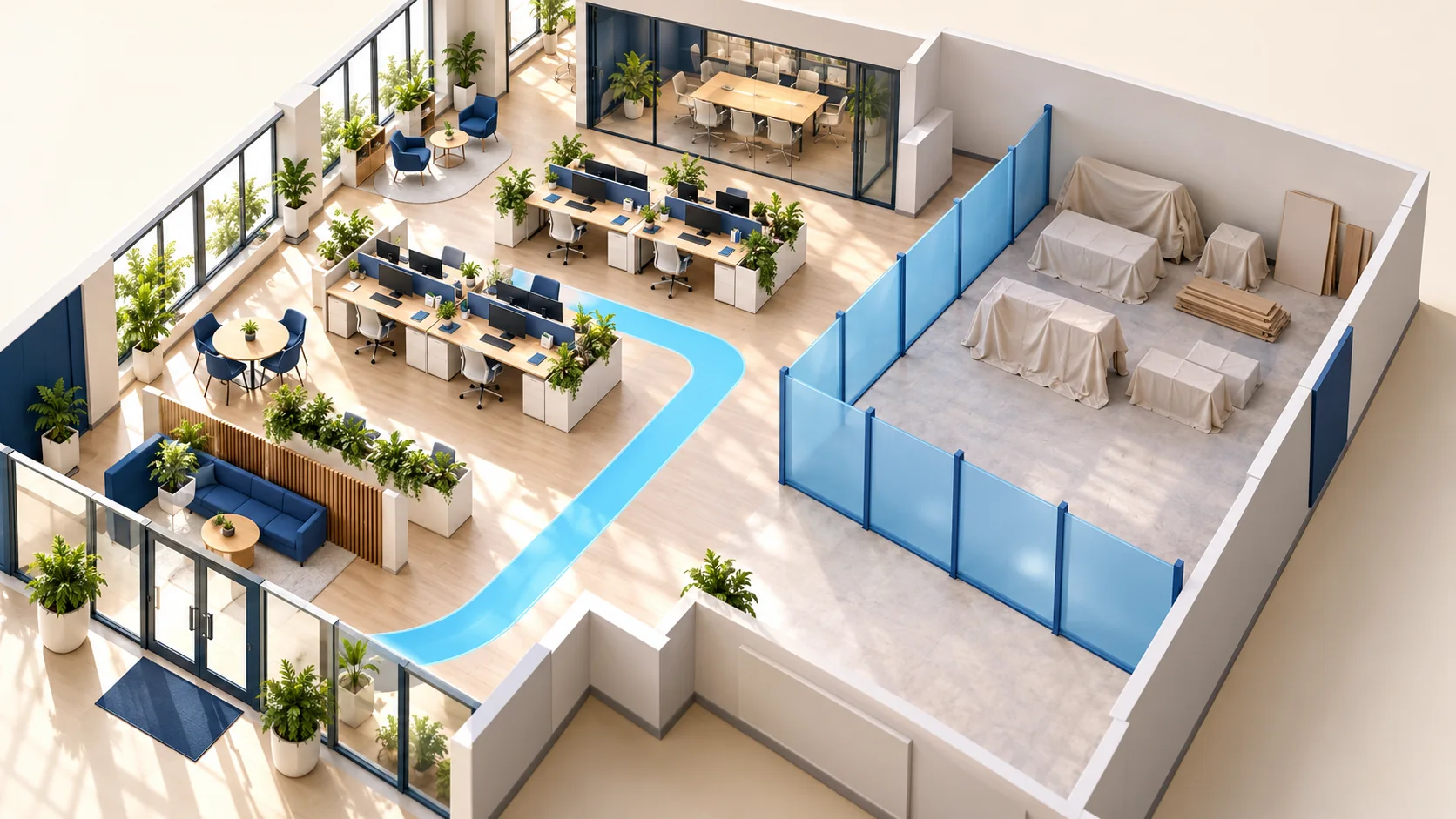
When an office stays open during renovation, the cleaning plan changes with the work zones. Staff may use one wing while another is under construction, and delivery routes may cross an entrance that was cleaned earlier. A single instruction to “keep the office clean” does not explain how the contractor, office team and cleaning provider should coordinate.
Build a zone-based plan before work begins, then update it as rooms change status. The project team remains responsible for construction hazards and appropriate controls. Ordinary office cleaning should only cover the areas and conditions the provider has agreed to handle.
Mark three kinds of space
Use a simple annotated floor plan or room list to distinguish occupied office areas, active construction areas and completed rooms awaiting release. Add the approved contractor and delivery routes. Marking the routes makes it easier to see where routine office cleaning may be affected by traffic from the project.
- Occupied areas: rooms currently available for normal business use.
- Active work areas: construction access and cleanup controlled by the project team.
- Awaiting release: completed work that still needs checks, cleaning or approval before its next use.
These are coordination labels, not safety certifications. A color on a plan does not establish that a room is safe to enter. Identify the person authorized to approve access and communicate a change. Keep the current version available to the people scheduling work, rather than relying on last week’s floor plan.
Set boundaries for routine and construction cleaning
Write separate tasks for the occupied area and the project area. The office provider may maintain agreed restrooms, reception surfaces and office floors while construction cleanup remains with the contractor or a separately scoped provider. Decide who removes tracked material from shared routes and who checks those routes after deliveries.
Do not send routine cleaning personnel into an active work area simply because visible dust appears there. Ask the project lead to identify the material, any known hazards and the approved approach first. Unfamiliar dust or residue should trigger clarification rather than an improvised cleanup.
California’s construction silica standard restricts dry sweeping and dry brushing where they could contribute to exposure to respirable crystalline silica, subject to specified exceptions. Its application depends on the work and conditions. The employer and project safety team should establish appropriate controls; this planning guide is not a hazard assessment or compliance plan.
Coordinate containment and ventilation with the project team
EPA’s office indoor-air guidance recommends coordinating renovation with building management and contractors, including isolation of the work area and consideration of work timing. Have the responsible construction and building professionals determine the containment and ventilation arrangements. Cleaning staff should not adjust HVAC systems, move barriers or remove protective coverings without authorization.
If dust appears outside the agreed boundary, report the location and time to the project lead. Repeated cleaning alone may not address the source. Ask whether work, routes or controls need to change before continuing affected tasks. Keep required exits usable and have the building team review any proposed route changes.
Use a short daily coordination note
A practical update can be brief as long as it identifies what changed. Send it before the cleaning window, especially when trades finish early, overrun or move to a different room. Give each provider the operational information it needs without distributing access credentials or sensitive tenant details.
- Rooms open for the agreed cleaning work today.
- Rooms closed or subject to escort.
- Dust-generating work and deliveries that affect shared routes.
- New finishes with cleaning restrictions supplied by the installer.
- Waste and retained-material boundaries.
- Person who can approve a change and the next update time.
For example, if a flooring installer returns to Conference Room B, change that room’s status and confirm any effect on the adjoining corridor. The cleaner should not have to discover the change after equipment is already set up.
Release rooms deliberately and track return work
Before a completed room joins the normal cleaning route, have the project lead confirm that it is ready for the agreed cleaning tasks. Obtain the relevant surface-care instructions and record remaining construction items. Define who approves its return to office use; a visual clean does not establish indoor-air clearance or completion of construction inspections.
Track any later trade visit that affects a cleaned area. Note which rooms need touch-up, why the work is needed and who will authorize it. Use the existing final-handoff checklist when the project reaches that stage, rather than treating every interim visit as a final clean.
For a phased commercial renovation in Orange County, Chino Hills, Chino, Ontario, Corona or Eastvale, send JLV the project location, occupied areas, current work stage and proposed cleaning zones. Discuss the scope and site conditions before scheduling any office or post-construction cleaning.