
On this day
New York's First Subway Ride and the Surfaces Everyone Shares
Historical event:
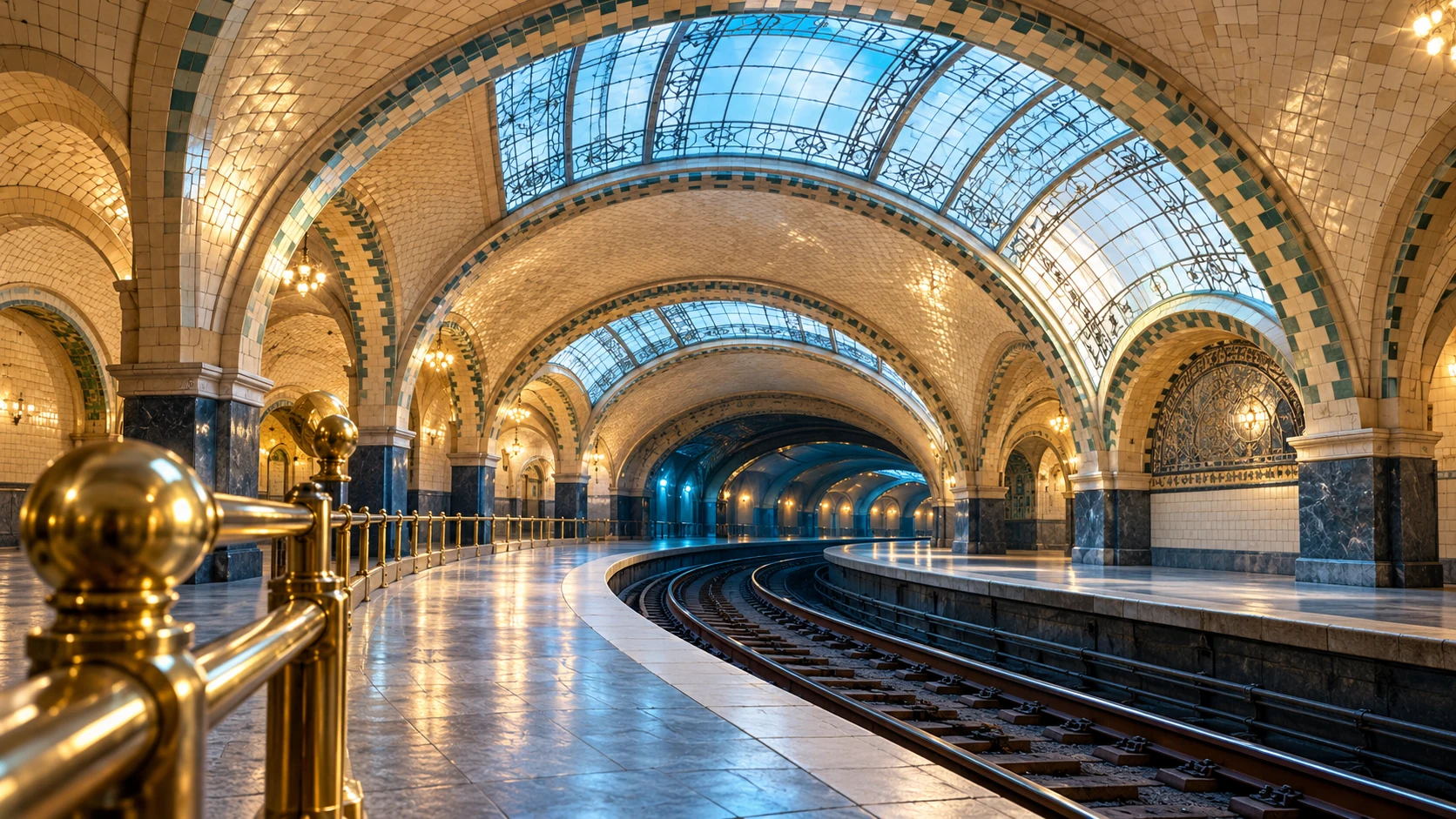
On October 27, 1904, New York acquired a new way to move beneath itself. The Interborough Rapid Transit subway opened with 28 stations along 9.1 miles of track. A journey that began at City Hall could carry passengers through a connected underground route toward 145th Street. A vast city suddenly had a new daily habit to learn.
The starting point made an unusually elegant introduction to underground travel. City Hall station had chandeliers, leaded skylights, sweeping curves, and vaulted tile ceilings. The Transit Museum credits architects George Heins and Christopher LaFarge with the station and Rafael Guastavino with its distinctive tiled ceilings. Descending below the street did not mean leaving architectural ambition behind.
That pairing is what makes the opening so appealing: a piece of practical infrastructure arrived with a sense of occasion. The route offered speed and connection; the station gave passengers something worth looking up at. A journey could be efficient and still contain a memorable room.
The New York Transit Museum's account traces that original line beneath Park Avenue South, across 42nd Street, and up Broadway. Read it as a route rather than a collection of station names and the achievement becomes easier to picture: separate destinations were being joined into one usable experience.
A railway needs tunnels and trains, of course. For the person making a first trip, it also needs understandable entrances, places to wait, and a clear sense of where to go next. Those modest encounters are how an enormous system becomes something a person can actually use.
The museum's opening-era collection includes station views and a City Hall ticket booth. They invite a different kind of sightseeing. Look past the grand story of engineering and notice the physical places where people met the system. The journey happened one small interaction at a time.
City Hall station was decommissioned in 1945, while the subway system continued evolving around it. Its short working life as a passenger station gives the 1904 opening another layer. A place can be central to a beginning without remaining central to every chapter that follows. The details preserve a particular idea of what the new system might feel like.
The office has its own stops
Try the same exercise at work. Follow the route of someone arriving for a meeting: entrance, reception, waiting seat, meeting-room door, table, presentation controls. The visitor may travel only a few dozen steps. The number of shared surfaces can still be surprisingly long.
Make one small inventory of a single route before trying to map the whole building. List the objects people use, identify anything that needs the owner's instructions, and mark what belongs in the agreed cleaning scope. This is a planning exercise, so there is no need to guess at a chemical, a frequency, or a treatment for an unfamiliar finish.
Then ask which stop on that route is easiest to overlook. The meeting-room handle may get attention while the ledge beside the waiting seats disappears into the background. Naming one neglected detail makes the next cleaning discussion manageable and gives the owner a specific result to review.
A smoother everyday journey
Which stops matter most in your Ontario workday? Talk with JLV about business and office cleaning, from the first door to the meeting room. Let's put the overlooked details on the map.