
On this day
The Guggenheim's Spiral and a Different Way to Walk a Room
Historical event:
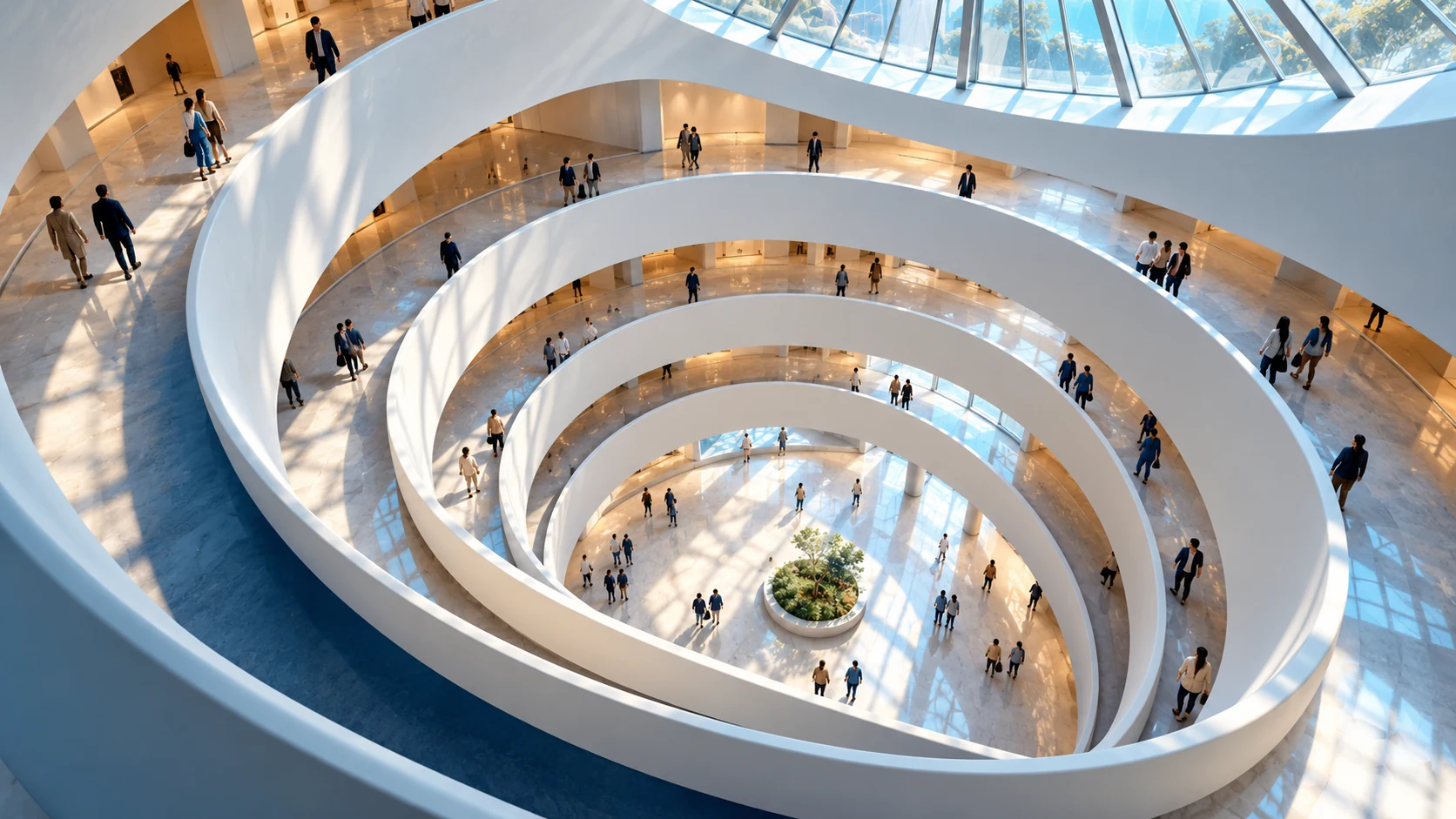
A museum visit often sounds like a series of rooms: enter one, cross it, find the next. The Solomon R. Guggenheim Museum's Frank Lloyd Wright building offers a different proposition. Follow a curve. Keep moving. Let the building change the view while you go.
The museum opened to the public on October 21, 1959. Its spiral ramp and central space made circulation part of the architectural experience, rather than something hidden between galleries. There is art to see, but there is also a building continually introducing itself.
The commission had arrived in 1943. Sixteen years separated that decision from the opening, with changing designs, property acquisition, and rising construction costs among the complications described in the museum history reproduced by Smithsonian Associates. Wright produced hundreds of drawings during the process. The building that feels so complete as a visual idea came through a long period of revision.
Wright died before the museum opened. That gives the first public day a poignant edge: people were entering a space he had imagined and worked over, while its daily life as a museum was just beginning. The finished architecture would now meet visitors, collections, and curators with opinions of their own.
Wright's foundation describes the design as a departure from conventional museum space, with a ramp around an open central volume. The relationship between looking and walking becomes unusually visible. A route is no longer just the way to reach the display. It helps frame the display.
An archival lecture given at the museum in 1961 adds a wonderfully human detail. Architect and curator Arthur Drexler discussed the building's merits alongside complaints about noise, crowds, and how its spaces worked. Even a landmark invites practical questions once people begin using it. Great design still has to host an ordinary day.
Walk past your first impression
That is a useful invitation for an office owner. A room viewed from its doorway can seem complete. Walk along the wall, turn around, and the view changes. The back of the door appears. A return wall emerges from behind a cabinet. A chair base becomes visible beneath the table.
Those details are not necessarily hidden on purpose. They simply do not all face the person entering the room. A review that relies on one glance gives the architecture too much control over what gets noticed.
Try a continuous inspection route through one room. Begin at the door, follow the perimeter where access is clear, look back from the far side, and finish where you started. Keep the exercise observational. Note areas that are inaccessible, objects that should stay in place, and surfaces that belong in the cleaning scope.
Take the long look
You do not need a spiral museum to benefit from changing your point of view. One deliberate circuit can turn a broad impression into a useful set of observations.
Bring JLV into the conversation about cleaning your Ontario workspace. A thoughtful walkthrough gives the overlooked corners a turn in the spotlight.