
Science
The 1676 Letter That Made a Drop of Water Remarkable
Historical event:
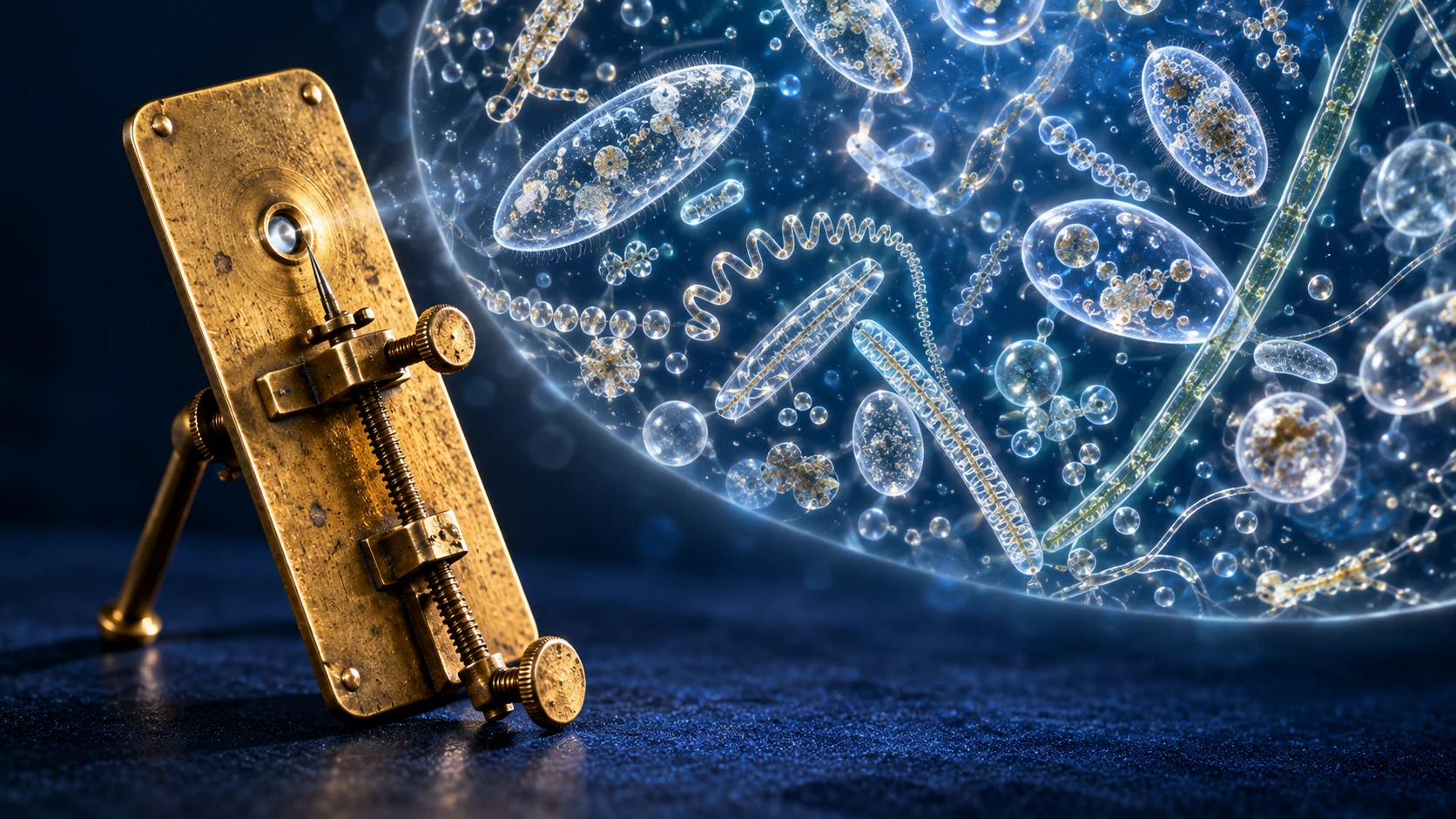
On October 9 in 1676, Antoni van Leeuwenhoek dated a letter to Henry Oldenburg, secretary of the Royal Society. Its subject could scarcely have looked more ordinary from across the room: water. Under close observation, it held an astonishing amount to report.
The surviving letter describes tiny living creatures in several kinds of water and in spice infusions. It is a record of repeated looking, not a single dramatic glance. The published collection preserves an eighteen-page manuscript, with small figures in the margins, and an English translation appeared in part the following year.
One passage follows rainwater across several days. Leeuwenhoek records when he collected it, how he kept it, and how the tiny organisms he observed changed in number. Elsewhere, he describes a moment when he thought he saw living things but couldn't see them clearly enough to trust the observation.
That hesitation may be the most appealing detail in the whole story. A researcher could be amazed and cautious at the same time.
Small observations, carefully made
The letter's date is the date of the communication, not proof that all the observations happened on October 9. Its day-by-day entries make that plain. The history becomes richer when those moments are kept separate: collecting a sample, examining it, looking again, and finally writing to someone who can question the account.
It also helps to keep the discovery in its proper scale. Seeing microscopic life was an extraordinary development. This letter alone did not establish the full modern understanding of infection or tell people how to disinfect a workplace. Those questions required other evidence and later work.
What the letter does offer is a particularly vivid encounter with the limits of unaided sight. A familiar substance can contain things you cannot resolve by looking casually. The instrument changes the question, and repeated observations change the confidence of the answer.
That is a good reason to be precise when we use the word clean.
EPA distinguishes cleaning, which removes dirt and organic matter, from disinfecting. A surface can look orderly and free of visible soil without that appearance demonstrating a disinfecting result. Conversely, the decision to disinfect belongs to the actual requirements of the space and the agreed work, not to a dramatic microscope story.
If disinfection is included in an office's agreed scope, confirm the product and the use directions for the intended surface. EPA emphasizes the label's contact time, including keeping the surface visibly wet for that required period. Material compatibility and the product's approved use also need to be checked. A quick glance at a finished surface cannot replace those instructions.
What does your Orange County office need from its next cleaning visit? Bring those priorities to JLV. Leeuwenhoek made ordinary water worth a second look; your everyday workspace deserves a thoughtful one too.