
Pop culture
Jurassic Park: A Convincing Picture Still Needs Evidence
Historical event:
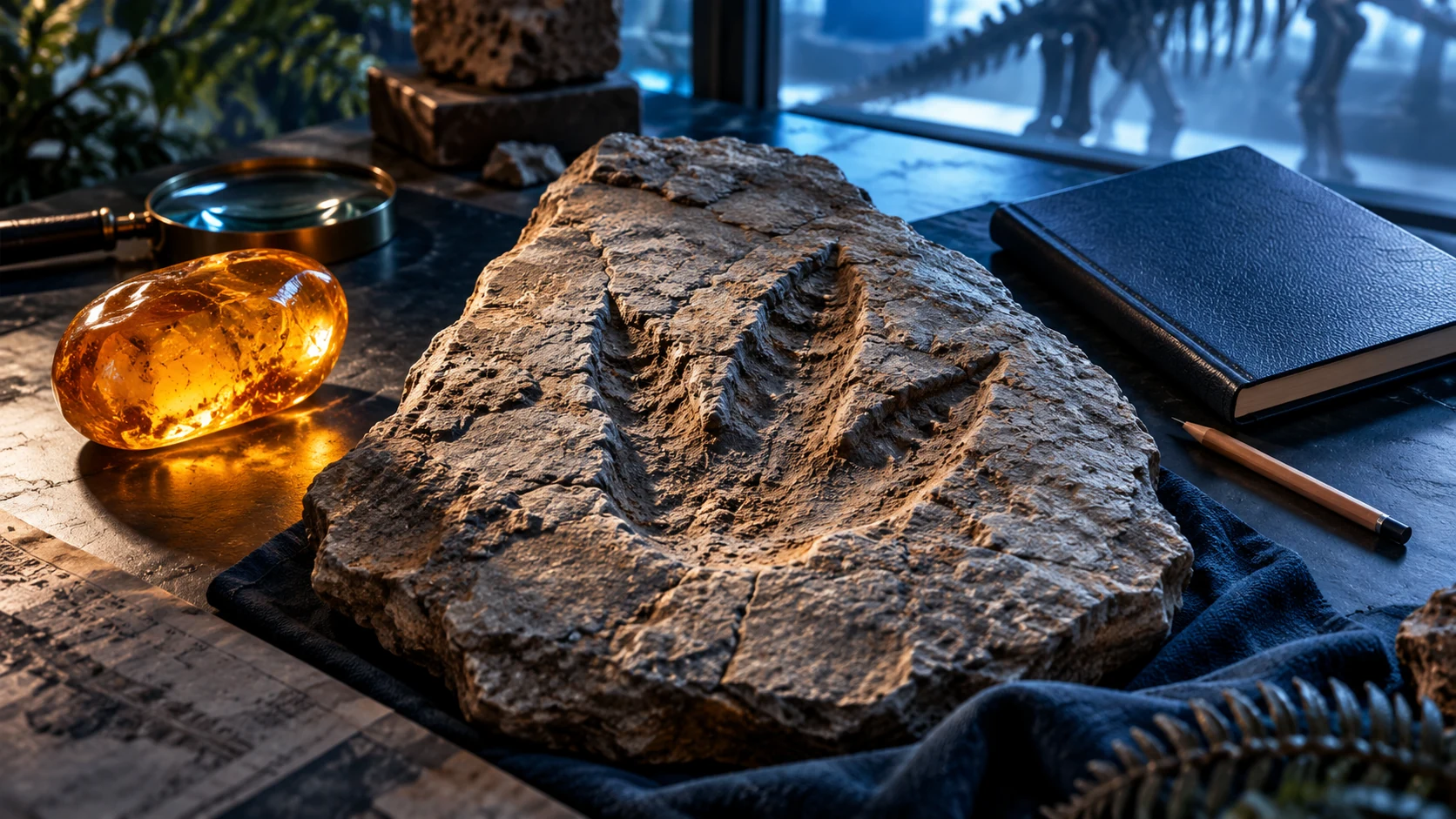
On June 11 in 1993, Jurassic Park opened in U.S. theaters and gave audiences a very persuasive reason to forget, briefly, that they were watching effects. The creatures had weight, movement, and presence. The filmmaking was real; the dinosaur-resurrection project belonged to fiction.
Steven Spielberg's film adapted Michael Crichton's novel with a screenplay credited to Crichton and David Koepp. Amblin's production history describes a shift away from an initial go-motion approach toward a combination of computer-generated dinosaurs and full-scale animatronic creations from Stan Winston's team. Different tools supported one convincing illusion.
That achievement deserves its own admiration. A movie doesn't need to be an instruction manual for its imaginary science to make an extraordinary experience.
Amber is not a ready-made blueprint
The Natural History Museum explains the difficulty with the film's premise. An insect preserved in amber can retain an impressive outward form without preserving usable dinosaur blood and DNA inside it. The existence of a fossil, or even evidence interpreted as preserved soft tissue, does not by itself establish that an intact genetic blueprint is available.
The distinction can be easy to miss because the image is so appealing. An ancient insect sits visibly inside a golden piece of amber. The mind wants to complete the story: if the insect is there, perhaps everything it once contained must be there too. Science has to test each of those steps separately.
Real dinosaur research has plenty of compelling evidence of its own. The museum describes how bones, teeth, footprints, and eggs can help researchers investigate ancient animals. Each kind of evidence answers certain questions while leaving others open. You don't need a living Tyrannosaurus in a visitor enclosure to learn something important.
The cinematic result and the scientific explanation can therefore be enjoyed on their own terms. One makes an imagined encounter visible. The other asks what the surviving evidence supports.
Give the before-and-after a fair question
That same habit is useful when reviewing a cleaning claim. A photograph may show a visible difference in a surface. It cannot, by itself, demonstrate disinfection, air quality, or a health outcome. Those are different claims with different evidence requirements.
EPA distinguishes cleaning, which removes dirt and organic matter, from disinfecting, which uses registered products to kill specified microorganisms under the conditions of the label. A glossy finish is not a substitute for those directions.
When discussing an office cleaning result, ask a simple question: what exactly are we evaluating? It might be visible dust on an agreed surface, a particular residue, or the overall presentation of an entrance. Naming the result keeps the conversation useful and prevents an attractive image from carrying more meaning than it should.
Bring JLV your real-world office cleaning priorities in Orange County, and let's discuss a clear scope grounded in the space. Save the spectacular leaps of imagination for movie night.