
Science
Faraday's Small Pulse Opened a Much Bigger Story
Historical event:
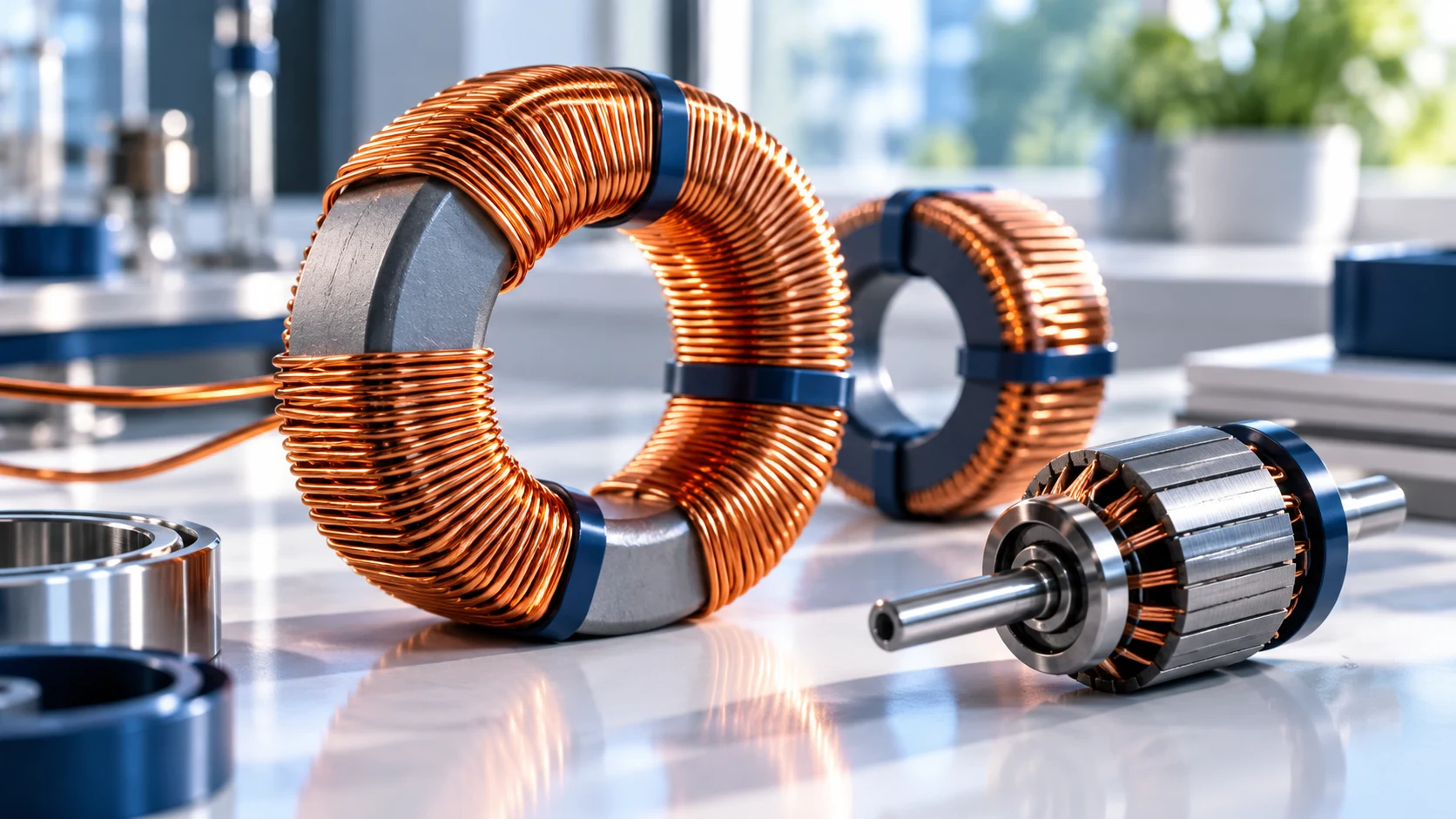
The important result lasted only a moment. On August 29 in 1831, Michael Faraday used an iron ring with coils of wire to induce a brief current in a second coil. The apparatus was small. The idea behind the result would travel a very long way.
The Royal Institution, where Faraday worked, preserves the ring-coil apparatus. Its materials are almost disarmingly ordinary: copper wire, cotton, and an iron ring. Faraday had to wind and insulate the coils carefully. The object makes a useful correction to the image of discovery as a thought that arrives fully formed and immediately becomes a machine.
There was hands-on preparation before there was a result worth recording.
The importance of a changing condition
Faraday was investigating how magnetism could produce electricity. The ring experiment showed a brief induced current rather than the steady output someone might casually imagine. That difference mattered. The behavior of the apparatus was the clue, and it had to be interpreted accurately.
Later in 1831, another experiment used a magnet moving through a stationary coil connected to a galvanometer, an instrument that detects current. The Royal Institution's surviving apparatus records that next part of the investigation. Movement and magnetism could produce a detectable electrical effect.
The institution links Faraday's 1831 work to the development of generators and transformers. His earlier work on electromagnetic rotation belonged to a different stage of the story. It would be misleading to fold every modern motor into the single August experiment, as though the whole electrical age had arrived in one afternoon.
The more interesting story is a sequence: construct an apparatus, notice what it actually does, change the arrangement, and test another question. The materials look simple because the difficulty lay partly in finding the useful relationship between them.
A modern powered machine hides most of that relationship inside its housing. To the person using it, the visible action may begin with a switch. The suitability of the machine for the work still depends on much more than whether it turns on.
Put the task ahead of the motor
When discussing powered cleaning equipment for a workplace, start with the surface and the work area. Identify the manufacturer's instructions, the accessible route, and any owner restrictions. Power arrangements and the timing of work in occupied spaces should be agreed with the responsible person before the plan is treated as settled.
Leave unfamiliar electrical conditions to someone qualified to assess them, and use equipment only as its instructions allow. The useful choice starts with the job: a narrow route, a particular finish, or a room that must be available again for the next appointment.
For an Ontario business owner, the useful goal is clarity about what will be done and where. Talk with JLV about office cleaning or post-construction cleanup for the work your space needs. Get the details connected before the job begins.