
Glass & window cleaning
How to Clean Window Tracks
The quick answer
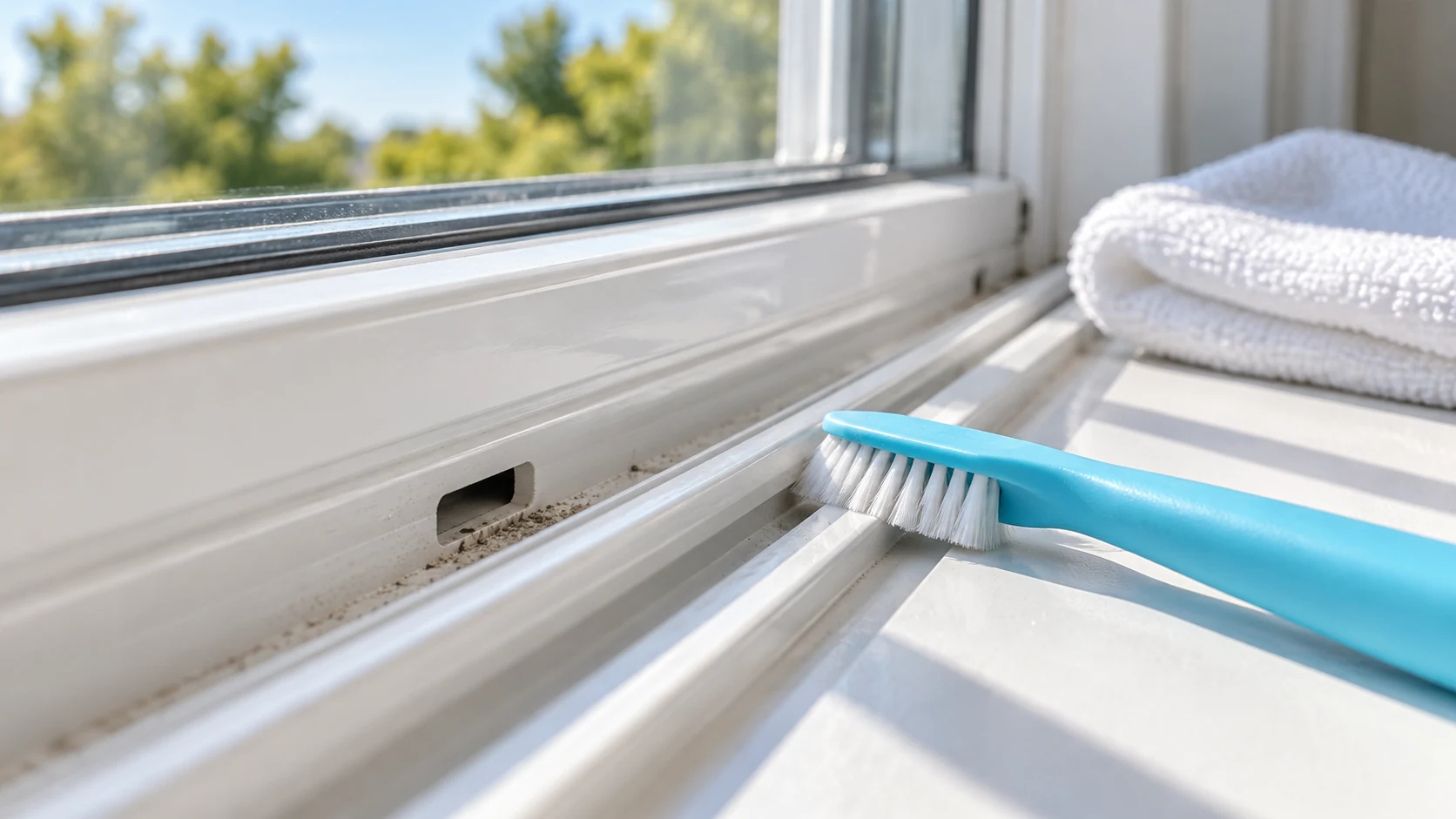
Remove loose dirt from a window track before adding moisture. Use a gentle vacuum attachment and soft brush, then wipe the accessible channel with a lightly damp cloth and dry it. Keep drainage openings clear, but never drill, enlarge or seal them. A track is part of the window assembly, not a small gutter to flush with a jug of water.
Know what you are cleaning
Look up the window model if possible. Sliding and hung windows have different rails, balances, weatherstripping and drainage paths. Some sill channels are designed to collect rain temporarily before draining. Persistent pooling, interior leaks or a sash that will not move normally need assessment beyond wiping.
This routine is for ordinary household or office dust. Stop before disturbing unknown renovation dust, flaking old paint, extensive growth or sharp fragments. Keep fingers clear of moving parts and do not remove the sash, balances or hardware unless the manufacturer's instructions specifically cover that procedure and you can perform it safely.
Useful supplies
- Vacuum with a clean, soft brush or suitable crevice attachment
- Soft detailing brush and several lint-free cloths
- Mild cleaner approved for the frame material and finish
- Small container of clean water and a dry towel for the sill
Work through the channel
1. Secure the area and open the window only as its instructions allow. Keep children and pets away from the opening. A window screen is not a fall barrier. Move papers or loose items that could blow outside while you work.
2. Vacuum accessible loose dirt slowly. Hold a soft brush near the suction opening to guide crumbs and ordinary dust into it. Do not scrape hardened deposits or force an attachment between seals. Inspect the vacuum nozzle for a sharp edge before bringing it against the frame.
3. Fold a damp cloth into a narrow, soft edge and wipe the channel. Use the permitted mild cleaner only where water alone is insufficient. Work from cleaner portions toward dirtier corners, changing cloth faces frequently. Keep the cloth damp rather than dripping.
4. Clean around weatherstripping with light pressure. Leave attached strips and flexible seals in place. Remove residue with another lightly damp cloth, then dry the accessible surfaces. Avoid soaking unfinished wood or sending liquid into concealed mechanisms.
5. Inspect visible drainage openings using the window's diagram. Gently clear accessible debris as the manufacturer directs, often with a small soft brush. Do not push tools deep into hidden passages. Close and operate the window normally after cleaning, watching for binding or loose components.
Common mistakes
Flooding the sill can send water where a cloth would never reach. A wire brush can scratch the frame, and a screwdriver can damage a seal. Household oil is not a universal cure for a sticky track; lubrication depends on the exact hardware. Do not spray lubricant or solvent simply because the sash still feels stiff.
When dirt is not the problem
If the channel is clean but the window still drags, check with the installer or service provider. Rollers, balances or alignment may need attention. Photograph recurring standing water and note when it appears. Do not caulk over a factory drain in an attempt to stop a draft or leak; have the water path inspected instead.
Make future cleaning easier
Include the tracks when checking screens and glass, rather than waiting until visible dirt forms a compacted ridge. Keep a record of windows with persistent moisture or operation problems so they receive maintenance. JLV can discuss a practical office cleaning schedule for Orange County, Chino and Ontario, California, at /contact/.