
Exterior & outdoor cleaning
How to Clean Outdoor Entry Mats
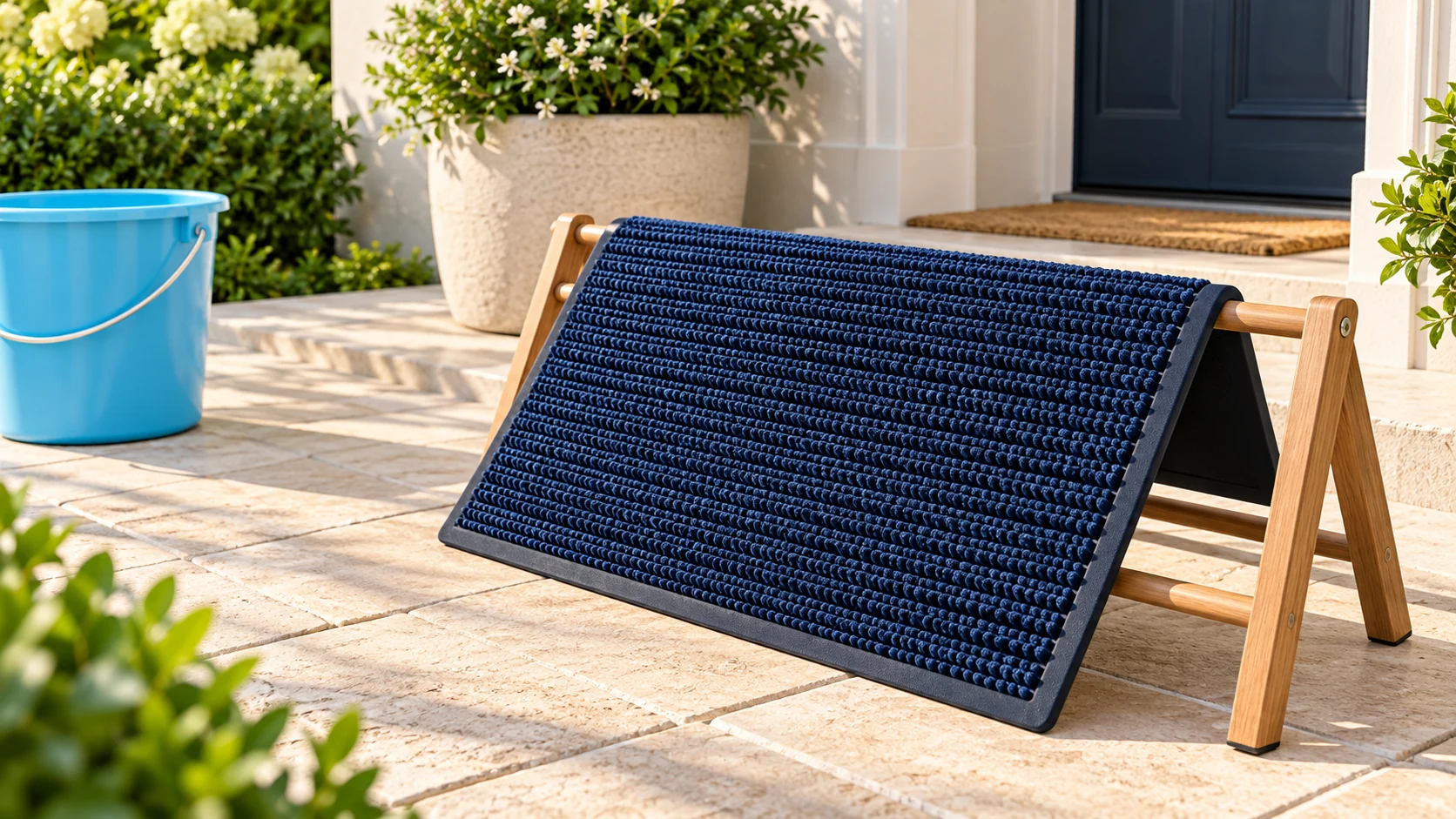
Quick answer
Identify the mat’s material and backing before cleaning it. Collect ordinary loose soil, use only its approved washing method and dry both the mat and the floor underneath before returning it. A clean mat with curled edges, trapped moisture or a slippery backing still needs attention.
Before you start
Coir, rubber scraper mats, synthetic carpet-faced mats and logo mats are different products. “Outdoor” does not mean machine washable or pressure-washer safe. M+A Matting’s WaterHog guidance permits specified vacuuming and hose cleaning for its products and requires drying before reuse. Do not apply those instructions automatically to a natural-fiber or printed mat.
Supplies
- The care label or product record, a suitable vacuum or gentle debris tool and a dustpan.
- A cleaner and washing method approved for both face and backing, if wet cleaning is needed.
- Gloves as appropriate, a safe substitute entrance arrangement, drying space and runoff collection.
Step-by-step method
- 1. Inspect the mat in place before moving it. Note curled corners, tears, delamination, worn grip and water underneath. If it catches shoes or will not lie flat, remove it from service and arrange a safe replacement rather than relying on cleaning to fix its shape.
- 2. Set up a usable entrance while the mat is away. Avoid loose towels or an improvised slippery substitute. Use lifting help for a heavy wet mat and do not drag it through the building, shaking grit onto the floor you are trying to protect.
- 3. Collect ordinary loose dirt using the manufacturer’s method. For a suitable carpet-faced mat, vacuum the grooves thoroughly with the approved setting. For a rubber scraper, collect material from between raised sections. Avoid beating dusty mats near people, doorways or air intakes.
- 4. Check the soil type before wet cleaning. Unknown construction dust, paint chips, oil or biological contamination needs a separate assessment. For ordinary dirt, test any approved cleaner on a small area including the backing edge and evaluate after drying.
- 5. Wash only if the mat’s complete care instructions permit it. Use a controlled hose rinse or other specified method and recover dirty water rather than rinsing toward a storm drain. Do not machine wash, pressure wash or soak a mat solely because another brand allows it.
- 6. Dry the mat in the supported position its maker recommends. Avoid sharp folds or heat that can deform the backing. Check the thickest sections and underside as well as the face. A cool damp backing can remain wet after the visible fibers look ready.
- 7. Clean and dry the floor or pavement where the mat belongs. Return the dry mat flat, check door clearance and confirm that its edges and grip are suitable for normal traffic. Remove it again if it shifts, curls or creates an uneven transition.
Check the result and avoid common mistakes
- Too much cleaner can leave residue in the grooves. Follow the label and rinse only as the construction allows.
- Do not hide a wet floor under a freshly cleaned mat.
- A damaged backing or permanently curled corner is a replacement question, not a reason to use tape or a heavy object without site approval.
Keep it easier next time
Match the inspection frequency to actual traffic and weather. During wet or dusty periods, check whether the mat is saturated or loaded with soil before it starts spreading material indoors. Keep a spare compatible mat when the entrance cannot be left without one, and store it flat and dry.
When to stop
Stop for contamination beyond ordinary soil, an unidentified backing, persistent damp odor, color transfer or structural damage. Ask the mat supplier about specialized cleaning or replacement. A successful entrance routine includes a safe walking surface as well as a clean-looking mat.
A practical next step
For business and office cleaning or post-construction cleaning in Orange County, Chino or Ontario, California, contact JLV Cleaning and Maintenance to discuss your space at /contact/.