
Glass & window cleaning
How to Clean Ground-Level Exterior Windows
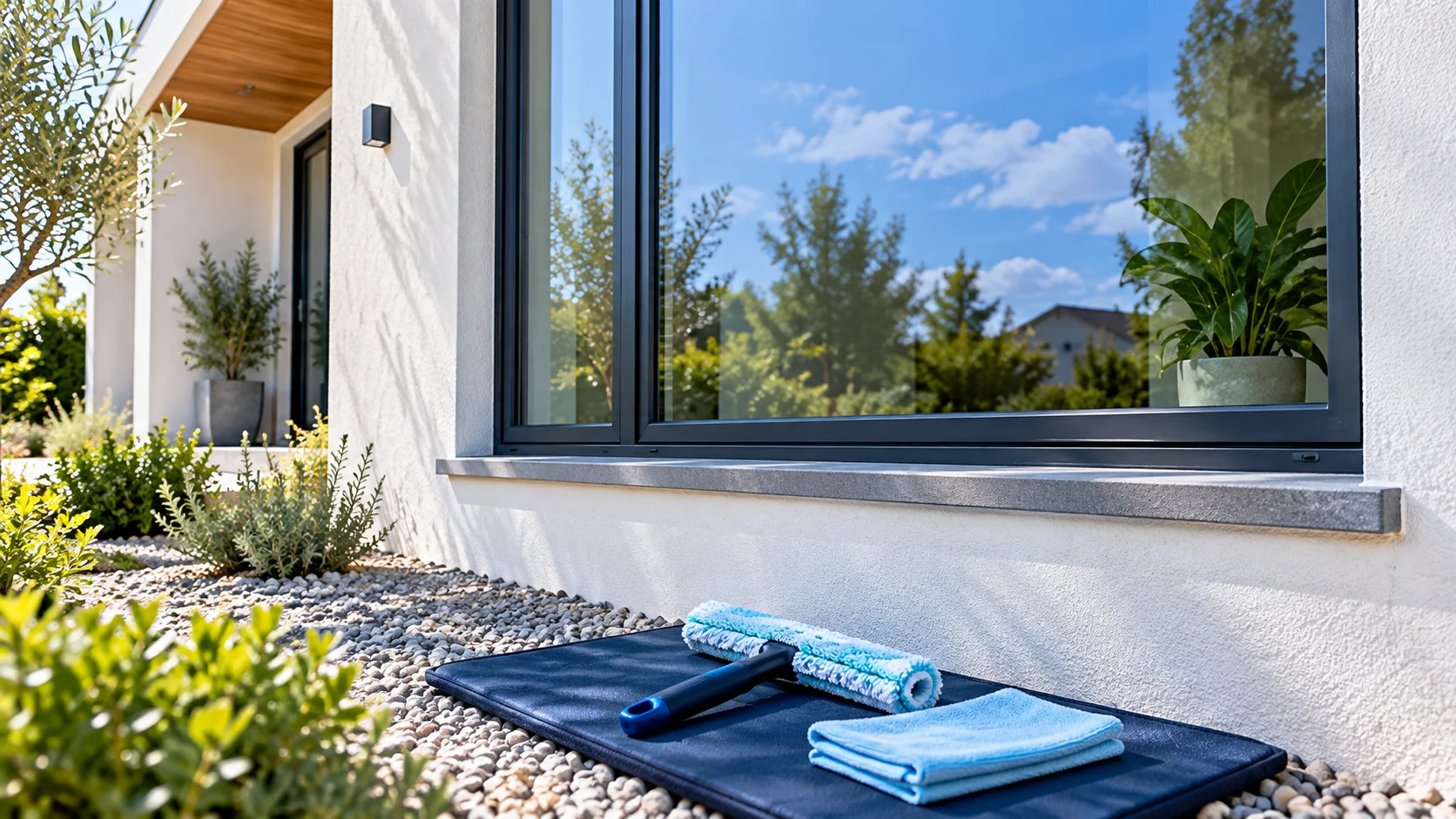
The quick answer
Wash ground-level exterior windows on cool, shaded glass. Loosen ordinary dust with gentle wetting, wash with the window maker's approved solution, and remove the rinse water before it dries into spots. Keep the work entirely within comfortable ground-level reach. A clean pane is not worth leaning over a railing, balancing on furniture or stretching under a power line.
Define the safe work area
Check for cracked glass, loose frames, damaged sealant, applied film and exposed coatings before starting. Exterior glass can carry abrasive grit, so rubbing a dirty pane with a dry rag is a poor first move. Set aside construction residue, heavy paint spots and unexplained deposits for a separate assessment.
Plan the runoff route. Keep water away from open doors, electrical equipment, wall outlets and people using the walkway. Close and latch the window. Choose a calm period when spray will not drift onto another business's entrance. If reaching the whole pane requires equipment or access beyond ordinary ground-level cleaning, bring in appropriate professional help.
Gather the kit
- Clean soft applicator, lint-free cloths and a sound rubber squeegee
- Mild cleaner specifically permitted for the glass and frame
- Clean water and, where appropriate, a hose set to a gentle flow
- Towels for edges and safe temporary access control for the work area
Clean one pane at a time
1. Remove loose debris from the surrounding frame using its approved method. Do not push dirt into drainage openings. Check removable screens separately and follow their removal instructions rather than pulling against the mesh.
2. Gently wet the glass to loosen surface dirt. Keep water pressure low and avoid forcing water toward seals, frame joints or vents. Do not use a pressure washer on the window assembly. The purpose of this step is to release soil, not test how watertight the building is.
3. Apply the permitted cleaner with a clean, soft applicator. Work across the pane in overlapping sections. Rinse or replace a gritty applicator immediately. A tool dropped onto the ground needs to be cleaned before it returns to the glass.
4. Rinse if the product directions require it, then draw off the liquid with the squeegee. Wipe the blade between passes and keep every hard tool component away from the pane. Use a clean cloth where the squeegee cannot safely fit.
5. Dry the frame edges and sill. Inspect the glass from both inside and outside when possible, then collect equipment and remove puddles. Reopen the walkway only when the surface is safe for normal use.
What to avoid
Do not scrape dried material with a razor, putty knife or abrasive pad. A product advertised for glass may still be unsuitable for the window's exposed coating, seals or frame. Keep cleaners in their original labeled containers and never combine them. Avoid washing a hot pane with very cold water or allowing cleaning liquid to bake onto sun-warmed glass.
Troubleshoot spots before escalating
Fresh circular spots after cleaning may be dried rinse water. Reclean a small area and remove its water promptly to see whether the appearance improves. Persistent deposits may require a manufacturer-approved mineral-removal process; do not substitute a strong bathroom descaler. Marks that remain after safe cleaning could be scratches or surface damage rather than removable dirt.
Set a useful maintenance rhythm
Inspect accessible windows when they visibly need attention, especially after dusty weather or nearby work. Record whether irrigation repeatedly hits a pane and ask the property manager to address the source. For business cleaning or post-construction planning in Orange County, Chino and Ontario, California, discuss the scope with JLV at /contact/.