
On this day
At Promontory, the Last Spike Was One Part of the Story
Historical event:
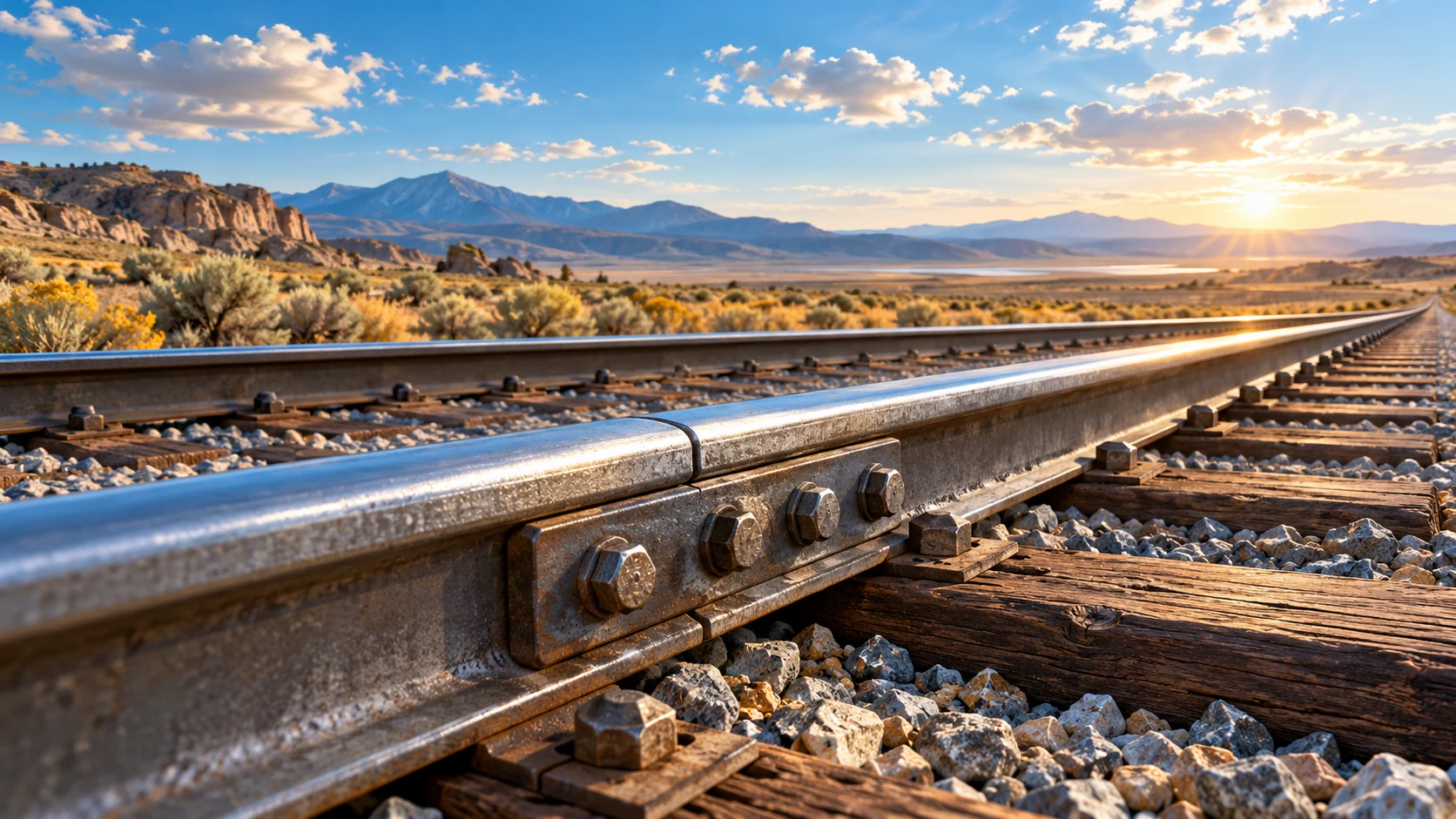
The photograph makes a complicated project look like a single moment: two locomotives, a crowd, a meeting of rails. It is a powerful image. It also leaves a great deal outside the frame.
On May 10, 1869, the Central Pacific and Union Pacific railroads met at Promontory Summit in Utah Territory for the ceremonial completion of the first U.S. transcontinental railroad. The National Park Service’s history places immigrant workers at the center of that accomplishment. Its archaeological account records that eight Chinese workers positioned the final rail before the ceremony.
Those workers belonged to a much larger labor story, one involving dangerous conditions and people whose names were often poorly recorded. The railroad’s expansion also crossed Indigenous homelands and formed part of policies that dispossessed Native peoples. Remembering the engineering while ignoring those costs would make the history smaller than it was.
Even the place did not freeze at the finish line. Tents and businesses formed a temporary town at Promontory. Passenger and freight transfer operations eventually shifted to Ogden. A celebrated connection still required an operating network around it.
A later chapter began in Costa Mesa
The locomotives that visitors encounter at Golden Spike today are replicas, with an Orange County connection. In 1975, O’Connor Engineering Laboratories in Costa Mesa took on the work of recreating Jupiter and No. 119. The National Park Service describes engineers using historical photographs and an 1870 locomotive handbook because original plans were unavailable.
The replicas entered service at the historic site on May 10, 1979, the ceremony’s 110th anniversary. That later project required its own careful reading of the past. A familiar photograph became useful evidence for people trying to understand the objects in it.
The connection offers another reason to look beyond a finish-line image. The 1869 ceremony was supported by years of labor, and the twentieth-century replicas required a different group’s work to make that scene tangible again. Recognizing a moment should encourage curiosity about the people and responsibilities surrounding it.
What remains outside the finished picture?
A renovated workplace has distinct assignments around its final cleanup. Identify which contractor owns remaining materials or repairs, who releases finished surfaces, and what the cleaning scope includes. A carton of spare parts and a mark needing touch-up do not become cleaning tasks simply because they remain in the room.
A short record of those responsibilities helps the owner see what is still open and gives each contributor a clearer definition of completion. It is a practical way to respect the work before the final photograph.
For post-construction cleaning in Orange County, Chino, or Ontario, talk with JLV about your project’s remaining details. Let’s make the final connection a clear one.
Sources
- Utah: Golden Spike National Historic Site — National Park Service
- The Archeology of Chinese Laborers Who Connected the Country — National Park Service
- The War and Westward Expansion — National Park Service
- The Tent City at Promontory — National Park Service
- Everlasting Steam: The Story of Jupiter and No. 119 — National Park Service