
On this day
Union Station and the Art of Waiting Well
Historical event:
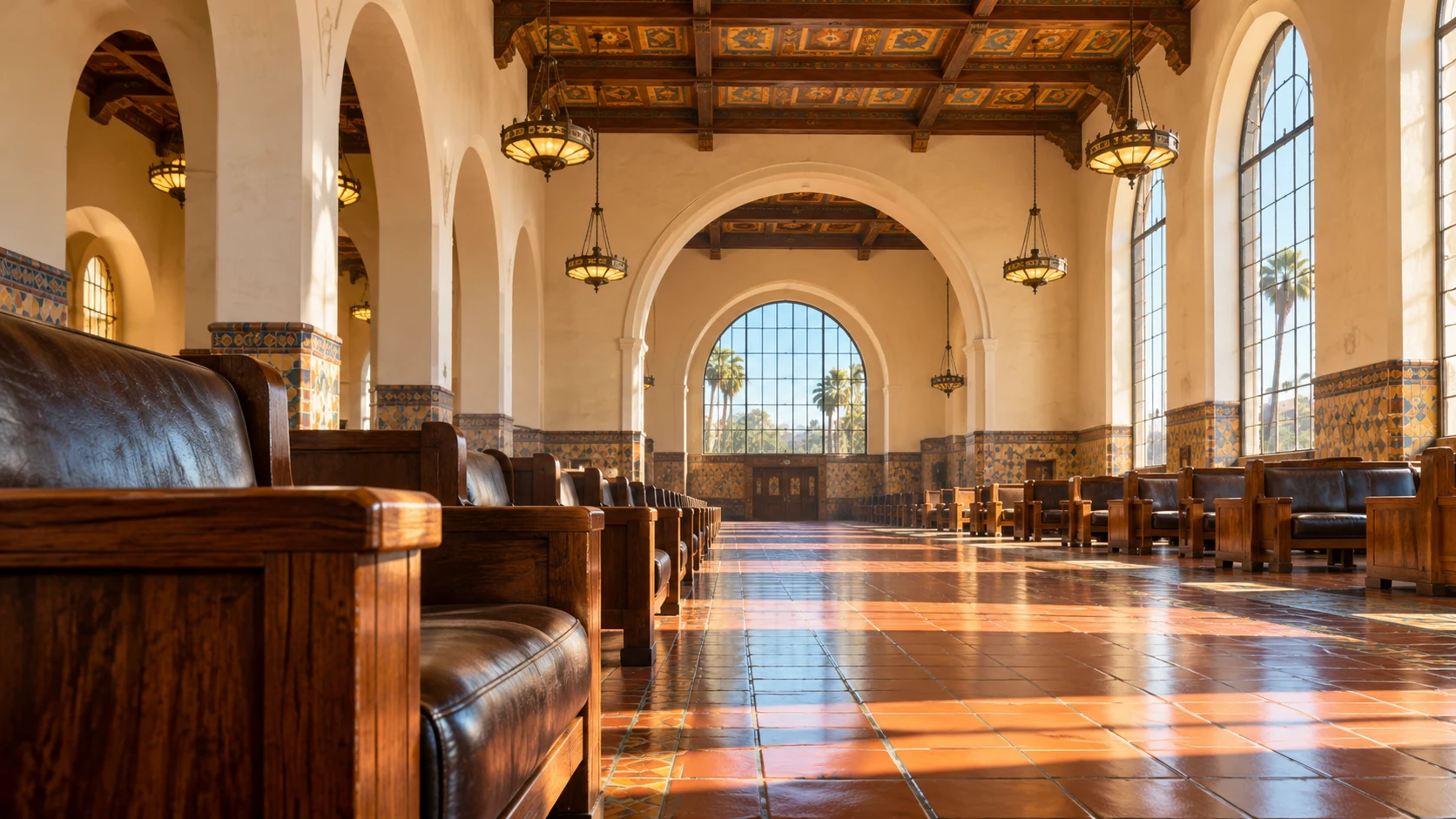
A train ticket tells you where you are going. A station tells you something about where you have arrived.
Los Angeles Union Station opened its doors on May 3, 1939. The building brought a grand sense of occasion to an everyday necessity: people needed somewhere to arrive, depart, meet, and wait. The waiting mattered enough to give it architecture worth remembering.
The station's own history traces the project to a 1933 joint venture among Southern Pacific, Union Pacific, and the Atchison, Topeka and Santa Fe railroads. Bringing three local terminals together was a practical assignment. Turning that assignment into a recognizable Los Angeles landmark took a different kind of imagination.
Architects John and Donald Parkinson, a father-and-son team, combined Spanish Colonial, Mission Revival, and Art Deco influences. Union Station describes the blend as Mission Moderne. Even the name suggests a conversation between the familiar and the forward-looking, with several design languages sharing the same destination.
A station's waiting area has an unusual job. It hosts people who may have very little in common except a few minutes in the same room. One person studies a timetable. Another watches the entrance. Someone else is already mentally at the other end of the line.
Architecture gives those separate little stories a common setting. The building becomes part of the trip before the train moves. That is why a waiting room can stay in the memory alongside the destination itself.
Union Station's history records a three-day opening celebration attended by half a million people. The festivities were temporary; the usefulness of a shared arrival place lasted. In the decades after opening, the station continued serving a changing city, eventually gaining local landmark designation in 1972 and National Register recognition in 1980.
An office reception area operates on a much smaller scale, but visitors still have time to notice it. The details are close at hand: the side of a chair, the gap between seats, the floor edge visible beneath them. A business owner may pass those spots quickly all day. A waiting visitor gets the seated view.
Before discussing a cleaning scope, take a seat where your visitors sit. Look around from that position. Which ordinary building surfaces are visible? Are chair legs and floor edges included? Can the agreed areas be reached without moving something heavy, delicate, or personal?
Put those observations into the conversation instead of relying on a general request to make reception look good. If fabric seating needs attention, identify the upholstery and its care instructions before deciding whether that work belongs in the scope. A chair's frame and its fabric deserve separate questions.
This simple change of viewpoint gives you a more useful starting point than judging the whole room from the doorway. It also helps focus attention on the space visitors actually experience while your team is busy elsewhere.
Welcoming visitors to an Orange County office? Talk with JLV about the reception details that belong in your cleaning plan, and give your next arrival a welcome worth remembering.