
On this day
The Getty Center and the Stories Written in Stone
Historical event:
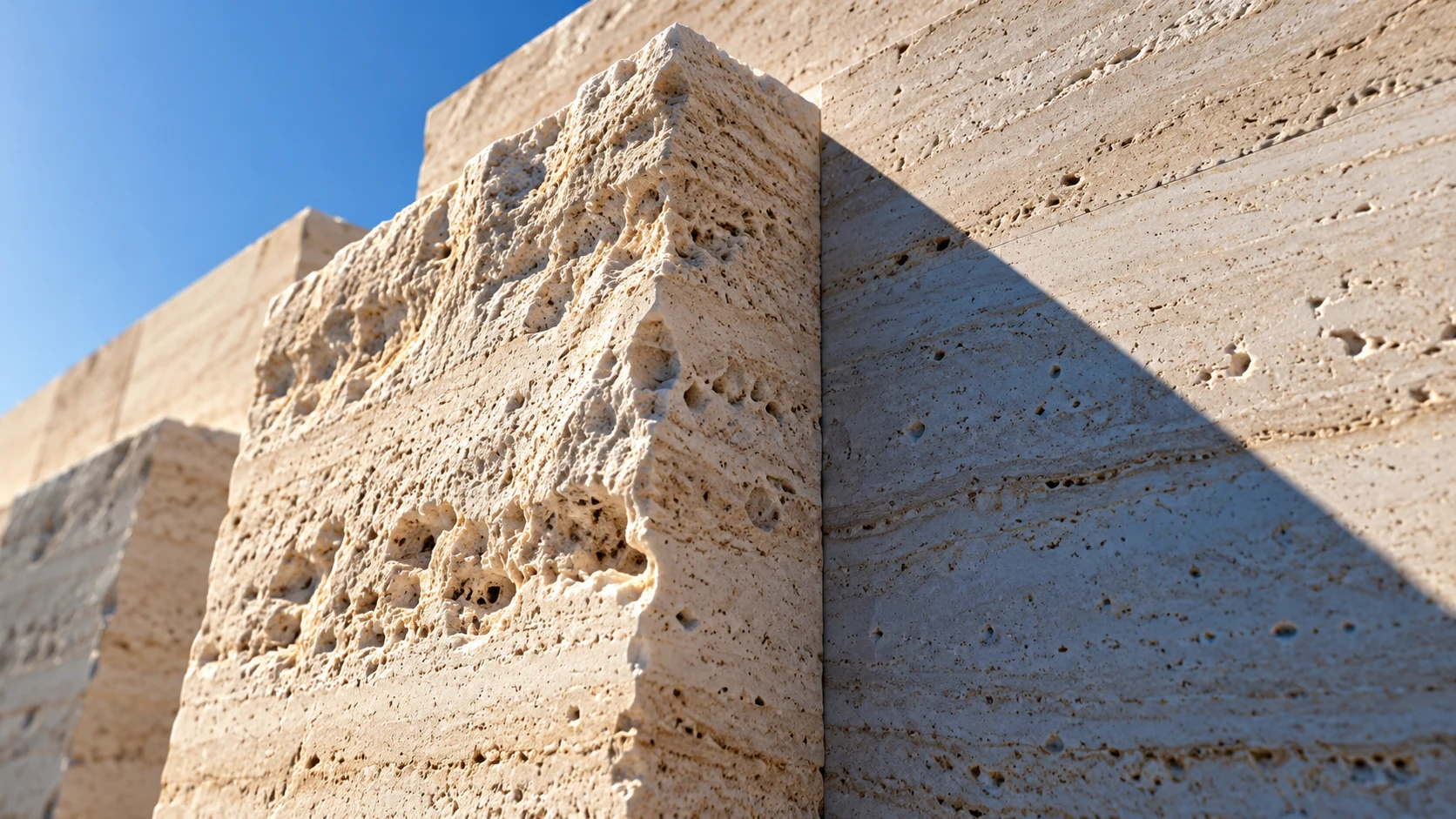
At the Getty Center, you can start looking for fascinating things before you enter a gallery. Try the walls.
On December 16 in 1997, the Getty Center welcomed its first public visitors. Getty's account of that morning describes people arriving early, waiting in the cold, and boarding the tram up the hill. The destination had been visible above Los Angeles for years while it took shape. At last, visitors could step into it.
Architect Richard Meier's campus gave those arrivals plenty to see: framed views, open spaces, curves, and a grid of stone. Its travertine came from Bagni di Tivoli in Italy. Getty's architecture guide records 1.2 million square feet of the material across the complex, an extraordinary amount of stone for visitors to encounter at human scale.
A wall with a longer memory
The texture is part of the attraction. Getty points visitors toward fossilized leaves, feathers, and branches revealed when the stone was split. A walk between galleries can suddenly become a very small fossil hunt. You went looking for art and found yourself studying the building material.
Getty's explanation of those fossils identifies travertine as a kind of limestone formed around springs. Layers can build around living material, preserving impressions or remains. Trapped gas bubbles contribute to the holes that give the stone its characteristic texture.
That makes an apparent irregularity worth a second look. A pore, a layer, or an impression may belong to the material's history. The building's visual interest depends partly on letting the stone look like stone.
There is something delightfully generous about this. You do not need a label telling you where to stand before the architecture begins rewarding your attention. Light moves over the surface, a texture catches your eye, and suddenly the wall has become a subject rather than a background.
Know what your finish is telling you
A business reception desk or lobby floor may also have a material story hidden behind an everyday label. Calling something tile tells you its format. It does not necessarily tell you what it is made of, how it is finished, or what care it needs.
The Natural Stone Institute puts identifying the stone's composition at the beginning of appropriate care. Its guidance also notes that calcium-carbonate-based stone is sensitive to acidic solutions. That is a good reason to obtain the actual care information rather than carry a familiar product from another surface and hope for the best.
For a cleaning walkthrough, gather the name of the stone, any available finish or sealer information, and the supplier's instructions. If those details are missing, make identifying them a clear next step. There is no prize for confidently guessing at an expensive surface.
Also agree on what the finished appearance should be. Natural variation, intentional texture, and an existing mark should not be bundled into one promise to make everything uniform. A photograph and a short owner-approved note can keep expectations specific.
Have a finish that deserves a closer look? JLV works with Orange County businesses on office cleaning. Let's start with the right surface information and build a considered plan from there.