
Science
The First Laser and the Surprising Precision of Light
Historical event:
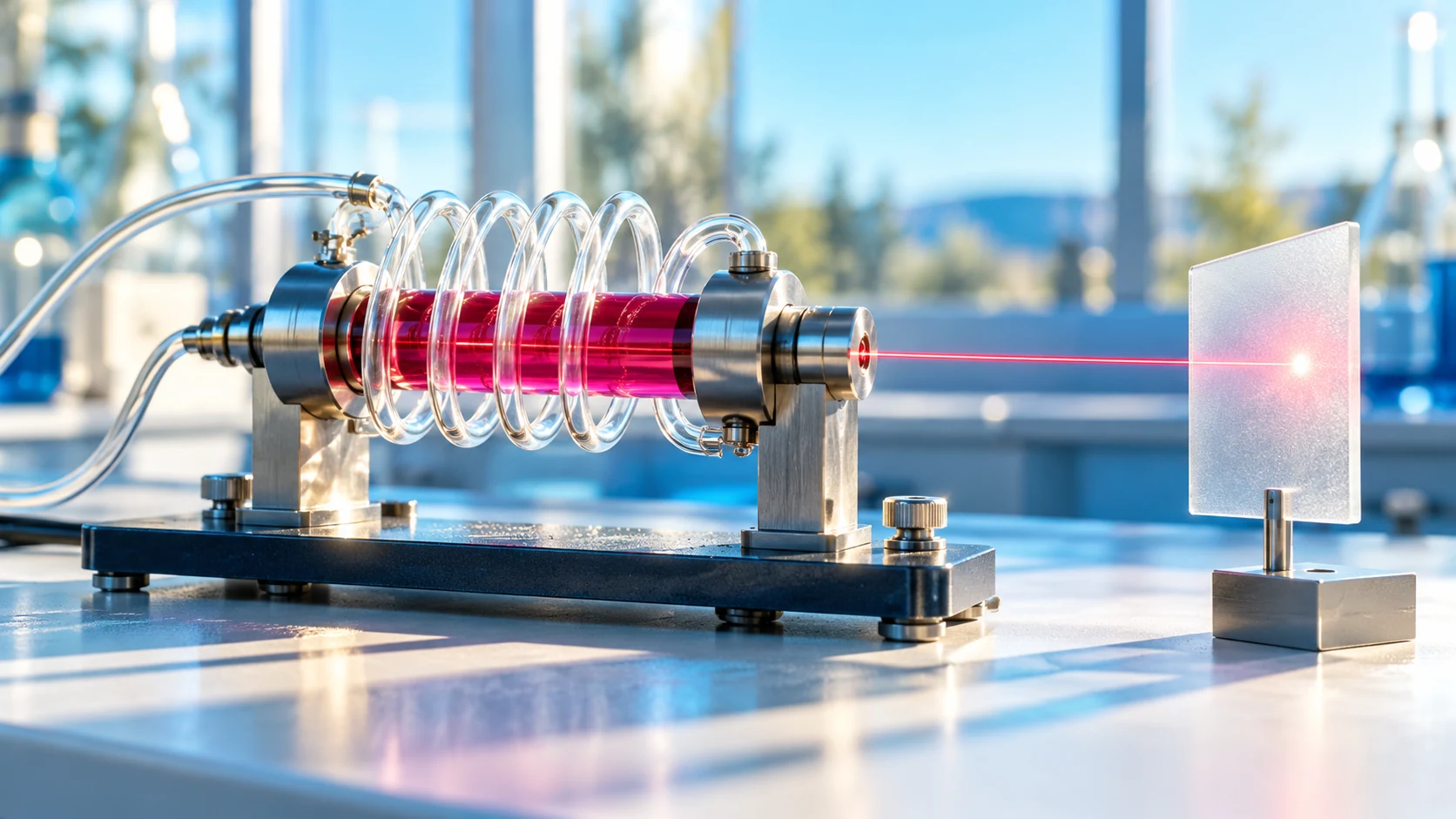
The device was small enough to disappoint a publicity photographer. On May 16 in 1960, Theodore Maiman and colleagues at Hughes Research Laboratories in Malibu achieved laser action using a synthetic ruby. A major technological turning point did not need a room-sized machine to announce itself.
HRL's account describes the ruby placed inside a flashlamp, with reflective ends helping produce the effect. The experiment delivered pulses of light and demonstrated that the laser idea could work. A public announcement followed in July. The laboratory success and the press event belong to different dates.
The ruby was pink, and its ends had been made reflective: small physical details at the heart of a very large idea.
The photograph has its own curious afterlife. According to HRL, a photographer wanted a larger setup for a more compelling picture, so a bigger flashlamp and ruby were used for widely published publicity images. The object that made the best photograph was not the exact small apparatus that first produced the result.
That is a delightful caution for anyone who assumes the most famous image always tells the most precise story.
More than a brighter bulb
Laser stands for light amplification by stimulated emission of radiation. The central idea involves excited material releasing light in a controlled relationship with light already present. In the right arrangement, that process amplifies a beam. It is a different kind of light source from an ordinary lamp illuminating a room.
Lawrence Livermore National Laboratory's history places Maiman's ruby experiment at the beginning of a rapidly expanding field. The early apparatus opened a door to further designs and uses. It would take more research and engineering to turn that door into the many technologies people now associate with lasers.
The story invites us to separate three things that often get bundled together: an effect, evidence of the effect, and a good-looking presentation of it. Maiman's result depended on what the experiment actually did. Its fame involved how people later pictured it.
That distinction offers a modest lesson for reviewing a workplace finish. The brightest reflection in a room is not a complete record of the surface's condition. A dramatic photograph is not a substitute for an ordinary, useful inspection.
For a business walkthrough, use the room's normal lighting and look from more than one position. Note where a visible mark appears and whether it remains apparent as the viewing angle changes. Keep the record descriptive, and connect any proposed treatment to the actual finish information.
The publicity photograph and the small working laser tell different parts of Maiman's story. Your own review can be simpler: choose the view that answers the question, and give the actual surface more attention than the most dramatic reflection.
If the details of your Chino office deserve a closer look, discuss business cleaning with JLV. Put the spotlight on a first impression you can actually review.