
On this day
Bowers Museum: A Home for Orange County's Stories
Historical event:
Before there was a museum at the corner of 20th and Main in Santa Ana, there was a home. In an early photograph held by Bowers Museum, Charles and Ada Bowers stand outside it, surrounded by the sort of ordinary details a family picture preserves almost by accident.
The image is a lovely beginning for an institution devoted to keeping things worth remembering. Charles and Ada wanted Orange County's history preserved. Their trust provided property for Santa Ana to build and maintain a museum after their deaths.
On February 13 in 1936, that museum opened to the public. The date belongs to the opening, rather than the start of construction. According to the museum's account, contractor William Rohrbacher began building on February 15, 1932. Almost four years lay between the two milestones.
A building still needed its stories
The museum's own more recent founding history explains why finishing a structure did not immediately produce a museum. Fixtures and other interior work remained, and there was a collection to assemble. There also needed to be someone to guide that work.
Bessie Beth Coulter became the museum's curator in 1935. She helped acquire its first collections and prepare the galleries. It is an easily overlooked part of an opening story: someone has to decide how a room full of potential becomes a place with something meaningful to share.
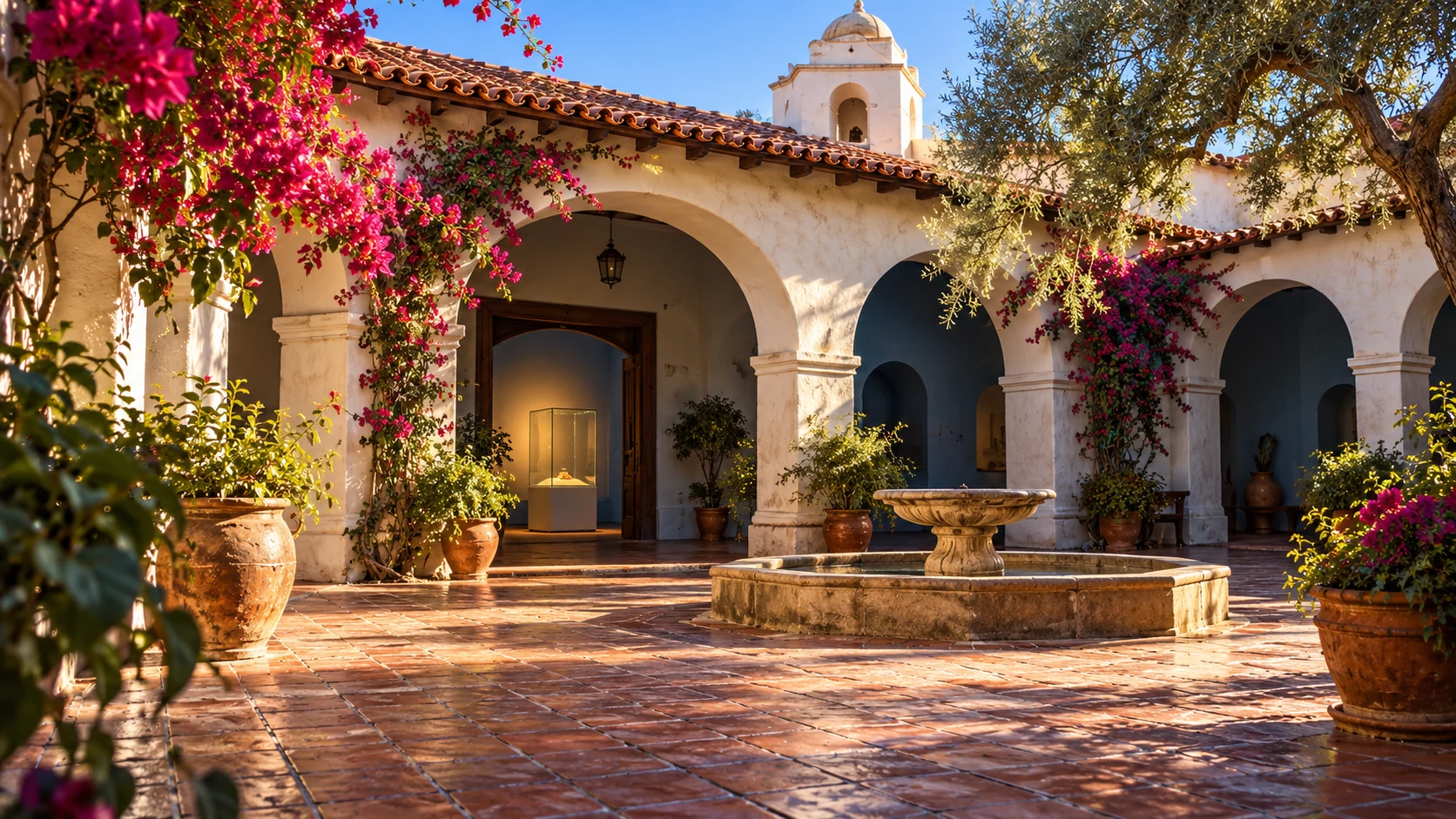
The building itself was deliberately constructed as a museum. The Spanish Mission Revival exterior replaced the Bowers family's Victorian home on the property. A visitor looking at the historic architecture might imagine another earlier use, but the institution's purpose was there from the beginning.
Among the objects on display at the 1936 opening, the museum records Native American cog stones, a large prehistoric marine-animal bone, and material from San Juan Capistrano and the rancho period. Different kinds of evidence met under one roof, inviting visitors to think beyond a single version of local history.
Objects can make a place's past feel close. A photograph supplies faces. A tool raises questions about work. Something that once seemed ordinary becomes worth keeping because of the people and experiences attached to it.
Your business may have its own small collection: an early photograph, a founder's keepsake, a delicate model, or an award with more meaning than its size suggests. Those objects belong in the cleaning conversation even when they do not belong in the cleaning scope.
During a walkthrough, identify the items that must stay where they are. Make clear who can authorize handling and whether the surrounding ordinary surfaces can be reached without moving them. Describe the boundary in plain language, especially when an object looks sturdy but has personal or historical importance.
This is a way to respect a workplace's identity while planning its everyday care. It lets the owner explain what matters before anyone has to make a judgment on the spot.
For an Orange County office with a story of its own, talk with JLV. Let's discuss cleaning that gives the space attention and the keepsakes their proper place.