
Science
A Crockery Shop’s Sawdust Became a Sweeper Story
Historical event:
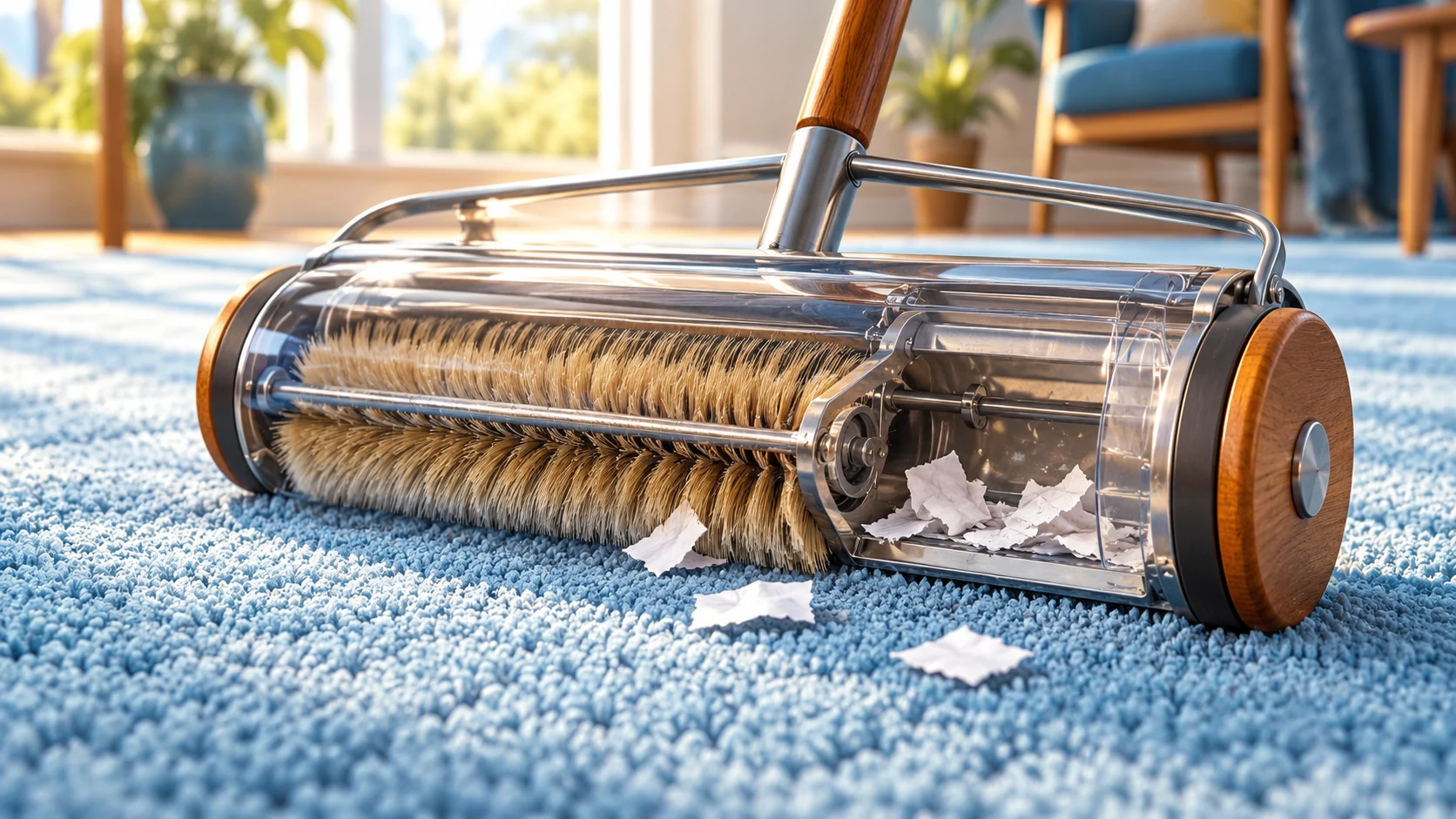
The cups and dishes were the merchandise. The sawdust was becoming the daily nuisance. In the company’s account of its beginnings, Melville and Anna Bissell’s Grand Rapids crockery shop supplied the problem that pointed their business in a new direction.
On September 19, 1876, Melville Bissell received U.S. Patent 182,346 for improvements in carpet sweepers. The title’s emphasis on improvement is useful: the document describes particular mechanical changes, not the sudden invention of every possible way to sweep a floor.
Its brush roller was supported near the center rather than at the ends. Driving wheels and gearing turned the brush. The stated aim was to help the sweeper follow uneven floor and carpet surfaces. Curved ends were intended to improve access near walls and furniture, while a removable component allowed the brush roller to be taken out.
The details read like answers to a person actually pushing a tool around a furnished room. Flat drawings contain very three-dimensional problems: the floor varies, the furniture gets close, and a component eventually needs attention.
The Bissell company’s history also gives Anna an active place in the early enterprise. Its account describes the couple selling sweepers to distributors in Philadelphia in 1876. Anna later led the company after Melville’s death in 1889, bringing experience in its operations, marketing, and sales.
That broader view keeps an invention from becoming a lonely flash of inspiration. Someone has to recognize the recurring problem, refine a device, explain it, sell it, and keep the enterprise operating. A patent identifies an invention; it does not contain the entire business around it.
There is also something satisfyingly specific about the original nuisance. The shop did not begin with a grand ambition to change floor care. It had sawdust where it was not wanted, again. Repetition can make a problem feel too ordinary to examine, even when it is exactly the problem worth noticing.
Ask why it keeps appearing
In a workplace, the recurring mess may have a similarly ordinary source: an unpacking area, a frequently used entrance, or a process that leaves debris in the same place. Rather than treating each appearance as a separate surprise, record where it happens and what activity seems to precede it.
Bring that observation to the cleaning discussion. Quick removal of visible debris and the fuller care a floor requires are different tasks, and the appropriate plan depends on the material and use of the space. An observation about the source can also reveal a question for the business itself, such as where unpacking should happen.
If the same corner of your Orange County office keeps asking for attention, tell JLV its story. We can discuss the cleaning needs alongside the recurring conditions. Start with the problem that keeps coming back.